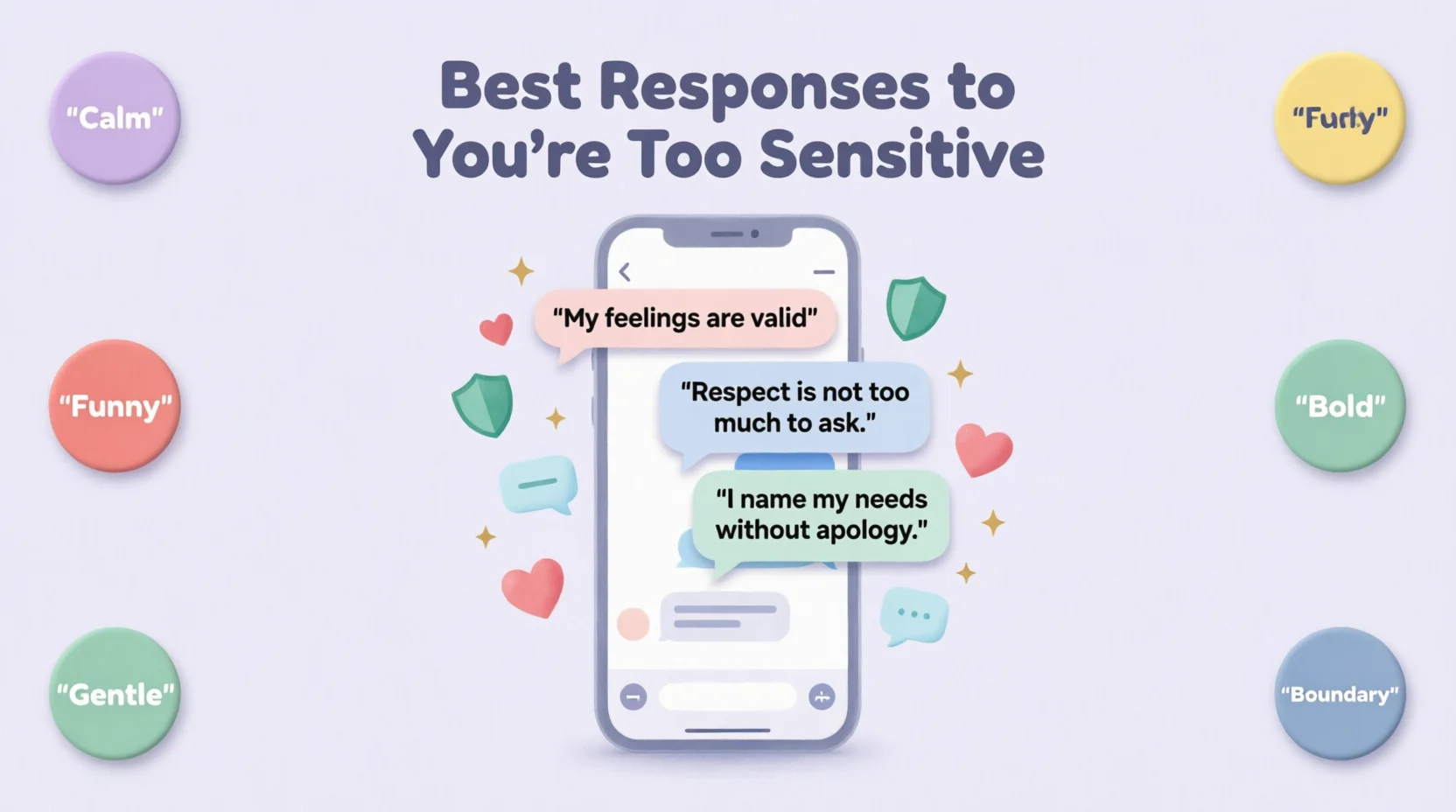
The best responses to “you’re too sensitive” stay calm, set a clear boundary, and never apologize for having feelings. Pick a line that fits the person and the moment, then say it with confidence. You can say My feelings are valid, I’m not overreacting, I’m responding, Let’s talk about what actually happened.
Few phrases land like a surprise slap in the group chat. One second you are sharing how something made you feel, and the next you hear, “You’re too sensitive.” 😬 It can come from a friend, a partner, a coworker, or a family member, and it often leaves you doubting yourself. Words like these matter because they can shrink your feelings and shut a conversation down fast.
Replying the right way helps you protect your peace, keep your dignity, and steer things somewhere healthier. This best responses to you’re too sensitive guide gives you ready to copy lines for every mood, from calm and professional to funny and bold, so you never get stuck staring at the screen again.
Calm and Confident Responses to “You’re Too Sensitive”
My feelings are valid, even if you disagree.
Example: Replying when a friend brushes off your hurt.
Meaning: Calmly stands by your emotions.
I’m not overreacting, I’m responding.
Example: Answering a partner after a harsh joke.
Meaning: Reframes your reaction as normal.
I hear you, and I still feel hurt.
Example: Replying during a tense chat.
Meaning: Holds both views without backing down.
Being honest about my feelings is a strength.
Example: Answering a coworker who rolled their eyes.
Meaning: Flips the insult into a positive.
I’m okay with caring this much.
Example: Replying to a family member’s teasing.
Meaning: Owns your depth with pride.
That comment bothered me, and I’m saying so.
Example: Speaking up after a rude remark.
Meaning: Names the issue without drama.
I don’t need to feel less to make this easier.
Example: Answering someone who wants you to drop it.
Meaning: Refuses to shrink your feelings.
I’d rather be sensitive than careless.
Example: Replying to a careless friend.
Meaning: Calmly turns the label around.
Let’s focus on what was said, not how I reacted.
Example: Redirecting a heated argument.
Meaning: Brings the talk back to the real issue.
My reaction makes sense given what happened.
Example: Replying after being ignored at a gathering.
Meaning: Explains your feelings with clarity.
I’m not asking you to agree, just to listen.
Example: Answering a defensive partner.
Meaning: Sets a simple, fair request.
I know myself, and my feelings are real.
Example: Responding to someone who keeps doubting you.
Meaning: Shows steady self trust.
Boundary Setting Responses to “You’re Too Sensitive”
Please don’t call me that when I’m being honest.
Example: Replying to a friend who repeats the label.
Meaning: Sets a clear rule for the chat.
I’m not okay with that kind of joke.
Example: Answering a teasing coworker.
Meaning: States your limit plainly.
Respect my feelings or skip the comment.
Example: Replying to a relative who mocks you.
Meaning: Offers a firm, simple choice.
That word shuts me down, so let’s try another way.
Example: Speaking to a partner during a disagreement.
Meaning: Invites a better style of talking.
I’ll continue this chat when it feels respectful.
Example: Replying to a heated group message.
Meaning: Pauses the talk until respect returns.
You can disagree without dismissing me.
Example: Answering a friend who laughs off your concern.
Meaning: Separates opinion from disrespect.
I’m going to step away from this tone.
Example: Leaving a tense conversation.
Meaning: Protects your peace without a fight.
Please take my feelings seriously.
Example: Replying to someone who rolls their eyes.
Meaning: A direct, polite request.
That label doesn’t help us solve anything.
Example: Answering during a problem solving talk.
Meaning: Pulls focus back to solutions.
I won’t argue about how I feel.
Example: Replying to a person who debates your emotions.
Meaning: Ends the pointless debate.
This is important to me, so please listen.
Example: Speaking to a busy partner.
Meaning: Asks for real attention.
I need a kinder tone to keep talking.
Example: Replying to a sharp message.
Meaning: Sets a clear standard for the chat.
Funny Responses to “You’re Too Sensitive”
Sensitive? I cry at pet food commercials, so yes.
Example: Replying to a friend who knows your soft side.
Meaning: Self aware humor that lightens the mood.
I’m not sensitive, my feelings just have great WiFi.
Example: Answering a group chat tease.
Meaning: A goofy twist that defuses tension.
Plot twist: I’m a human with emotions.
Example: Replying to a sarcastic coworker.
Meaning: Playful honesty that makes a point.
Sorry, my feelings are not on silent mode.
Example: Joking after a harsh comment.
Meaning: Lighthearted way to show you care.
I’m a limited edition, handle with care.
Example: Answering a friend who teases you.
Meaning: Funny self worth in one line.
My heart came with no off switch, sorry.
Example: Replying to someone who wants you to chill.
Meaning: Humor that admits your depth.
Yes, and my emotional range is a bonus feature.
Example: Answering a sibling’s tease.
Meaning: Turns the label into a perk.
Careful, my feelings are fragile, like good pottery.
Example: Replying with a smile in a group.
Meaning: Soft humor with a clear message.
I’m just emotionally HD, you’re on dial up.
Example: Roasting a dismissive friend.
Meaning: Clever and cheeky comparison.
Breaking news: feelings still exist.
Example: Replying to someone who ignores your mood.
Meaning: Dry humor that points out the obvious.
I’m not sensitive, I’m just fluent in feelings.
Example: Answering a friend who avoids deep chats.
Meaning: Frames empathy as a skill.
My emotions asked for a manager.
Example: Replying after a rude joke.
Meaning: Silly escalation that still sends a message.
Sarcastic Responses to “You’re Too Sensitive”
Wow, what a great way to apologize.
Example: Replying to someone who deflects blame.
Meaning: Calls out a non apology with dry wit.
Thanks for the diagnosis, doctor.
Example: Answering a friend who judges your reaction.
Meaning: Mocks the self appointed expert.
Oh good, an expert on my feelings.
Example: Replying to a know it all coworker.
Meaning: Sarcasm that points out their overreach.
You’re right, I should feel nothing. Brilliant plan.
Example: Answering a cold, dismissive remark.
Meaning: Exaggeration that shows the flaw.
Ah yes, the classic dodge.
Example: Replying when they change the subject.
Meaning: Spots a deflection and names it.
Sure, because feelings are optional now.
Example: Answering a person who dismisses emotion.
Meaning: Dry humor with a sharp edge.
Wow, such empathy. Truly inspiring.
Example: Replying to a heartless comment.
Meaning: Sarcastic praise that stings.
Noted. Insult accepted, topic still open.
Example: Answering someone who tries to end the chat.
Meaning: Refuses to drop the real issue.
Fascinating theory. Does it come with evidence?
Example: Replying to a bold claim.
Meaning: Calls for proof with a smirk.
Thanks, I’ll add it to the list of things I didn’t ask.
Example: Answering unwanted commentary.
Meaning: Dry humor that sets a limit.
Oh no, I’ve been exposed for having feelings.
Example: Replying with a roll of the eyes.
Meaning: Mock panic that shows how silly the remark is.
Cool story. Anyway, as I was saying.
Example: Brushing off the label and continuing.
Meaning: Moves forward with confidence.
Bold and Direct Responses to “You’re Too Sensitive”
No, you were rude.
Example: Replying to a friend who dodges blame.
Meaning: Puts responsibility back where it belongs.
That’s a lazy answer to a real concern.
Example: Answering someone who dismisses you.
Meaning: Calls out a weak excuse.
Stop blaming me for your words.
Example: Replying during an argument.
Meaning: Sets a firm line on accountability.
Try an apology instead of a label.
Example: Answering a partner who never owns mistakes.
Meaning: Suggests a better path forward.
I’m not the problem here.
Example: Replying to someone who deflects.
Meaning: Refuses to carry blame that isn’t yours.
Don’t tell me how to feel.
Example: Answering a person who keeps pushing.
Meaning: Shuts down emotional policing.
That excuse is getting old.
Example: Replying to a repeat offender.
Meaning: Shows you notice the pattern.
Next time, think before you speak.
Example: Answering a careless joke.
Meaning: A direct request for better behavior.
I’m done explaining my feelings to you.
Example: Ending a draining chat.
Meaning: Closes the topic with finality.
You hurt me. Own it.
Example: Replying to a friend who refuses to listen.
Meaning: Plain truth with firm energy.
Your tone started this, not my reaction.
Example: Answering a tense message.
Meaning: Points to the real cause.
Respect is not too much to ask.
Example: Replying to someone who mocks you.
Meaning: Defends a basic standard.
Polite Responses to “You’re Too Sensitive”
I understand, but that really hurt.
Example: Replying to a relative who meant no harm.
Meaning: Kind honesty without blame.
Thank you for your view, and I feel differently.
Example: Answering a coworker during a chat.
Meaning: Respectful disagreement.
I appreciate your honesty, but that stung.
Example: Replying to a blunt friend.
Meaning: Shares the impact gently.
Could we talk about it more kindly?
Example: Asking a partner to soften the tone.
Meaning: A polite request for care.
I hope you can see why it affected me.
Example: Answering after a careless joke.
Meaning: Invites understanding.
I’d love for us to listen to each other.
Example: Replying during a disagreement.
Meaning: Encourages balanced communication.
Thank you for being open, here is how I feel.
Example: Sharing your side calmly.
Meaning: Keeps the talk constructive.
I know you didn’t mean it, but it landed hard.
Example: Replying to an unintentional comment.
Meaning: Gives them the benefit of the doubt.
Let’s try to understand each other.
Example: Answering a rising argument.
Meaning: Offers peace and teamwork.
I value this friendship, so I’m speaking up.
Example: Replying to a close friend.
Meaning: Shows care behind your honesty.
I’d appreciate a little more kindness.
Example: Answering a rushed text.
Meaning: A soft but clear ask.
Thank you for listening to my side.
Example: Replying after they soften.
Meaning: Acknowledges progress.
Professional Responses to “You’re Too Sensitive”
I’d prefer we keep feedback respectful.
Example: Replying to a manager’s sharp comment.
Meaning: Sets a workplace standard.
Let’s focus on the facts of the situation.
Example: Answering a coworker during a meeting.
Meaning: Moves the chat to solid ground.
I’m raising this so we can work well together.
Example: Speaking to a teammate.
Meaning: Frames your concern as teamwork.
I’d appreciate constructive feedback instead.
Example: Replying to harsh criticism.
Meaning: Asks for a more useful approach.
That comment was not appropriate for work.
Example: Answering an unprofessional joke.
Meaning: Firm and formal boundary.
I’m happy to discuss this calmly.
Example: Replying during a tense email thread.
Meaning: Signals maturity and control.
Let’s keep our discussion professional.
Example: Answering a heated message.
Meaning: Resets the tone politely.
I’d like to document this conversation.
Example: Replying to repeated disrespect.
Meaning: Shows you take it seriously.
My concern is about the behavior, not the person.
Example: Speaking with a colleague.
Meaning: Keeps the talk fair and focused.
Can we schedule a time to talk this through?
Example: Replying to a rushed comment.
Meaning: Moves the chat to a better setting.
I’d value a respectful workplace.
Example: Answering a pattern of jokes.
Meaning: States a clear expectation.
Thank you, I’ll follow up with HR if needed.
Example: Replying to ongoing disrespect.
Meaning: A calm warning with authority.
Emotional Responses to “You’re Too Sensitive”
That hurt more than you realize.
Example: Replying to a loved one after a rude remark.
Meaning: Shares the real emotional impact.
I’m trying so hard to be understood.
Example: Answering a partner who brushes you off.
Meaning: Opens up about your effort.
It makes me feel small when you say that.
Example: Replying to a family member.
Meaning: Names the feeling honestly.
I need you to hear me, not fix me.
Example: Answering a friend who tries to solve everything.
Meaning: Asks for real listening.
My feelings are how I care about things.
Example: Replying to someone who minimizes you.
Meaning: Ties emotion to love and attention.
I wish you could see how this feels.
Example: Answering after a painful comment.
Meaning: Invites empathy softly.
Please don’t dismiss something that matters to me.
Example: Replying to a careless friend.
Meaning: Asks for gentle respect.
I’m hurting, and I’m telling you honestly.
Example: Sharing a vulnerable moment.
Meaning: Offers truth with courage.
It takes courage for me to say this.
Example: Speaking up in a hard chat.
Meaning: Highlights your bravery.
I’m not asking for much, just kindness.
Example: Replying to a harsh partner.
Meaning: A heartfelt, simple request.
It really matters how you talk to me.
Example: Answering a dismissive tone.
Meaning: Shows the weight of their words.
I deserve to feel safe with you.
Example: Replying in a close relationship.
Meaning: States a deep need clearly.
Clever Responses to “You’re Too Sensitive”
Interesting, you used that as a closing argument?
Example: Replying during a debate.
Meaning: Points out their weak move wittily.
Calling me names isn’t a rebuttal.
Example: Answering someone dodging the point.
Meaning: Exposes a shaky argument.
You’ve just proven my point, thanks.
Example: Replying to a dismissive remark.
Meaning: Turns their words against them.
I’m sensitive to disrespect, you’re right about that.
Example: Answering a friend with a smile.
Meaning: Accepts the label and redefines it.
Funny how my feelings are the issue now.
Example: Replying when blame shifts to you.
Meaning: Calls out a clever dodge.
If feelings are too much, why are you reacting?
Example: Answering a defensive friend.
Meaning: Highlights their own emotional response.
Let’s circle back to what you said.
Example: Redirecting a heated chat.
Meaning: Refuses to be sidetracked.
I thought we were discussing your comment.
Example: Replying when they change topics.
Meaning: Returns to the real issue.
Sensitive enough to notice, honest enough to say it.
Example: Answering a casual dismissal.
Meaning: Frames your reaction as a strength.
That’s a bold way to avoid accountability.
Example: Replying to a deflection.
Meaning: Names the move with a smirk.
Say it again, but with an apology.
Example: Answering a friend who needs coaching.
Meaning: Gives them a better script.
I accept your label, not your conclusion.
Example: Replying to a closing line.
Meaning: Smart and firm.
Chill and Casual Responses to “You’re Too Sensitive”
Maybe, but it still bugged me.
Example: Replying to a friend in a relaxed chat.
Meaning: Honest without making it heavy.
Lol okay, but that one stung.
Example: Answering a casual tease.
Meaning: Light tone with a real message.
Fair, but I’d still like to talk about it.
Example: Replying to a laid back friend.
Meaning: Stays calm while holding your ground.
Could be, but can we chat about it?
Example: Answering a group chat joke.
Meaning: Invites an easy conversation.
Haha, maybe. Still, not cool.
Example: Replying to a friend who pokes fun.
Meaning: Smiles while setting a limit.
I mean, sure, but I’d rather be heard.
Example: Answering a partner mid chill.
Meaning: Casual honesty with warmth.
Okay, noted. Still gonna feel it though.
Example: Replying to a dismissive buddy.
Meaning: Simple self respect.
Eh, maybe. Let’s just be nicer?
Example: Answering a roommate.
Meaning: Soft nudge toward kindness.
Probably, but I’m still bummed.
Example: Replying to a friend in a low key chat.
Meaning: Shares feelings without pressure.
Yeah, maybe. Mind if we talk it out?
Example: Answering a calm friend.
Meaning: Offers a relaxed next step.
Could be me, but I’d like to explain.
Example: Replying during a mellow moment.
Meaning: Opens a fair conversation.
Alright, but I’m allowed to feel stuff.
Example: Replying with a shrug.
Meaning: Casual confidence in your emotions.
Gentle and Caring Responses to “You’re Too Sensitive”
I know you care, and I’d love some softness.
Example: Replying to a partner who means well.
Meaning: Assumes good intent kindly.
Can we talk gently about this?
Example: Answering a family member.
Meaning: Invites a calmer approach.
I’m sharing this because I trust you.
Example: Replying to a close friend.
Meaning: Shows the value of the bond.
It would mean a lot if you listened.
Example: Answering a busy partner.
Meaning: Asks for care in a soft way.
I want us to feel safe with each other.
Example: Replying in a relationship talk.
Meaning: Focuses on trust.
I’m not trying to start a fight, I promise.
Example: Answering a tense moment.
Meaning: Eases worry with warmth.
I care about us, so I’m speaking up.
Example: Replying to a loved one.
Meaning: Frames honesty as love.
Thank you for hearing me out.
Example: Answering after they soften.
Meaning: Rewards good listening.
Can we hold each other with kindness?
Example: Replying to a friend after a spat.
Meaning: Invites mutual care.
I just need a little patience right now.
Example: Answering during a rough week.
Meaning: Asks for gentleness.
My heart is open, please treat it well.
Example: Replying to someone close.
Meaning: Shows trust and vulnerability.
I’d love to understand each other better.
Example: Answering a friend after tension.
Meaning: Builds a bridge.
Dramatic Responses to “You’re Too Sensitive”
Gasp. Me? Having feelings? Scandalous.
Example: Replying to a friend in a joking chat.
Meaning: Over the top humor that deflates the label.
Cue the violin music for my poor heart.
Example: Answering a playful tease.
Meaning: Theatrical fun with a point.
Excuse me while I clutch my pearls.
Example: Replying to a bold comment.
Meaning: Mock shock that keeps it light.
The audacity. The sheer audacity.
Example: Answering a rude remark with flair.
Meaning: Dramatic reaction to a silly claim.
Someone call the emotional police.
Example: Joking in a group chat.
Meaning: Exaggerated humor that eases tension.
I’m shook, truly, but not in the way you think.
Example: Replying to a careless friend.
Meaning: Plays with slang and sass.
Roll the credits, this scene is over.
Example: Ending a draining argument.
Meaning: A movie style exit.
Plot twist, the villain is the comment.
Example: Answering a heated chat.
Meaning: Points blame at the words.
Pause the show, I need a breather.
Example: Stepping away from a loud talk.
Meaning: Takes a break with humor.
Wow, my feelings just got their own drama series.
Example: Replying after a snide remark.
Meaning: Funny self awareness.
I will now exit stage left.
Example: Leaving a pointless chat.
Meaning: A dramatic, confident goodbye.
The prophecy is true, I have emotions.
Example: Answering a teasing coworker.
Meaning: Epic humor with a real message.
Creative Responses to “You’re Too Sensitive”
My heart is a garden, so tread lightly.
Example: Replying to a thoughtful friend.
Meaning: A poetic way to ask for care.
Think of my feelings like WiFi, they need a good signal.
Example: Answering a tech loving partner.
Meaning: A fun comparison that clarifies your needs.
I’m a thermometer, not a flaw.
Example: Replying to a friend who dismisses you.
Meaning: Frames sensitivity as useful information.
My emotions are the weather report, not the storm.
Example: Answering a calm coworker.
Meaning: Describes feelings as data.
Consider me a smoke alarm for kindness.
Example: Replying to a careless remark.
Meaning: Casts your reaction as helpful.
Feelings are my compass, I follow them home.
Example: Answering a poetic friend.
Meaning: A thoughtful metaphor.
If I’m a radio, I just pick up every station.
Example: Replying to a music loving partner.
Meaning: Says you notice more than most.
My heart has a volume dial, please keep it gentle.
Example: Answering a loud argument.
Meaning: Asks for a softer tone.
I’m a mood ring, and today it says hurt.
Example: Replying with a gentle smile.
Meaning: Light imagery that shares the truth.
Picture me as a candle, not a firework.
Example: Answering someone who wants less emotion.
Meaning: Describes a quiet, steady glow.
I’m a book with deep chapters, not a pamphlet.
Example: Replying to a shallow comment.
Meaning: Celebrates your depth.
Feelings are my language, and I’m fluent.
Example: Answering a friend who avoids emotion.
Meaning: Frames empathy as a skill.
Gen Z Slang Responses to “You’re Too Sensitive”
No cap, that comment was not it.
Example: Replying to a friend in the group chat.
Meaning: Honest feedback in internet language.
Bestie, that’s giving dismissive.
Example: Answering a careless text.
Meaning: Calls out their tone with slang.
Sorry, I’m not signing up for that energy.
Example: Replying to a negative comment.
Meaning: Declines the vibe politely.
Respectfully, my feelings are valid, period.
Example: Answering a pushy friend.
Meaning: Sets a boundary with flair.
That’s a red flag, not a personality trait.
Example: Replying to a repeat offender.
Meaning: Names the behavior clearly.
Main character energy means having feelings.
Example: Answering a friend with humor.
Meaning: Flips the label with confidence.
Lowkey rude, highkey unnecessary.
Example: Replying to a harsh message.
Meaning: Slang that stays sharp.
Vibe check failed, try again.
Example: Answering a cold comment.
Meaning: Gives them a second chance.
Not the gaslight, gatekeep, girlboss of feelings.
Example: Replying to someone who minimizes you.
Meaning: Meme speak that calls out gaslighting.
We don’t do that here.
Example: Answering a disrespectful remark.
Meaning: Simple, firm, and meme friendly.
Say less, I’m protecting my peace.
Example: Ending a draining chat.
Meaning: Confident exit with slang.
Ate and left no crumbs, that was my boundary.
Example: Replying after standing your ground.
Meaning: Celebrates your own strength.
Self Respect and Walk Away Responses to “You’re Too Sensitive”
I’m done discussing this.
Example: Ending a repeated argument.
Meaning: Closes the topic firmly.
I’ll talk when we can be respectful.
Example: Pausing a tense chat.
Meaning: Sets a condition for continuing.
My peace matters more than this debate.
Example: Walking away from a pointless fight.
Meaning: Puts your wellbeing first.
I won’t beg to be understood.
Example: Replying to someone who refuses to listen.
Meaning: Shows self respect.
I’m choosing myself right now.
Example: Leaving a draining chat.
Meaning: Prioritizes your needs.
This conversation is not helping either of us.
Example: Ending a loop of blame.
Meaning: Calmly steps back.
I’m going to take space.
Example: Pausing after a hurtful comment.
Meaning: A mature way to protect yourself.
I deserve people who respect my feelings.
Example: Replying to a repeat offender.
Meaning: States your standard.
Goodbye for now, take care.
Example: Closing a tense message.
Meaning: Polite and final.
I’m not available for that kind of talk.
Example: Answering disrespect.
Meaning: Declines the negativity.
I’ll be here when you’re ready to listen.
Example: Leaving the door open.
Meaning: Offers a fair path back.
My feelings are not up for debate.
Example: Ending a draining back and forth.
Meaning: Finishes with strength.
FAQs
What Does “You’re Too Sensitive” Mean?
It usually means someone thinks your reaction is bigger than needed. It can be dismissive.
Can “You’re Too Sensitive” Have A Flirty Meaning?
Sometimes, in a teasing way. Tone and smiles matter, so read the room.
Is It Ever Said In A Professional Setting?
Yes, but it can feel unprofessional. A calm, factual reply works best.
What Should I Say If I Don’t Mean To Argue?
Try “I hear you, thanks for sharing.” It keeps things calm without agreeing.
Is Humor Appropriate When Replying?
Often yes. Light humor can ease tension, but skip it if the topic is serious.
Conclusion
Hearing “you’re too sensitive” does not have to rattle you. With 180 replies in your pocket, you can respond with calm, humor, boldness, or a graceful exit in seconds. Remember that every reply shapes how others treat your feelings, so choose the line that sounds like you.
Your emotions are information, not a flaw. Try a new response next time, tweak the wording, and make it your own. Found a favorite? Save this list, share it with your group chat, and send it to a friend who needs a comeback. Now go reply with confidence and protect your peace