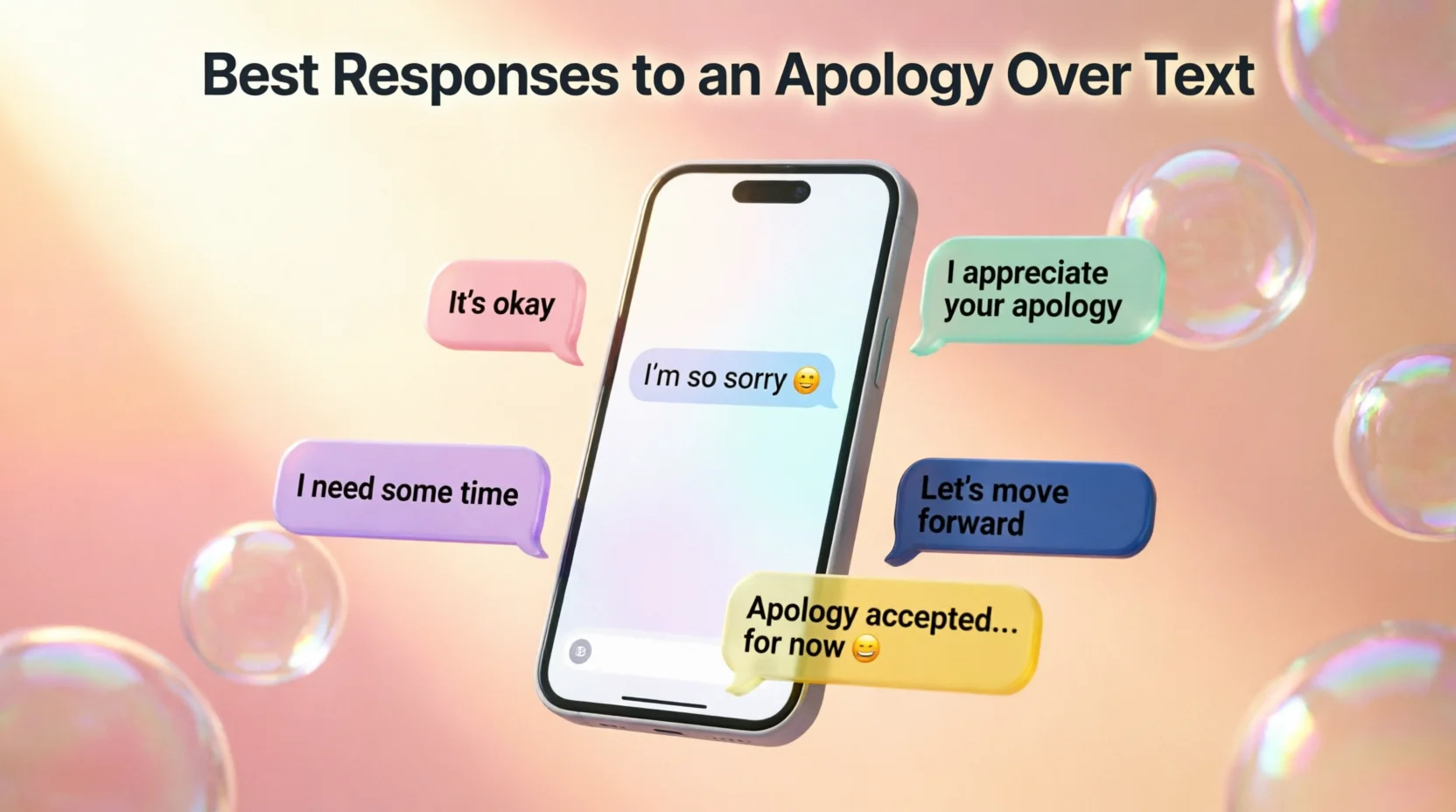
The best responses to an apology over text depend on how you feel and what happened. You can accept the apology warmly, keep things casual, set boundaries, or ask for more time before forgiving someone.
- “It’s okay, I appreciate you apologizing.”
- “Thank you for owning up to it.”
- “No worries, let’s move forward.”
- “I appreciate that, but I need some time.”
- “We’re good, just be more careful next time.”
Ever received an apology text and stared at your screen wondering what to say back? Maybe your best friend messed up, your partner hurt your feelings, a coworker made a mistake, or someone you like finally admitted they were wrong. Suddenly, replying to one simple message feels like a whole assignment.
Finding the best responses to an apology over text isn’t just about choosing the right words. It’s about expressing how you feel without sounding too cold, forgiving someone before you’re ready, or accidentally turning a small misunderstanding into a bigger problem. Sometimes, a simple “It’s okay” does the job. Other times, you need a thoughtful message that shows you’ve heard their apology but still need space.
Whether you want to sound sweet, funny, mature, confident, or slightly sarcastic, there’s a response for every situation. The key is to choose a reply that feels natural to you and matches what actually happened.
1. Polite Responses to an Apology
Polite replies work well when someone genuinely apologizes and you want to acknowledge their effort without making the situation awkward.
- “It’s okay, I appreciate you apologizing.”
Example: When a friend realizes they made a mistake and reaches out sincerely.
Meaning: You acknowledge their apology and show that you value their honesty. - “Thank you for saying that.”
Example: When someone takes responsibility for an uncomfortable misunderstanding.
Meaning: You appreciate their willingness to address the situation. - “No worries, these things happen.”
Example: When someone accidentally cancels plans or makes a minor mistake.
Meaning: You reassure them that the situation isn’t a major issue. - “I understand, and I appreciate the explanation.”
Example: When someone explains why they couldn’t follow through on a commitment.
Meaning: You show understanding without necessarily agreeing with everything they said. - “That’s alright, let’s move forward.”
Example: When you want to put a minor disagreement behind you.
Meaning: You signal that you’re ready to move on. - “I appreciate you clearing that up.”
Example: When someone apologizes for a confusing message or misunderstanding.
Meaning: You value their effort to resolve the confusion. - “It’s fine, thanks for letting me know.”
Example: When someone apologizes for being late with an update.
Meaning: You acknowledge their message in a calm and respectful way. - “I accept your apology.”
Example: When you genuinely feel ready to forgive someone.
Meaning: You clearly communicate that you’ve accepted their apology. - “Thank you for being honest with me.”
Example: When someone openly admits they were wrong.
Meaning: You encourage honesty and responsible communication. - “I appreciate your kindness in addressing this.”
Example: When a colleague apologizes for an awkward workplace interaction.
Meaning: You recognize their respectful approach. - “It’s alright, I know mistakes happen.”
Example: When someone makes an unintentional error.
Meaning: You show patience and recognize that nobody is perfect. - “Thanks for apologizing. We’re okay.”
Example: When a friend worries that a small disagreement has damaged your friendship.
Meaning: You reassure them that the relationship is still on good terms.
2. Funny Responses to an Apology
A little humor can ease tension when the mistake is minor and both people are comfortable joking about it.
- “Apology accepted. Your record has been updated.”
Example: When a close friend forgets a small favor and jokes about making it up to you.
Meaning: You accept the apology with a playful, mock-official tone. - “Okay, but I’m keeping the screenshots.”
Example: When your friend sends a funny apology after an embarrassing text.
Meaning: You playfully remind them that the incident won’t be forgotten easily. - “Fine, but you owe me a snack.”
Example: When someone cancels your casual hangout at the last minute.
Meaning: You lighten the mood by suggesting a harmless way to make it up to you. - “All right, case closed!”
Example: When a silly disagreement between friends has been resolved.
Meaning: You signal that the issue is settled in a humorous way. - “Accepted with a tiny side-eye.”
Example: When your friend makes a small mistake you can comfortably laugh about.
Meaning: You accept the apology while playfully showing mild disapproval. - “You’re lucky I have a forgiving personality.”
Example: When someone jokingly apologizes for stealing your fries.
Meaning: You make forgiveness sound like a playful personal favor. - “Okay, redemption arc starts now.”
Example: When a friend promises to do better after a harmless mishap.
Meaning: You jokingly frame their next actions as a chance to make things right. - “I’ll allow it this time.”
Example: When someone apologizes for being a few minutes late.
Meaning: You accept their apology with mock authority. - “Peace treaty officially signed.”
Example: When you and a friend finish a playful argument.
Meaning: You celebrate the end of the disagreement in a funny way. - “Apology received, drama postponed.”
Example: When a minor misunderstanding has finally been cleared up.
Meaning: You use humor to suggest that further conflict isn’t necessary. - “You’re forgiven, but the memes will continue.”
Example: When a friend gives you a funny reason for messing up.
Meaning: You accept the apology while keeping the interaction lighthearted. - “Okay, we’re back to being annoying together.”
Example: When your closest friend apologizes after a brief disagreement.
Meaning: You reassure them that your usual friendship dynamic is back.
3. Sweet Responses to an Apology
Sweet replies are ideal when someone matters to you and you want to make them feel heard, appreciated, and reassured.
- “It’s okay, we all make mistakes.”
Example: When someone you care about feels genuinely bad about a minor mistake.
Meaning: You offer reassurance and remind them that mistakes are part of being human. - “Thank you for caring enough to apologize.”
Example: When someone takes the time to repair a misunderstanding.
Meaning: You show appreciation for their concern about your feelings. - “I appreciate you, and we’re okay.”
Example: When a close friend worries about losing your trust over a small disagreement.
Meaning: You reassure them that the relationship still matters to you. - “It’s behind us, okay? Don’t be too hard on yourself.”
Example: When someone keeps feeling guilty after you’ve resolved the issue.
Meaning: You encourage them to stop dwelling on a mistake. - “Your apology means a lot to me.”
Example: When someone finally acknowledges something that hurt your feelings.
Meaning: You communicate that their effort to make things right matters. - “Thank you for understanding how I felt.”
Example: When someone recognizes the emotional impact of their actions.
Meaning: You appreciate their empathy and willingness to listen. - “We’re human, and I’m glad we can talk about things.”
Example: When you want to strengthen a friendship after a disagreement.
Meaning: You value open communication more than being right. - “I forgive you, and I hope we can grow from this.”
Example: When someone important to you sincerely apologizes for a mistake.
Meaning: You offer forgiveness while expressing hope for a healthier relationship. - “It’s okay, your honesty means a lot.”
Example: When someone admits their mistake instead of making excuses.
Meaning: You reinforce the importance of honesty and accountability. - “I’m glad we cleared the air.”
Example: When a misunderstanding has been weighing on both of you.
Meaning: You express relief that the tension has eased. - “Thank you for making things right.”
Example: When someone apologizes and takes steps to correct their mistake.
Meaning: You appreciate both their words and their effort. - “We can move forward together.”
Example: When a valued relationship has recovered from a disagreement.
Meaning: You express willingness to rebuild understanding and connection.
4. Emotional Responses to an Apology
When an apology touches a deeper issue, an honest emotional response can communicate what a quick “it’s fine” cannot.
- “Thank you. I really needed to hear that.”
Example: When someone finally acknowledges something that has been hurting you.
Meaning: You express relief that your feelings have been recognized. - “I appreciate your apology, but it did hurt me.”
Example: When you’re willing to accept an apology without pretending the incident was harmless.
Meaning: You acknowledge their effort while remaining honest about your pain. - “I’m glad you understand why I was upset.”
Example: When someone finally sees your perspective after a disagreement.
Meaning: You value their understanding more than simply ending the argument. - “That means more to me than you realize.”
Example: When someone takes responsibility for a meaningful mistake.
Meaning: You communicate the emotional importance of their apology. - “I want us to be okay, too.”
Example: When someone apologizes because they fear the relationship has changed.
Meaning: You express hope for reconciliation. - “I’ve been waiting for us to talk about this.”
Example: When an unresolved disagreement has been bothering you for a while.
Meaning: You show that the conversation was necessary for you. - “I’m grateful you’re willing to listen.”
Example: When someone apologizes and gives you room to explain your feelings.
Meaning: You appreciate their willingness to understand your side. - “It wasn’t easy for me, but I appreciate this.”
Example: When an apology addresses a situation that affected you deeply.
Meaning: You recognize the positive step without minimizing what happened. - “I hope we can learn from this.”
Example: When you want to repair a relationship and avoid repeating the same conflict.
Meaning: You focus on growth rather than blame. - “Thank you for acknowledging what happened.”
Example: When someone finally recognizes the impact of their behavior.
Meaning: You appreciate their willingness to face the situation honestly. - “I still have feelings about it, but I’m listening.”
Example: When you aren’t ready to forgive but want to hear the other person out.
Meaning: You keep communication open without hiding your emotions. - “I appreciate the apology, and I hope things get better between us.”
Example: When you want to repair a strained relationship gradually.
Meaning: You express cautious hope for a better connection.
5. Confident Responses to an Apology
Confident replies help you acknowledge an apology while making it clear that respect, accountability, and honesty matter.
- “I appreciate the apology. Let’s make sure it doesn’t happen again.”
Example: When someone repeats a mistake that has affected your plans.
Meaning: You accept their effort while emphasizing the importance of change. - “Thank you for taking responsibility.”
Example: When someone admits their part in a disagreement without blaming others.
Meaning: You recognize accountability as a positive step. - “I hear you, and I know what I need going forward.”
Example: When you have thought about what must change after a disagreement.
Meaning: You acknowledge the apology while staying clear about your expectations. - “I appreciate your words. Actions will matter, too.”
Example: When someone has apologized for a repeated issue.
Meaning: You explain that consistent behavior is necessary to rebuild trust. - “I’m willing to move forward if we both do better.”
Example: When both people contributed to a disagreement.
Meaning: You show openness to reconciliation and shared responsibility. - “Thank you. I also need my boundaries to be respected.”
Example: When someone apologizes after crossing a personal boundary.
Meaning: You make your expectations clear without being hostile. - “I accept that you’re sorry, and I’ll decide what comes next.”
Example: When you need time to consider how the apology affects your relationship.
Meaning: You maintain control over your own decision. - “I value accountability, so I appreciate this.”
Example: When someone admits a mistake at work or in a friendship.
Meaning: You reinforce the importance of taking responsibility. - “Let’s focus on making things better from here.”
Example: When you want a practical solution after a disagreement.
Meaning: You direct the conversation toward positive change. - “I appreciate the honesty. Let’s be clearer next time.”
Example: When poor communication caused unnecessary confusion.
Meaning: You encourage more effective communication in the future. - “I’m open to rebuilding trust, one step at a time.”
Example: When someone’s mistake has affected your confidence in them.
Meaning: You show willingness to rebuild the relationship without rushing. - “Thank you. I know what I deserve, and respect matters to me.”
Example: When you want to acknowledge an apology while reinforcing your standards.
Meaning: You express self-respect and the importance of mutual respect.
6. Casual and Chill Responses to an Apology
Keep things relaxed when the issue is small and you don’t want to turn the conversation into a serious discussion.
- “All good!”
Example: When a friend apologizes for replying late to a casual message.
Meaning: You let them know there’s no significant issue. - “No stress, we’re good.”
Example: When someone worries about a minor scheduling mistake.
Meaning: You reassure them that everything is fine. - “It’s cool, don’t worry about it.”
Example: When someone apologizes for an accidental inconvenience.
Meaning: You signal that you’re not holding a grudge. - “You’re fine, honestly.”
Example: When a friend repeatedly apologizes for something small.
Meaning: You help them relax and stop overthinking. - “No big deal!”
Example: When someone makes a harmless mistake during a conversation.
Meaning: You communicate that the situation isn’t serious. - “We’re good, let’s keep it moving.”
Example: When you want to end a minor disagreement and return to your plans.
Meaning: You show that you’re ready to move on. - “It’s all good on my end.”
Example: When a colleague apologizes for a small delay.
Meaning: You reassure them that you aren’t upset. - “Don’t sweat it.”
Example: When a friend feels bad about forgetting a minor detail.
Meaning: You encourage them not to worry excessively. - “No worries, happens to everyone.”
Example: When someone makes an ordinary, unintentional mistake.
Meaning: You normalize the situation and keep things friendly. - “We’re cool!”
Example: When someone wants to confirm that a minor misunderstanding is resolved.
Meaning: You tell them the relationship feels comfortable again. - “It’s fine, we’re past it.”
Example: When you’ve already moved on from a small disagreement.
Meaning: You make it clear that you don’t want to revisit the issue. - “Thanks for the apology. We’re okay.”
Example: When a friend needs simple reassurance after a minor mistake.
Meaning: You acknowledge their effort and offer a straightforward resolution.
7. Professional Responses to an Apology Over Text
Professional replies are useful for workplace chats, emails, team messages, and situations where you want to remain respectful and solution-focused.
- “Thank you for acknowledging the mistake.”
Example: When a colleague apologizes for an error in a shared document.
Meaning: You recognize their accountability professionally. - “I appreciate the clarification.”
Example: When a coworker apologizes for unclear instructions.
Meaning: You acknowledge their effort to resolve confusion. - “Thank you for letting me know. We can move forward.”
Example: When a team member apologizes for a minor delay.
Meaning: You accept the explanation and return attention to the work. - “I appreciate you addressing this promptly.”
Example: When a colleague responds quickly to a workplace concern.
Meaning: You value their timely communication. - “Thank you for taking responsibility. Let’s focus on the next steps.”
Example: When a project issue needs a practical solution.
Meaning: You acknowledge accountability and redirect attention to progress. - “I understand, and I appreciate your professionalism.”
Example: When someone handles a workplace misunderstanding respectfully.
Meaning: You recognize their constructive approach. - “Thank you for the update. Let’s ensure we’re aligned going forward.”
Example: When a missed communication affects a shared task.
Meaning: You encourage clearer coordination in the future. - “I appreciate your apology and your efforts to resolve this.”
Example: When a colleague corrects a mistake that affected your work.
Meaning: You acknowledge both their apology and their practical response. - “Thank you for clarifying the situation.”
Example: When a professional message was misunderstood.
Meaning: You recognize their attempt to establish a shared understanding. - “Understood. Let’s use this as an opportunity to improve the process.”
Example: When a preventable error reveals a workplace communication issue.
Meaning: You focus on learning and preventing future problems. - “I appreciate your response. Please keep me updated.”
Example: When a coworker apologizes for a delay that still requires follow-up.
Meaning: You remain courteous while communicating your need for updates. - “Thank you. I consider the matter addressed.”
Example: When a professional concern has been resolved appropriately.
Meaning: You formally communicate that you consider the issue settled.
8. Responses When You’re Still Hurt
You don’t have to pretend everything is fine just because someone apologized. These replies help you be honest without being unnecessarily harsh.
- “I appreciate your apology, but I’m still hurt.”
Example: When the incident affected you more deeply than the other person realizes.
Meaning: You acknowledge their apology while expressing your current feelings. - “Thank you, but I need time to process everything.”
Example: When you’re emotionally overwhelmed after a disagreement.
Meaning: You request space before deciding how to move forward. - “I’m glad you apologized, but things aren’t instantly okay.”
Example: When someone expects immediate forgiveness after hurting you.
Meaning: You explain that emotional recovery takes time. - “I hear your apology. I just need a little space.”
Example: When you aren’t ready to continue the conversation.
Meaning: You acknowledge their words while protecting your emotional comfort. - “I appreciate this, but I need to see some change.”
Example: When someone apologizes for a behavior that keeps happening.
Meaning: You explain that meaningful improvement matters. - “I’m not ready to say it’s okay yet.”
Example: When you want to be honest instead of offering forgiveness prematurely.
Meaning: You communicate that you need more time. - “Thank you for apologizing. What happened still matters to me.”
Example: When someone minimizes an incident that affected your trust.
Meaning: You recognize their apology without dismissing the impact. - “I want to move forward, but I can’t rush my feelings.”
Example: When you’re hopeful about repairing a relationship but still upset.
Meaning: You explain why healing needs to happen at your own pace. - “I’m listening, but I need you to understand my side, too.”
Example: When an apology doesn’t fully address your perspective.
Meaning: You invite a more balanced conversation. - “I appreciate your words, but I’m still working through it.”
Example: When you’re processing a difficult misunderstanding.
Meaning: You communicate that your feelings haven’t fully settled. - “I’m willing to talk, just not before I’m ready.”
Example: When someone wants to resolve the issue immediately.
Meaning: You set a reasonable boundary around the timing of the conversation. - “Thank you. I hope we can work through this honestly.”
Example: When you want to repair the relationship without ignoring the problem.
Meaning: You express hope while emphasizing honest communication.
9. Sarcastic Responses to an Apology
Sarcasm can work between people who understand each other’s humor. Keep it gentle when the situation is sensitive, and avoid it when someone is making a sincere effort to repair serious harm.
- “Well, look who discovered the word sorry.”
Example: When a close friend finally apologizes for a harmless, repeated habit.
Meaning: You tease them about taking a while to apologize. - “An apology? What a plot twist.”
Example: When someone unexpectedly admits they were wrong during a playful disagreement.
Meaning: You express mock surprise at their change of approach. - “I’ll alert the history books.”
Example: When a friend jokes about rarely admitting mistakes.
Meaning: You exaggerate the moment for humorous effect. - “Character development looks good on you.”
Example: When someone finally owns up to a small mistake.
Meaning: You playfully recognize their improved accountability. - “Noted. Growth has entered the chat.”
Example: When a friend admits they handled a minor situation poorly.
Meaning: You use internet-style humor to acknowledge their progress. - “Should I frame this apology?”
Example: When a friend unexpectedly apologizes after a silly argument.
Meaning: You tease them about the unusual occasion. - “Well, that’s a refreshing surprise.”
Example: When someone admits they misunderstood a casual conversation.
Meaning: You express playful surprise while acknowledging the apology. - “Look at us communicating like adults.”
Example: When you and a friend resolve a minor disagreement calmly.
Meaning: You celebrate the improved communication with light sarcasm. - “The apology department is officially open.”
Example: When someone finally sends a playful apology after a small mishap.
Meaning: You turn the apology into a mock business announcement. - “I’ll pretend I didn’t see that coming.”
Example: When a friend apologizes after an obvious, harmless mistake.
Meaning: You gently tease them about the predictable situation. - “A rare moment of accountability.”
Example: When a friend who enjoys debating admits a minor mistake.
Meaning: You humorously point out their willingness to take responsibility. - “Okay, that was unexpectedly mature.”
Example: When someone handles a small disagreement better than expected.
Meaning: You acknowledge their behavior with a playful compliment.
10. Cute Responses to an Apology
Cute replies add warmth to everyday conversations, especially when the other person feels nervous about upsetting you.
- “It’s okay, we’re still good.”
Example: When a friend worries that a small mistake has changed your friendship.
Meaning: You offer gentle reassurance. - “Apology accepted, little human.”
Example: When a close friend makes a harmless mistake and enjoys playful teasing.
Meaning: You accept the apology affectionately. - “Aww, thank you for saying sorry.”
Example: When someone sends a thoughtful apology after a misunderstanding.
Meaning: You appreciate their effort in a warm, affectionate way. - “It’s okay, let’s start fresh.”
Example: When you want to leave a minor disagreement behind.
Meaning: You suggest a positive new beginning. - “You’re forgiven, just give me a smile.”
Example: When a friend feels awkward after a small disagreement.
Meaning: You invite them to relax and reconnect. - “No hard feelings, promise.”
Example: When someone needs reassurance that you’re no longer upset.
Meaning: You clearly communicate that you’re not holding a grudge. - “Thank you for being sweet enough to apologize.”
Example: When someone makes an effort to repair a small misunderstanding.
Meaning: You appreciate their thoughtfulness. - “Okay, sending peaceful vibes your way.”
Example: When you want to end a lighthearted disagreement on a positive note.
Meaning: You communicate friendliness and goodwill. - “We’re okay, so stop worrying now.”
Example: When a friend keeps apologizing after you’ve accepted it.
Meaning: You gently reassure them that the issue is resolved. - “That’s all right, sunshine.”
Example: When you use affectionate nicknames with a close friend or partner.
Meaning: You soften the moment with warmth and familiarity. - “Thank you for making my heart feel heard.”
Example: When someone sincerely recognizes your feelings after a disagreement.
Meaning: You express appreciation for their emotional understanding. - “A fresh start sounds lovely.”
Example: When both people are ready to put a misunderstanding behind them.
Meaning: You show enthusiasm for rebuilding a positive connection.
11. Flirty Responses to an Apology
Flirty replies can keep the conversation playful when the apology comes from someone you like and the situation is genuinely minor.
- “Hmm, I might forgive you if you keep being this sweet.”
Example: When your crush apologizes for a harmless texting mistake.
Meaning: You show playful interest while accepting their apology. - “Apology accepted, cutie.”
Example: When someone you’re flirting with apologizes for a minor misunderstanding.
Meaning: You combine forgiveness with an affectionate compliment. - “You’re lucky you’re charming.”
Example: When a crush apologizes for a small, harmless mistake.
Meaning: You tease them while keeping the conversation light. - “Okay, but you owe me some quality conversation.”
Example: When someone you’re interested in disappears from a casual chat.
Meaning: You playfully invite them to reconnect. - “Fine, I’ll let you redeem yourself.”
Example: When someone you like apologizes for forgetting a small detail.
Meaning: You offer a playful chance to make things right. - “That apology was actually kind of adorable.”
Example: When your crush sends a thoughtful message after a misunderstanding.
Meaning: You let them know you find their sincerity endearing. - “I appreciate the apology, smooth talker.”
Example: When someone you’re flirting with tries to charm their way through a minor mistake.
Meaning: You acknowledge the apology with affectionate teasing. - “Okay, we’re good. Keep that cute energy.”
Example: When someone you’re interested in makes a genuine effort to reconnect.
Meaning: You encourage the friendly, playful mood between you. - “You make apologizing look pretty sweet.”
Example: When a crush takes responsibility without getting defensive.
Meaning: You express appreciation while adding a subtle flirtatious touch. - “I forgive you, but I expect extra charm now.”
Example: When you and someone you like already joke around comfortably.
Meaning: You turn a small mistake into a playful opportunity to flirt. - “Well, now you’ve got my attention again.”
Example: When someone you like sends a thoughtful apology after a minor misunderstanding.
Meaning: You signal renewed interest in the conversation. - “We’re good. Now tell me something interesting.”
Example: When you want to move past a small issue and continue chatting with your crush.
Meaning: You keep things light and encourage the conversation to continue.
12. Short Responses to an Apology Over Text
Sometimes, a quick reply is all you need. These short messages are easy to send without overexplaining your feelings.
- “It’s okay.”
Example: When someone apologizes for a small inconvenience.
Meaning: You communicate simple acceptance. - “I appreciate it.”
Example: When someone makes an effort to apologize sincerely.
Meaning: You acknowledge their effort without adding unnecessary detail. - “We’re good.”
Example: When a friend wants to know whether the issue is resolved.
Meaning: You reassure them that you’re comfortable moving forward. - “Thanks for apologizing.”
Example: When you want to acknowledge their message directly.
Meaning: You recognize their willingness to say sorry. - “No worries.”
Example: When someone apologizes for a minor delay.
Meaning: You show that the situation isn’t bothering you. - “I understand.”
Example: When someone explains what led to their mistake.
Meaning: You acknowledge their explanation without making a broader promise. - “All forgiven.”
Example: When you genuinely feel ready to let go of a small issue.
Meaning: You communicate that you’ve moved past the incident. - “Thank you, truly.”
Example: When someone’s apology feels meaningful to you.
Meaning: You express sincere appreciation. - “It’s all good.”
Example: When you want a relaxed response to a minor misunderstanding.
Meaning: You signal that the situation is settled. - “I hear you.”
Example: When someone apologizes and you want to acknowledge their words.
Meaning: You show that you’ve listened without promising forgiveness. - “Let’s move on.”
Example: When a disagreement has been resolved and you want to leave it behind.
Meaning: You express readiness to focus on what comes next. - “Thank you for owning it.”
Example: When someone accepts responsibility for their mistake.
Meaning: You appreciate their honesty and accountability.
13. Responses When You Don’t Want to Forgive Yet
Accepting an apology and forgiving someone are not always the same thing. These replies let you respond respectfully without making a decision before you’re ready.
- “I appreciate your apology, but I’m not ready to forgive yet.”
Example: When you need more time after a painful disagreement.
Meaning: You acknowledge the apology while being honest about your readiness. - “Thank you for saying sorry. I need some time.”
Example: When you feel overwhelmed by the situation.
Meaning: You request space without rejecting future communication. - “I hear you, but trust takes time to rebuild.”
Example: When someone’s actions have damaged your confidence in them.
Meaning: You explain that trust cannot be restored through words alone. - “I’m not ignoring your apology; I’m processing it.”
Example: When someone expects an immediate response to a serious apology.
Meaning: You clarify that you need time to think. - “I appreciate the effort, but I need to see consistency.”
Example: When someone has apologized for a recurring issue.
Meaning: You emphasize the importance of sustained change. - “I’m willing to hear you out, but I’m still upset.”
Example: When you want to understand their perspective without pretending you’re fine.
Meaning: You remain open to discussion while expressing your feelings. - “I need more than an apology to feel comfortable again.”
Example: When the incident has affected your sense of trust or security.
Meaning: You communicate that repair requires more than words. - “I’m not sure how I feel about everything yet.”
Example: When you’re uncertain whether the relationship can return to normal.
Meaning: You give yourself permission to make a decision later. - “Thank you, but I don’t want to rush this.”
Example: When someone pushes for an immediate resolution.
Meaning: You set a reasonable pace for working through the issue. - “I need to understand what will change going forward.”
Example: When you’re concerned that the same problem could happen again.
Meaning: You ask for clarity about future behavior. - “I appreciate your honesty, but my feelings are still valid.”
Example: When someone apologizes but seems to expect you to stop feeling hurt.
Meaning: You affirm that an apology doesn’t erase your emotional experience. - “I’m taking this one step at a time.”
Example: When you want to leave room for future reconciliation without committing now.
Meaning: You allow yourself time and space to decide what comes next.
14. Clever and Thoughtful Responses to an Apology
These replies show emotional awareness and encourage meaningful communication without making the exchange unnecessarily heavy.
- “An apology is a good start.”
Example: When someone admits a mistake and you want to encourage further effort.
Meaning: You recognize the apology while leaving room for improvement. - “I appreciate honesty more than excuses.”
Example: When someone finally accepts responsibility for a misunderstanding.
Meaning: You communicate that accountability matters to you. - “We can’t change what happened, but we can learn from it.”
Example: When both people want to move beyond an unfortunate disagreement.
Meaning: You encourage reflection and positive change. - “Thank you for choosing understanding over defensiveness.”
Example: When someone listens to your concerns instead of arguing back.
Meaning: You appreciate their willingness to communicate constructively. - “Growth begins when we can admit we’re wrong.”
Example: When someone sincerely recognizes their mistake.
Meaning: You emphasize personal development and accountability. - “I value the apology, and I value what happens next.”
Example: When the issue requires practical follow-through.
Meaning: You recognize their words while highlighting future actions. - “We don’t have to agree on everything to understand each other.”
Example: When a disagreement comes from different perspectives.
Meaning: You encourage mutual respect even when opinions differ. - “Thank you for helping us clear the misunderstanding.”
Example: When someone takes the initiative to resolve confusing communication.
Meaning: You appreciate their contribution to a clearer relationship. - “The willingness to make things right matters.”
Example: When someone takes responsibility and tries to repair a mistake.
Meaning: You recognize the importance of sincere effort. - “Let’s take the lesson without carrying the resentment.”
Example: When you’re ready to move forward after a minor conflict.
Meaning: You encourage learning from the experience instead of holding onto bitterness. - “I appreciate the apology. Let’s communicate better next time.”
Example: When poor communication created unnecessary tension.
Meaning: You turn the experience into an opportunity to improve. - “Understanding each other is more valuable than winning an argument.”
Example: When a disagreement has become more about being right than solving the problem.
Meaning: You prioritize mutual understanding over competition.
15. Responses When Someone Apologizes but Repeats the Mistake
When an apology becomes a pattern without meaningful change, your reply can be direct, respectful, and firm.
- “I appreciate the apology, but we’ve discussed this before.”
Example: When someone apologizes for repeating an issue you’ve already addressed.
Meaning: You point out that the problem needs more than another apology. - “I need actions to match your words.”
Example: When someone repeatedly promises to change but doesn’t follow through.
Meaning: You emphasize consistency between promises and behavior. - “Thank you, but I don’t want to keep having the same conversation.”
Example: When recurring disagreements are becoming exhausting.
Meaning: You express a need for a lasting solution. - “An apology matters, but so does accountability.”
Example: When someone says sorry without taking steps to fix the issue.
Meaning: You clarify that responsibility includes meaningful follow-through. - “I hear your apology. What will be different this time?”
Example: When someone promises not to repeat a familiar mistake.
Meaning: You invite them to explain how they plan to change. - “I can’t keep pretending this doesn’t affect me.”
Example: When repeated behavior has begun affecting your well-being.
Meaning: You honestly communicate the impact of the ongoing issue. - “I need consistency, not just promises.”
Example: When someone’s behavior has repeatedly contradicted their words.
Meaning: You make clear that dependable actions are essential. - “I’m open to change, but I won’t ignore the pattern.”
Example: When you want to give someone a chance without overlooking repeated problems.
Meaning: You remain open-minded while recognizing what has happened before. - “Let’s talk about how to prevent this from happening again.”
Example: When you want a practical solution to a recurring disagreement.
Meaning: You encourage problem-solving instead of repeating apologies. - “I appreciate that you’re sorry, but I also need to feel respected.”
Example: When repeated behavior makes you feel that your concerns aren’t being considered.
Meaning: You connect accountability with the need for mutual respect. - “I don’t want another promise; I want lasting improvement.”
Example: When you’ve heard similar promises several times.
Meaning: You clearly state that meaningful change matters more than reassurance. - “I hope things improve, but I need to protect my peace, too.”
Example: When you’re deciding how to handle a recurring issue in a relationship.
Meaning: You express hope while recognizing your own emotional boundaries.
FAQs About Responding to an Apology Over Text
What does an apology over text mean?
It means someone is expressing regret for something they said or did through a text message.
What is the best response to an apology over text?
“Thank you for apologizing. I appreciate it” works well when you want a polite, balanced response.
How do you respond to an apology from someone you love?
Acknowledge their feelings honestly and choose words that reflect whether you’re ready to forgive.
What does it mean when someone apologizes over text?
They may want to acknowledge a mistake, repair the relationship, or explain that they feel sorry.
How do you reply to an apology from your crush?
Keep it warm and natural with a reply like, “It’s okay, I appreciate you saying that.”
How do you respond professionally to an apology?
Say, “Thank you for acknowledging the issue. Let’s focus on the next steps.”
What should you say if you don’t actually forgive them?
Try, “I appreciate your apology, but I need more time to process what happened.”
Is it okay to respond to an apology with humor?
Yes, if the mistake is minor and both people are comfortable joking about the situation.
Should you always accept an apology?
No. You can acknowledge someone’s apology without forgiving them or continuing the relationship.
How do you respond when someone keeps apologizing?
If you’ve forgiven them, offer reassurance. If the issue continues, explain what needs to change.
What if someone apologizes but repeats the same mistake?
Explain that you need consistent actions, not repeated apologies, to rebuild trust.
Is saying “It’s okay” a good response to an apology?
Yes, when you genuinely feel okay about what happened. Otherwise, choose a more honest response.
Conclusion
The best responses to an apology over text aren’t always the funniest, sweetest, or most perfectly worded. They’re the ones that reflect how you genuinely feel. Whether you’re accepting an apology from a friend, replying to your crush, handling a workplace misunderstanding, or setting boundaries with someone close to you, honesty matters more than finding a flawless line.
You can be kind without rushing forgiveness, confident without being harsh, and funny without dismissing someone’s feelings. Choose a response that fits the situation, and remember that a sincere apology is a starting point for better communication.
Save this list for those moments when the right words refuse to appear, share your favorite reply with a friend, and keep communicating with confidence.