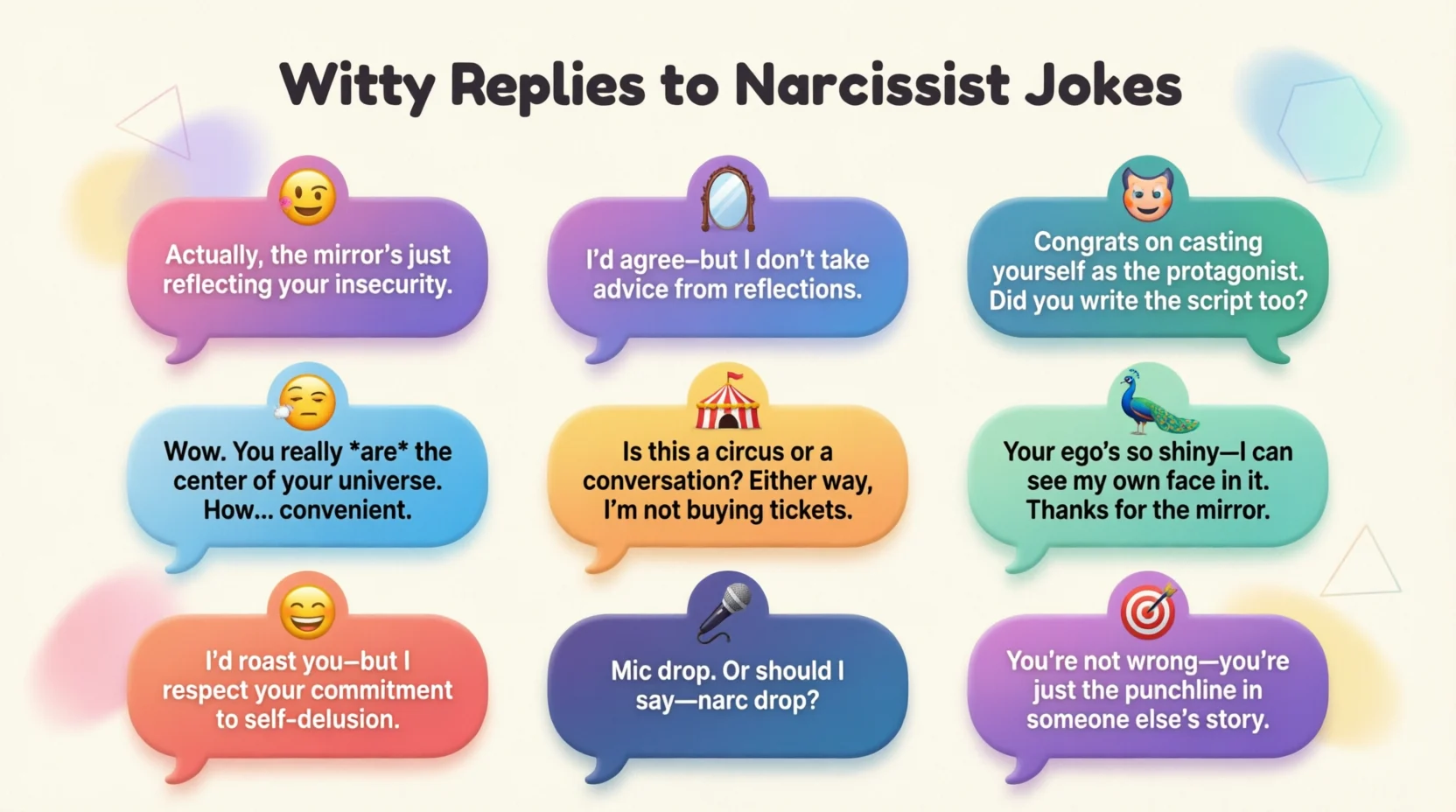
The best responses to narcissist personality jokes keep things witty without turning the moment into unnecessary drama. Try replies like “That ego deserves its own Wi-Fi,” “Confidence called, it wants a refund,” “That joke came with a mirror,” or “I’ll let your ego handle that one.”
Ever get hit with a narcissist personality joke and suddenly your brain forgets every clever response you have ever known? Whether it happens in a group chat, a DM, at work, between friends, or during playful flirting, the right comeback can completely change the mood.
Some jokes are genuinely funny, while others are little digs wrapped in humor. That is why having a few best responses to narcissist personality jokes ready can help you stay confident without making the situation unnecessarily awkward. You can answer with humor, sarcasm, politeness, confidence, or a perfectly timed one-liner.
The goal is not always to win the exchange. Sometimes the best reply is the one that makes everyone laugh while showing that you are completely unbothered. Pick your mood, choose your line, and let your personality do the rest.
Funny Responses
- “Your ego just entered the group chat.”
Use this when someone makes an exaggerated joke about themselves.
Meaning: It playfully calls attention to their oversized confidence. - “Should we get your ego a microphone?”
Use this when someone keeps making themselves the center of attention.
Meaning: It turns their self-importance into a light joke. - “That confidence has its own fan club.”
Use this when someone is clearly impressed with themselves.
Meaning: It humorously exaggerates their level of self-admiration. - “Mirror selfies must be exhausting around here.”
Use this when the joke involves someone admiring themselves.
Meaning: It teasingly suggests they spend plenty of time checking themselves out. - “Your confidence really clocks in overtime.”
Use this when someone keeps praising themselves.
Meaning: It jokes that their confidence never seems to take a break. - “Someone tell the ego it already won.”
Use this when the person is acting unusually proud.
Meaning: It playfully tells them to relax because they have made their point. - “That ego deserves its own Wi-Fi.”
Use this when their personality seems to take up the whole room.
Meaning: It humorously suggests their ego has become a separate presence. - “The confidence is loud today.”
Use this when someone is being especially self-assured.
Meaning: It lightly pokes fun at their noticeable confidence. - “Okay, main character, we see you.”
Use this when someone makes everything about themselves.
Meaning: It jokingly compares their behavior to main-character energy. - “Your self-esteem just broke the sound barrier.”
Use this when their confidence seems dramatically high.
Meaning: It exaggerates their confidence for comedic effect. - “That joke came with a mirror.”
Use this when their joke seems focused on themselves.
Meaning: It suggests they somehow made themselves the subject again. - “The spotlight seems permanently booked.”
Use this when someone keeps grabbing attention.
Meaning: It humorously points out their desire to stay noticed.
Sarcastic Responses
- “Oh, the humility is breathtaking.”
Use this when someone makes a very self-centered joke.
Meaning: It sarcastically suggests they are being extremely humble. - “Please, tell us more about you.”
Use this when someone keeps bringing the conversation back to themselves.
Meaning: It uses exaggerated interest to tease their self-focus. - “Naturally, it’s all about you.”
Use this when they make themselves the subject again.
Meaning: It sarcastically highlights their self-centered attitude. - “We were worried the spotlight might miss you.”
Use this when they seem eager for attention.
Meaning: It jokingly suggests they always need the spotlight. - “Your confidence has entered its deluxe edition.”
Use this when someone is unusually proud of themselves.
Meaning: It playfully exaggerates their confidence. - “What would the world do without your opinion?”
Use this when someone offers unsolicited commentary.
Meaning: It sarcastically questions their assumption that everyone needs their input. - “Good thing your ego has backup batteries.”
Use this when someone keeps hyping themselves up.
Meaning: It jokes that their confidence seems impossible to exhaust. - “I see the modesty is taking the day off.”
Use this when someone is bragging playfully.
Meaning: It lightly teases their lack of modesty. - “Your mirror must be your biggest supporter.”
Use this when someone is admiring themselves.
Meaning: It jokingly suggests their reflection always agrees with them. - “That was almost humble. Almost.”
Use this when someone makes a self-congratulatory comment.
Meaning: It playfully points out that their statement was far from modest. - “Confidence noted. Volume also noted.”
Use this when their self-assurance is especially obvious.
Meaning: It acknowledges their confidence while teasing its intensity. - “And the award for self-promotion goes to…”
Use this when someone keeps praising themselves.
Meaning: It turns their bragging into a pretend award ceremony.
Brutal Responses
- “Your ego got there before you did.”
Use this when their confidence feels bigger than their presence.
Meaning: It delivers a sharp joke about their oversized ego. - “Confidence is great. Self-awareness is better.”
Use this when their joke crosses into obvious self-importance.
Meaning: It reminds them that confidence works best with self-awareness. - “That ego needs a reality check.”
Use this when their self-praise becomes excessive.
Meaning: It suggests they may be overestimating themselves. - “The mirror is clearly giving you dangerous levels of encouragement.”
Use this when they seem overly impressed with themselves.
Meaning: It humorously blames their reflection for their confidence. - “You really know how to make every topic about yourself.”
Use this when they repeatedly redirect attention to themselves.
Meaning: It directly points out their self-centered behavior. - “Your confidence is doing most of the talking.”
Use this when their words sound overly self-assured.
Meaning: It suggests their confidence may be louder than their substance. - “That ego has a bigger personality than the room.”
Use this when they dominate the conversation.
Meaning: It jokes that their ego is overpowering everyone else. - “You brought confidence. We were hoping for perspective.”
Use this when their joke feels overly self-focused.
Meaning: It contrasts confidence with the missing quality of perspective. - “Your self-praise deserves a standing ovation.”
Use this when someone praises themselves repeatedly.
Meaning: It turns their bragging into exaggerated applause. - “You never miss a chance to admire yourself.”
Use this when their comments repeatedly return to themselves.
Meaning: It points out their noticeable self-focus. - “That ego has excellent PR.”
Use this when they consistently make themselves sound impressive.
Meaning: It jokes that their ego is unusually good at marketing itself. - “At least your confidence never needs an introduction.”
Use this when their personality announces itself loudly.
Meaning: It humorously suggests their confidence is impossible to overlook.
Flirty Responses
- “Careful, that confidence is almost attractive.”
Use this when playful teasing has a flirty vibe.
Meaning: It turns their confidence into a light compliment. - “Okay, confidence looks good on you.”
Use this when you genuinely like their self-assured energy.
Meaning: It combines teasing with subtle attraction. - “You flirt with yourself better than anyone.”
Use this when someone is clearly impressed with themselves.
Meaning: It playfully teases their self-admiration. - “Your ego is competing with your charm.”
Use this when someone is both confident and charming.
Meaning: It suggests their ego and personality are battling for attention. - “I might forgive the ego if the charm keeps up.”
Use this when you want playful flirtation.
Meaning: It teasingly says their charm makes the attitude tolerable. - “That confidence is making this conversation interesting.”
Use this when their boldness catches your attention.
Meaning: It shows interest without taking the joke too seriously. - “Big confidence, huh? I respect the commitment.”
Use this when someone confidently jokes about themselves.
Meaning: It playfully admires their bold personality. - “Your ego has competition. I’m here too.”
Use this when you want a cheeky comeback.
Meaning: It jokingly suggests you deserve some attention too. - “I see why you like yourself.”
Use this when their confidence is charming rather than annoying.
Meaning: It turns the narcissism joke into a playful compliment. - “That attitude almost makes you impossible to ignore.”
Use this when someone has strong confident energy.
Meaning: It hints that their personality has caught your attention. - “Keep talking like that and I might start believing you.”
Use this when their self-confidence is entertaining.
Meaning: It playfully encourages their boldness. - “Confidence noted. Charm still under review.”
Use this when you want teasing flirtation.
Meaning: It keeps the interaction playful while pretending to evaluate them.
Polite Responses
- “Confidence is definitely one way to look at it.”
Use this when you want to respond without encouraging the joke too much.
Meaning: It acknowledges their comment without strongly agreeing. - “I’ll give you points for confidence.”
Use this when you want a friendly response.
Meaning: It recognizes their self-assurance in a light way. - “That’s certainly a confident perspective.”
Use this when the comment feels exaggerated.
Meaning: It politely signals that you noticed their confidence. - “You seem pretty sure of yourself.”
Use this when you want a neutral response.
Meaning: It observes their confidence without judging it. - “Fair enough, everyone has their style.”
Use this when you prefer not to argue.
Meaning: It calmly accepts that people communicate differently. - “I can appreciate the confidence.”
Use this when the joke is harmless.
Meaning: It gives a positive response without overdoing it. - “That’s one interpretation.”
Use this when you disagree but want to stay composed.
Meaning: It politely leaves room for different opinions. - “I’ll let you enjoy that one.”
Use this when you want to keep the interaction friendly.
Meaning: It lightly steps back from the joke. - “You definitely have confidence.”
Use this when you want a simple response.
Meaning: It acknowledges their self-assurance without adding criticism. - “I see where you’re coming from.”
Use this when you want to avoid unnecessary tension.
Meaning: It shows that you heard their perspective. - “That certainly made me smile.”
Use this when the joke is genuinely amusing.
Meaning: It responds warmly without analyzing the joke. - “I’ll take that as your sense of humor.”
Use this when the comment is teasing but harmless.
Meaning: It keeps the exchange friendly and relaxed.
Professional Responses
- “Let’s keep the confidence and focus on the work.”
Use this when a workplace joke distracts from the task.
Meaning: It redirects the conversation professionally. - “Confidence is useful when it comes with teamwork.”
Use this when someone dominates a professional discussion.
Meaning: It emphasizes collaboration alongside confidence. - “Let’s focus on the outcome rather than personalities.”
Use this when a joke is becoming personal at work.
Meaning: It shifts attention toward productive goals. - “I appreciate confidence, but collaboration matters too.”
Use this during a team discussion.
Meaning: It balances self-assurance with cooperation. - “Let’s keep personal jokes out of the work discussion.”
Use this when the humor becomes uncomfortable.
Meaning: It establishes a clear professional boundary. - “We can joke about it after we finish the task.”
Use this when humor is interrupting productivity.
Meaning: It keeps the mood light while setting priorities. - “Let’s stick to the facts for now.”
Use this when someone turns a work issue into a personality joke.
Meaning: It redirects the conversation toward useful information. - “Confidence aside, what’s the best solution?”
Use this when a colleague is overly focused on being right.
Meaning: It brings the discussion back to problem-solving. - “Let’s make sure everyone gets a voice.”
Use this when one person dominates the conversation.
Meaning: It encourages balanced participation. - “A little humor is fine, but let’s stay productive.”
Use this when the atmosphere needs a gentle reset.
Meaning: It allows humor while reinforcing professionalism. - “Let’s separate the joke from the actual discussion.”
Use this when teasing starts affecting a work conversation.
Meaning: It keeps personality jokes from distracting the team. - “We can keep this constructive.”
Use this when a comment starts becoming personal.
Meaning: It calmly encourages respectful communication.
Creative Responses
- “Your ego just submitted a résumé.”
Use this when someone is listing their best qualities.
Meaning: It turns their self-praise into a creative job application joke. - “Breaking news: confidence has officially gone viral.”
Use this when someone is being unusually self-assured.
Meaning: It humorously treats their confidence like trending news. - “Plot twist: the mirror agrees with you.”
Use this when someone makes a bold claim about themselves.
Meaning: It jokes that their reflection is always on their side. - “Your ego just unlocked premium membership.”
Use this when someone is especially self-confident.
Meaning: It exaggerates their confidence as an upgraded subscription. - “The confidence department is clearly fully staffed.”
Use this when someone never seems short on self-belief.
Meaning: It humorously suggests they have endless confidence. - “Your personality just got a cinematic universe.”
Use this when someone makes everything about themselves.
Meaning: It playfully exaggerates their importance. - “Somewhere, a mirror just felt validated.”
Use this when someone compliments themselves.
Meaning: It turns their self-admiration into a playful image. - “Your ego has excellent content strategy.”
Use this when someone constantly promotes themselves.
Meaning: It jokes that their ego knows how to stay visible. - “That confidence deserves its own headline.”
Use this when someone makes a bold statement.
Meaning: It humorously treats their confidence as major news. - “Your ego just got a verified badge.”
Use this when someone acts especially important.
Meaning: It uses social-media language to tease their self-importance. - “I see the self-branding campaign is going strong.”
Use this when someone repeatedly promotes themselves.
Meaning: It compares their self-praise to a marketing campaign. - “The spotlight has officially found its favorite.”
Use this when someone keeps attracting attention.
Meaning: It creatively jokes about their need for attention.
Cute Responses
- “Aww, someone really likes themselves.”
Use this when teasing someone affectionately.
Meaning: It makes the narcissism joke sound playful rather than harsh. - “Your confidence is kind of adorable.”
Use this when their boldness feels charming.
Meaning: It turns their self-assurance into a sweet compliment. - “Okay, little superstar.”
Use this when someone is proudly showing off.
Meaning: It affectionately teases their desire for attention. - “Look at you hyping yourself up.”
Use this when someone compliments themselves.
Meaning: It playfully acknowledges their self-confidence. - “Someone woke up feeling important.”
Use this when they are being unusually confident.
Meaning: It lightly teases their elevated mood. - “Your confidence is having a cute little moment.”
Use this when their confidence is entertaining.
Meaning: It keeps the teasing warm and friendly. - “Okay, superstar, we noticed.”
Use this when someone is seeking attention.
Meaning: It playfully confirms that their performance was noticed. - “You really are your own biggest fan.”
Use this when they praise themselves.
Meaning: It affectionately teases their self-supporting attitude. - “Confidence looks cozy on you.”
Use this when someone seems comfortable being themselves.
Meaning: It gives their confidence a warm, positive spin. - “A little self-love never hurt anyone.”
Use this when the joke is harmless.
Meaning: It frames their confidence as positive self-appreciation. - “Keep shining, superstar.”
Use this when you want to respond positively.
Meaning: It encourages confidence while keeping the tone playful. - “Okay, we love the confidence.”
Use this when you genuinely enjoy their bold energy.
Meaning: It responds with cheerful approval.
Dramatic Responses
- “The ego has entered the building.”
Use this when someone suddenly becomes extremely confident.
Meaning: It dramatically announces their larger-than-life attitude. - “Honered Guests, confidence has arrived.”
Use this when someone starts praising themselves.
Meaning: It turns their entrance into a playful announcement. - “Someone alert the historians.”
Use this when someone makes an exaggerated claim about themselves.
Meaning: It jokingly treats their statement like a historic event. - “The spotlight has chosen its champion.”
Use this when someone wants all the attention.
Meaning: It dramatically exaggerates their need for recognition. - “The ego has spoken. We may all go home now.”
Use this when someone acts like their opinion settles everything.
Meaning: It jokes that their confidence has ended the discussion. - “And thus begins another chapter in the legend of you.”
Use this when someone tells another self-focused story.
Meaning: It playfully exaggerates their sense of importance. - “Cue the inspirational music.”
Use this when someone gives themselves a heroic compliment.
Meaning: It mocks the dramatic tone in a playful way. - “The confidence level has reached cinematic proportions.”
Use this when their self-assurance feels exaggerated.
Meaning: It compares their confidence to an over-the-top movie scene. - “Someone roll the credits.”
Use this when they have made themselves the star of the moment.
Meaning: It jokes that their personal performance is complete. - “The main character has delivered another speech.”
Use this when they give a long self-focused explanation.
Meaning: It humorously frames them as the star of a fictional story. - “This deserves a documentary.”
Use this when someone tells an exaggerated story about themselves.
Meaning: It playfully exaggerates how important they think the story is. - “History may never recover from that confidence.”
Use this when someone makes a bold self-assessment.
Meaning: It dramatically exaggerates their confidence for humor.
Chill And Casual Responses
- “Haha, okay, I hear you.”
Use this when you want a relaxed response.
Meaning: It acknowledges the joke without taking it seriously. - “Okay, confidence.”
Use this when someone is being proudly self-assured.
Meaning: It casually teases their confidence. - “You do you.”
Use this when you do not want to debate the joke.
Meaning: It gives them space to enjoy their own personality. - “Fair enough, honestly.”
Use this when the joke is harmless.
Meaning: It accepts their comment without making a big deal out of it. - “Haha, whatever helps you sleep.”
Use this when teasing a friend lightly.
Meaning: It playfully suggests they are convincing themselves. - “Okay, we get it, you’re confident.”
Use this when they keep hyping themselves.
Meaning: It casually points out their repeated self-praise. - “Noted.”
Use this when you want a short, understated comeback.
Meaning: It acknowledges the comment without giving it much attention. - “I’ll allow it.”
Use this when you want playful approval.
Meaning: It jokingly positions you as the judge of their confidence. - “That’s definitely a take.”
Use this when you find their statement amusing.
Meaning: It lightly signals that their opinion is interesting or exaggerated. - “You’ve got jokes today.”
Use this when their teasing is entertaining.
Meaning: It keeps the exchange friendly and casual. - “Okay, I see the energy.”
Use this when someone is especially confident.
Meaning: It acknowledges their mood without judging it. - “Haha, I respect the confidence.”
Use this when you want a positive casual reply.
Meaning: It appreciates their boldness while keeping things light.
Confident Responses
- “Confidence is great. I have plenty too.”
Use this when someone jokes about being more important than you.
Meaning: It shows that their confidence does not intimidate you. - “You can have the spotlight. I know my worth.”
Use this when someone seeks attention.
Meaning: It communicates self-respect without competing for attention. - “I’m not impressed by ego, but confidence is welcome.”
Use this when you want a composed comeback.
Meaning: It distinguishes healthy confidence from excessive self-importance. - “You do your thing. I’ll do mine.”
Use this when you want to avoid an unnecessary power struggle.
Meaning: It shows independence and emotional composure. - “I’m comfortable enough not to compete.”
Use this when someone tries to turn the joke into a competition.
Meaning: It shows confidence without needing to prove anything. - “Your opinion of yourself is noted.”
Use this when someone strongly praises themselves.
Meaning: It calmly acknowledges their self-image without validating it. - “I know who I am, so I’m good.”
Use this when someone tries to provoke insecurity.
Meaning: It communicates strong self-awareness. - “You can keep the ego. I’ll keep the peace.”
Use this when you want to stay above the drama.
Meaning: It shows that you value calm over competition. - “I don’t need the spotlight to know I matter.”
Use this when someone constantly seeks attention.
Meaning: It communicates confidence without needing recognition. - “I’m good with myself, thanks.”
Use this when someone makes a personal joke about you.
Meaning: It shows that their comment does not shake your confidence. - “Confidence doesn’t need an audience.”
Use this when someone performs for attention.
Meaning: It suggests genuine confidence can exist without approval. - “You can keep the competition. I’m just being me.”
Use this when someone makes the exchange competitive.
Meaning: It shows self-assurance without joining the contest.
Emotional Responses
- “Jokes are funny until they start hitting personal.”
Use this when humor begins to hurt.
Meaning: It gently communicates that the comment crossed a line. - “I’m okay with jokes, but respect matters too.”
Use this when you want to set a boundary calmly.
Meaning: It balances humor with emotional respect. - “I’d rather laugh together than at each other.”
Use this when a joke feels targeted.
Meaning: It encourages healthier humor. - “That one felt a little personal.”
Use this when you want to be honest without escalating.
Meaning: It clearly communicates discomfort. - “I know you’re joking, but I didn’t love that one.”
Use this when you want to address the comment directly.
Meaning: It acknowledges their intention while expressing your feelings. - “Let’s keep the humor kind.”
Use this when jokes repeatedly become hurtful.
Meaning: It sets a simple boundary around respectful humor. - “I’m not interested in turning feelings into punchlines.”
Use this when a joke touches something sensitive.
Meaning: It communicates emotional boundaries clearly. - “We can joke without making it personal.”
Use this when you want to continue the relationship positively.
Meaning: It encourages humor that does not target vulnerabilities. - “I’d rather keep this conversation respectful.”
Use this when the joke becomes uncomfortable.
Meaning: It calmly prioritizes respectful communication. - “That joke landed differently than you probably intended.”
Use this when you think they did not mean harm.
Meaning: It explains that their intention and impact were different. - “I’m choosing not to take that personally.”
Use this when you want to stay composed.
Meaning: It shows emotional control while acknowledging the comment. - “Let’s reset and keep it friendly.”
Use this when you want to move past an awkward joke.
Meaning: It gives both people a chance to return to a positive tone.
Sweet Responses
- “I know you’re joking, and I’m still smiling.”
Use this when you want to respond warmly.
Meaning: It shows that you are taking the humor positively. - “Your confidence is one of your funniest features.”
Use this when teasing someone affectionately.
Meaning: It turns their confidence into a sweet compliment. - “You make confidence look fun.”
Use this when you enjoy their personality.
Meaning: It gives their boldness a positive interpretation. - “I’ll take the jokes with a smile.”
Use this when the teasing is friendly.
Meaning: It shows that you are comfortable with playful humor. - “You’re funny when you get carried away.”
Use this when someone exaggerates about themselves.
Meaning: It gently teases their enthusiasm. - “I’ll never complain about a little confidence.”
Use this when their attitude is charming.
Meaning: It frames confidence as a positive quality. - “You really know how to make people smile.”
Use this when the joke is genuinely entertaining.
Meaning: It responds with sincere appreciation. - “I think your confidence is part of the charm.”
Use this when you genuinely like their bold personality.
Meaning: It turns the teasing topic into a compliment. - “Keep being unapologetically you.”
Use this when you want to encourage authenticity.
Meaning: It supports healthy self-confidence. - “Your jokes are ridiculous, but I’ll allow it.”
Use this when teasing someone affectionately.
Meaning: It shows playful acceptance. - “You make even ego jokes sound entertaining.”
Use this when their humor is genuinely good.
Meaning: It compliments their ability to make people laugh. - “Okay, I admit that one was cute.”
Use this when their joke unexpectedly makes you smile.
Meaning: It gives them a warm, playful compliment.
Clever Responses
- “Confidence is attractive; self-importance needs better editing.”
Use this when someone makes an overly proud joke.
Meaning: It cleverly separates confidence from excessive ego. - “Your ego has excellent timing, I’ll give it that.”
Use this when their self-focused joke lands well.
Meaning: It compliments the humor while teasing their ego. - “Self-awareness would make that confidence even stronger.”
Use this when their joke needs a thoughtful comeback.
Meaning: It suggests confidence works better with perspective. - “You clearly have a strong relationship with your reflection.”
Use this when someone keeps admiring themselves.
Meaning: It cleverly jokes about their self-admiration. - “That confidence deserves a fact-check.”
Use this when someone makes an exaggerated claim.
Meaning: It humorously questions whether their confidence matches reality. - “Your ego has a very persuasive marketing team.”
Use this when someone sells themselves extremely well.
Meaning: It compares their self-promotion to expert advertising. - “Confidence speaks loudly, but substance usually gets remembered.”
Use this when someone is overly focused on appearances.
Meaning: It suggests lasting impressions come from more than confidence. - “I respect the confidence, but the plot needs more characters.”
Use this when someone makes everything about themselves.
Meaning: It cleverly asks for more balance in the conversation. - “That’s a bold opinion from the president of your own fan club.”
Use this when they praise themselves.
Meaning: It turns their self-confidence into a playful fictional title. - “Your confidence has strong branding.”
Use this when someone consistently presents themselves as impressive.
Meaning: It humorously compliments their self-promotion skills. - “The ego is impressive. The self-awareness could use an update.”
Use this when you want a sharper but intelligent reply.
Meaning: It points out the difference between confidence and awareness. - “You make self-confidence look like a full-time profession.”
Use this when someone never stops hyping themselves.
Meaning: It cleverly exaggerates their dedication to self-praise.
Playful Responses
- “Okay, superstar, take your bow.”
Use this when someone finishes a self-congratulatory joke.
Meaning: It playfully treats them like the star of a show. - “Your ego is having a productive day.”
Use this when someone is especially self-confident.
Meaning: It lightly jokes about their elevated self-image. - “I see the confidence is fully charged.”
Use this when someone is unusually bold.
Meaning: It compares their confidence to a fully powered device. - “Someone give this ego a round of applause.”
Use this when they keep praising themselves.
Meaning: It turns their self-praise into playful applause. - “You really came prepared with the self-love today.”
Use this when someone is clearly feeling themselves.
Meaning: It teases their strong self-appreciation. - “The confidence train has no brakes.”
Use this when someone keeps escalating their self-praise.
Meaning: It humorously suggests their confidence is unstoppable. - “Okay, I’ll let you enjoy your moment.”
Use this when you want a light response.
Meaning: It gives them playful permission to have the spotlight. - “Your ego deserves a tiny trophy.”
Use this when someone makes an impressive self-praise joke.
Meaning: It playfully rewards their confidence. - “You really brought your A-game of self-confidence.”
Use this when someone is especially bold.
Meaning: It jokingly celebrates their confidence. - “That ego came dressed for the occasion.”
Use this when someone is particularly self-assured.
Meaning: It imagines their ego as a guest arriving fully prepared. - “The confidence is doing numbers today.”
Use this when their boldness is unusually noticeable.
Meaning: It uses internet-style language to praise or tease their confidence. - “Okay, we see the personal hype campaign.”
Use this when someone keeps promoting themselves.
Meaning: It playfully describes their self-promotion.
Short And Sharp Responses
- “Noted, superstar.”
Use this when you want a quick playful reply.
Meaning: It acknowledges their confidence with light teasing. - “Ego check.”
Use this when someone gets overly self-important.
Meaning: It briefly calls attention to their attitude. - “Confidence detected.”
Use this when someone makes a bold statement.
Meaning: It humorously announces that their confidence is obvious. - “Main character energy.”
Use this when someone makes everything about themselves.
Meaning: It playfully describes their attention-grabbing behavior. - “Mirror approved?”
Use this when someone praises themselves.
Meaning: It jokingly asks whether their reflection agrees. - “Big ego energy.”
Use this when their self-confidence is especially obvious.
Meaning: It playfully labels their exaggerated confidence. - “We get it, you’re impressive.”
Use this when someone keeps praising themselves.
Meaning: It jokingly tells them their message has been received. - “Confidence level: noted.”
Use this when you want a dry comeback.
Meaning: It acknowledges their confidence without adding much emotion. - “Easy there, legend.”
Use this when someone makes an exaggerated claim.
Meaning: It playfully tells them to tone down the self-hype. - “The ego has spoken.”
Use this when someone acts very self-important.
Meaning: It humorously treats their ego like an authority. - “Okay, self-appointed icon.”
Use this when someone gives themselves too much credit.
Meaning: It gently mocks their self-given importance. - “Confidence received.”
Use this when you want a short, neutral tease.
Meaning: It confirms that their self-assurance has been noticed.
FAQs
What Does “Narcissist Personality Jokes” Mean?
It usually refers to jokes about someone being highly self-focused, confident, or attention-seeking.
Are Narcissist Personality Jokes Always Serious?
No. They can be playful teasing, sarcasm, criticism, or simple humor between friends.
What Is A Funny Response To A Narcissist Joke?
Try, “Your ego just entered the group chat,” for a light and playful comeback.
What Is A Clever Response To A Narcissist Joke?
Try, “Confidence is great. Self-awareness is better,” when you want something sharper.
Can I Use These Replies With Friends?
Yes, especially when you already have a playful relationship and both people enjoy teasing.
What If The Joke Actually Hurts My Feelings?
Say, “I know you’re joking, but that one felt a little personal.”
Are Narcissist Jokes Appropriate At Work?
Keep workplace replies neutral and redirect the conversation toward teamwork or the task.
Can These Responses Be Flirty?
Yes. Try, “Careful, that confidence is almost attractive,” for a playful flirty tone.
What If I Don’t Want To Argue?
Use a calm reply like, “Fair enough,” or simply change the subject.
Should I Match Their Energy?
You can, but choose a tone that fits your relationship and keeps the exchange respectful.
Is Humor Good For Handling Difficult Comments?
Sometimes. Humor can lower tension, but a clear boundary is better when a joke feels hurtful.
What If They Keep Making Personal Jokes?
Be direct and say that you are comfortable joking, but personal comments are not okay.
Conclusion
The best comeback is not always the sharpest one. Sometimes a funny line gets the laugh, sometimes a clever response ends the teasing, and sometimes a calm boundary says everything you need to say. The key is knowing your audience and choosing a response that matches the moment.
Whether you want something playful, confident, sarcastic, flirty, professional, or completely unbothered, there is a reply here for almost every situation. Save your favorites, send one when the moment calls for it, and do not be afraid to put your own spin on them. A good response can change the entire vibe of a conversation. Pick your line, own your tone, and have fun with it.