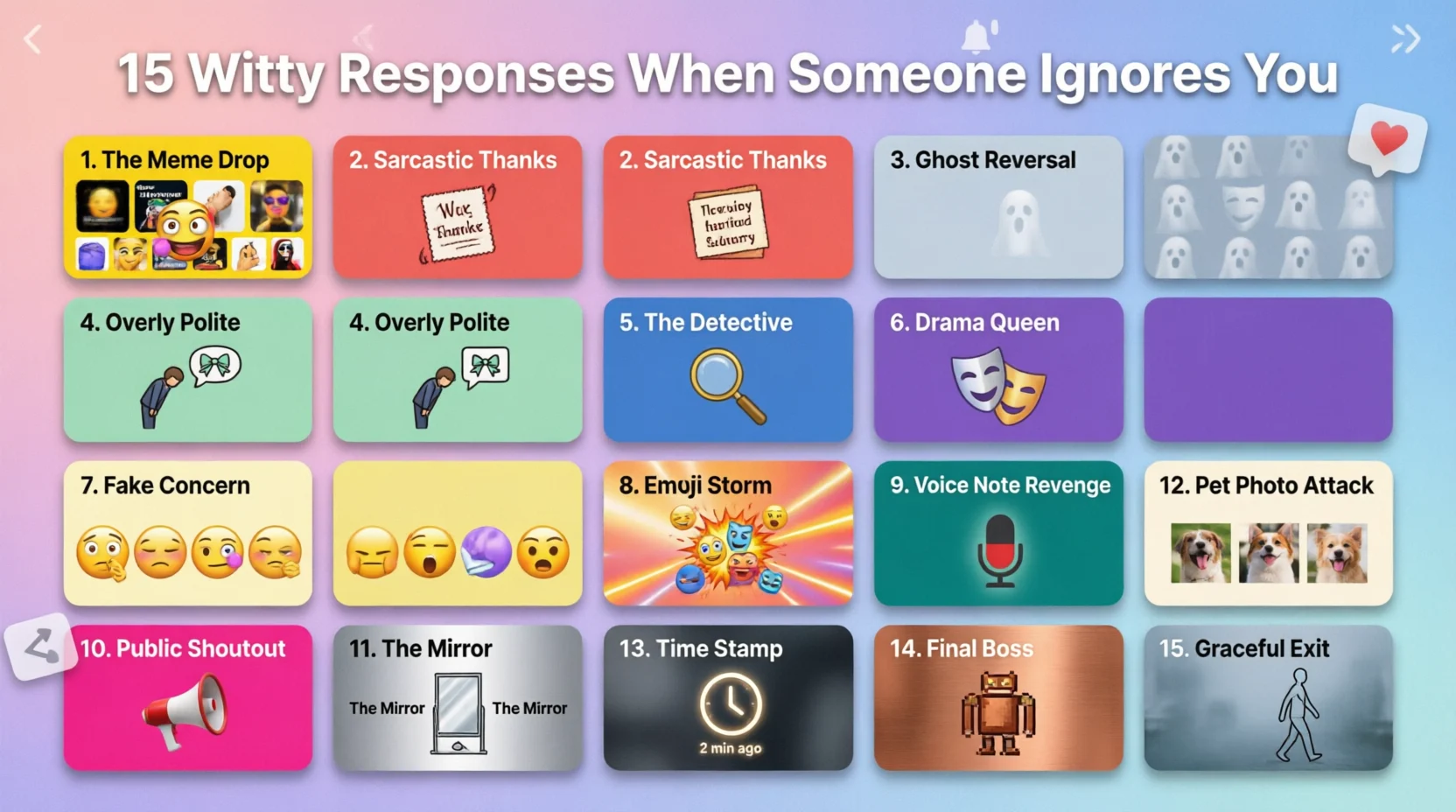
When someone ignores you and then gives a smart reply, the best response depends on your mood and the relationship. You can stay funny, confident, polite, or simply match their energy without overdoing it.
Try these: “I noticed the silence,” “Welcome back,” “That was a long pause,” “No worries, I got the message,” “Your reply finally arrived.”
Being ignored is one thing. Getting a clever little reply after being ignored is a whole different texting experience. Whether it happens in DMs, group chats, at work, between friends, or with someone you secretly like, the right comeback can say a lot without turning the situation into a full-blown drama series.
Sometimes you want to laugh it off. Sometimes you want to sound confident. And sometimes, you simply want them to know that you noticed the silence. That is exactly where the best responses to smart replies for being ignored can help.
A good response keeps your dignity intact while letting your personality do the talking. From playful one-liners to polite responses and witty comebacks, the key is knowing what fits the moment. Pick your mood, choose your line, and send it like you mean it.
Funny Responses
“Look who finally remembered I exist.”
Use this when a friend disappears and suddenly returns like nothing happened.
Meaning: It playfully calls out their absence without sounding genuinely angry.
“I was starting to think my message entered witness protection.”
Use this when someone takes an unusually long time to respond.
Meaning: It turns their silence into a funny exaggeration.
“Welcome back from your very important expedition.”
Use this when someone returns after leaving you waiting.
Meaning: It humorously suggests they had an extremely busy adventure.
“That reply took the scenic route.”
Use this when their response arrives much later than expected.
Meaning: It jokes about the delay in a lighthearted way.
“Your notification department is working overtime today.”
Use this when someone suddenly starts replying after being quiet.
Meaning: It teases them about their inconsistent texting.
“I almost sent a search party.”
Use this when someone has been missing from the chat for a while.
Meaning: It shows you noticed their absence while keeping things playful.
“Oh wow, the chat has been resurrected.”
Use this when an old conversation suddenly becomes active again.
Meaning: It humorously compares their return to bringing something back to life.
“I had already written your disappearance documentary.”
Use this when their silence was long enough to become a joke.
Meaning: It exaggerates the situation for comedic effect.
“Glad to see the typing feature still works.”
Use this when someone finally responds after ignoring you.
Meaning: It lightly pokes fun at their delayed reply.
“And here I was enjoying the peaceful silence.”
Use this when you want playful sarcasm instead of confrontation.
Meaning: It jokingly suggests their return interrupted your peace.
“Breaking news: you replied.”
Use this when their response feels unusually rare.
Meaning: It turns their reply into a mock news announcement.
“I should frame this response.”
Use this when someone rarely replies quickly.
Meaning: It humorously suggests their message is a rare event.
Witty Responses
“Interesting timing.”
Use this when someone replies much later than expected.
Meaning: It calmly points out the delay with subtle wit.
“I was beginning to understand the silence.”
Use this when their lack of response already said enough.
Meaning: It suggests their silence communicated something clearly.
“Your reply finally made it to the building.”
Use this when a delayed message arrives.
Meaning: It jokingly treats the message like a late delivery.
“Silence really had a lot to say.”
Use this when you noticed their lack of response.
Meaning: It suggests their silence communicated more than words could.
“That response came with a waiting period.”
Use this when the person takes their time replying.
Meaning: It highlights the delay in a clever, understated way.
“I see the communication schedule has changed.”
Use this when someone’s texting habits suddenly shift.
Meaning: It politely points out their unusual communication pattern.
“Noted. The timing tells its own story.”
Use this when you want to acknowledge their delay confidently.
Meaning: It implies you noticed more than they might realize.
“A reply at last. How historic.”
Use this when someone finally answers after disappearing.
Meaning: It makes their response sound like a rare historical event.
“I respect the dramatic pause.”
Use this when someone intentionally or unintentionally leaves you waiting.
Meaning: It turns their silence into a playful performance.
“That was quite the suspense episode.”
Use this when the wait felt unnecessarily long.
Meaning: It humorously compares waiting for a reply to watching a suspense story.
“Your timing deserves its own calendar.”
Use this when someone’s replies are consistently unpredictable.
Meaning: It jokingly highlights their unusual response habits.
“Message received, eventually.”
Use this when you want to acknowledge the reply without overreacting.
Meaning: It confidently notes that the response arrived late.
Sarcastic Responses
“Oh, so we do reply now?”
Use this when someone suddenly responds after ignoring you.
Meaning: It sarcastically highlights their change in behavior.
“Glad the silence had an expiration date.”
Use this when their ignoring finally ends.
Meaning: It lightly mocks how long their silence lasted.
“I almost forgot what your replies looked like.”
Use this when someone has been absent from your messages.
Meaning: It sarcastically points out how rarely they respond.
“Nice of you to join the conversation.”
Use this when someone arrives late to an ongoing discussion.
Meaning: It playfully calls attention to their delayed participation.
“Your response time is truly unforgettable.”
Use this when someone replies painfully late.
Meaning: It uses irony to emphasize the delay.
“I appreciate the historical response.”
Use this when a message arrives long after it was sent.
Meaning: It jokes that their reply belongs to another era.
“Was the reply stuck in traffic?”
Use this when someone takes forever to answer.
Meaning: It humorously gives their delayed message an imaginary excuse.
“I see the typing stars finally aligned.”
Use this when someone eventually decides to reply.
Meaning: It sarcastically suggests replying required perfect timing.
“That must have been a very long thought.”
Use this when their reply took ages to arrive.
Meaning: It gently mocks the amount of time they took.
“Thank you for ending the mystery.”
Use this when you have been waiting for an answer.
Meaning: It sarcastically frames their reply as solving a mystery.
“I was beginning to think replies were optional for you.”
Use this when someone repeatedly ignores messages.
Meaning: It calls out their communication habits with mild sarcasm.
“Well, better late than never, I suppose.”
Use this when you want classic, recognizable sarcasm.
Meaning: It acknowledges their reply while emphasizing how late it was.
Confident Responses
“No worries, I know when to stop waiting.”
Use this when you want to show you are not dependent on their response.
Meaning: It communicates self-respect and emotional confidence.
“I noticed, but I did not take it personally.”
Use this when you want to remain composed.
Meaning: It shows awareness without giving their silence control over you.
“You do not have to reply just to reply.”
Use this when you value honest communication over forced responses.
Meaning: It makes clear that you prefer genuine effort.
“I got the message without the message.”
Use this when their silence already made their position clear.
Meaning: It confidently suggests their behavior communicated enough.
“No hard feelings. I simply adjusted my expectations.”
Use this when someone’s actions changed how much you rely on them.
Meaning: It communicates maturity without begging for attention.
“I match effort, not excuses.”
Use this when someone repeatedly gives reasons for disappearing.
Meaning: It emphasizes that you value consistent effort.
“I am good either way.”
Use this when you want to avoid appearing overly invested.
Meaning: It shows emotional independence.
“Your silence gave me enough information.”
Use this when you have decided not to chase further.
Meaning: It says their lack of response helped you understand the situation.
“I do not chase conversations.”
Use this when you want a firm but calm boundary.
Meaning: It communicates that communication should be mutual.
“No pressure. I know where I stand.”
Use this when you have already understood their level of interest.
Meaning: It shows certainty without demanding an explanation.
“I can handle silence. I just do not pretend not to notice it.”
Use this when you want to be honest without sounding emotional.
Meaning: It balances confidence with awareness.
“All good. I have other things to focus on.”
Use this when you want to move forward without conflict.
Meaning: It shows that their response is not controlling your day.
Polite Responses
“No worries, I understand you may have been busy.”
Use this when you want to keep the interaction friendly.
Meaning: It gives the other person the benefit of the doubt.
“It is okay, thanks for getting back to me.”
Use this when you want to acknowledge their response graciously.
Meaning: It keeps the conversation positive despite the delay.
“I appreciate the reply.”
Use this when you want a short and respectful response.
Meaning: It acknowledges their message without adding tension.
“No problem at all.”
Use this when the delay is not worth discussing.
Meaning: It communicates that you are comfortable moving forward.
“I hope everything is okay on your end.”
Use this when their silence seems unusual or concerning.
Meaning: It shows genuine care rather than frustration.
“Thanks for letting me know.”
Use this when their response finally clarifies the situation.
Meaning: It keeps your reply mature and straightforward.
“Understood. Take care.”
Use this when you want to close the conversation politely.
Meaning: It communicates acceptance without continuing the issue.
“No worries, we can talk when you have time.”
Use this when you are willing to continue the conversation later.
Meaning: It removes pressure while keeping the door open.
“I understand. Thanks for responding.”
Use this when you want to avoid unnecessary tension.
Meaning: It shows maturity and respect.
“That is completely fine.”
Use this when you genuinely do not mind the delay.
Meaning: It reassures the person that there is no conflict.
“I appreciate the update.”
Use this in situations where their response provides useful information.
Meaning: It keeps the exchange professional and calm.
“No problem, hope your day is going well.”
Use this when you want to reset the mood.
Meaning: It turns an awkward moment into a friendly interaction.
Professional Responses
“Thanks for getting back to me.”
Use this when a coworker responds later than expected.
Meaning: It acknowledges their response without creating workplace tension.
“No problem, I appreciate the update.”
Use this when their delayed reply still provides useful information.
Meaning: It keeps the exchange courteous and productive.
“Understood. Please let me know when you have an update.”
Use this when the matter still requires follow-up.
Meaning: It keeps expectations clear and professional.
“Thanks for your response. I will proceed accordingly.”
Use this when their message gives you enough information to continue.
Meaning: It closes the matter efficiently.
“I understand. We can revisit this when convenient.”
Use this when the issue does not require immediate attention.
Meaning: It shows patience while keeping communication open.
“No concerns. Thanks for following up.”
Use this when you want to maintain a positive professional tone.
Meaning: It acknowledges their response without criticizing the delay.
“Thanks for clarifying.”
Use this when their response resolves confusion.
Meaning: It focuses on the useful information rather than the delay.
“Understood. I will keep that in mind.”
Use this when you want a neutral workplace response.
Meaning: It acknowledges their message without inviting unnecessary discussion.
“Appreciate you getting back to me.”
Use this when someone finally responds to an important message.
Meaning: It politely recognizes their effort.
“No problem. Let us keep things moving.”
Use this when you want to return focus to the task.
Meaning: It prioritizes progress over the delayed reply.
“Thanks. I will wait for the next update.”
Use this when additional information is still needed.
Meaning: It clearly communicates what you expect next.
“All noted. Thank you.”
Use this when you need a concise and formal acknowledgment.
Meaning: It confirms that you received and understood their response.
Flirty Responses
“I was wondering when you would come back.”
Use this when you want to show interest without being too obvious.
Meaning: It suggests you noticed their absence and are happy they returned.
“Ignoring me already? Bold choice.”
Use this when playful teasing fits your relationship.
Meaning: It turns their silence into light romantic banter.
“You took your time, but I will allow it.”
Use this when you want confident playful flirting.
Meaning: It jokingly acts as though you are granting permission for their return.
“I was starting to think you missed your chance.”
Use this when you want a teasing, confident comeback.
Meaning: It suggests they are lucky you are still interested.
“So you finally decided to text me?”
Use this when you want playful attention without sounding serious.
Meaning: It highlights their return while inviting more conversation.
“I noticed you disappeared.”
Use this when you want a simple flirty acknowledgment.
Meaning: It shows that their absence caught your attention.
“You are lucky I am still curious.”
Use this when you want confident teasing.
Meaning: It suggests your interest remains but is not guaranteed.
“I almost thought you were trying to make me miss you.”
Use this when you want to add playful romantic tension.
Meaning: It frames their silence as possibly intentional teasing.
“That was a long way to get back to me.”
Use this when you want to tease someone you like.
Meaning: It points out the delay while keeping the mood light.
“I was beginning to think you were playing hard to reach.”
Use this when you want a cheeky flirtatious response.
Meaning: It jokingly suggests their silence was part of a game.
“Look at you finally making an appearance.”
Use this when you want casual flirt energy.
Meaning: It playfully welcomes their return.
“I will pretend I did not notice how long that took.”
Use this when you want soft teasing rather than confrontation.
Meaning: It acknowledges the delay while keeping things charming.
Cute Responses
“There you are!”
Use this when someone you care about finally replies.
Meaning: It shows happiness about hearing from them again.
“I missed your little notifications.”
Use this when you want to sound affectionate and playful.
Meaning: It shows that their messages brighten your day.
“Glad you came back.”
Use this when you genuinely enjoy talking to the person.
Meaning: It communicates warmth without overdoing it.
“I was waiting for my favorite notification.”
Use this when the person is special to you.
Meaning: It playfully tells them their messages matter.
“The chat feels better with you here.”
Use this when you want a sweet response.
Meaning: It communicates that their presence improves the conversation.
“I was wondering where you went.”
Use this when you want to show gentle concern.
Meaning: It shows that you noticed their absence.
“Okay, I forgive the disappearing act.”
Use this when you want playful affection.
Meaning: It lightly accepts their return without holding a grudge.
“You are back, yay.”
Use this when you want something simple and cheerful.
Meaning: It shows genuine excitement about their return.
“I was saving your spot.”
Use this when you want a cute, slightly sentimental line.
Meaning: It suggests their place in your conversation still mattered.
“Nice seeing your name pop up again.”
Use this when you want to express warmth naturally.
Meaning: It shows that their message made you happy.
“I was beginning to miss our random chats.”
Use this when you enjoy casual conversations with them.
Meaning: It expresses affection without being overly serious.
“Okay, your return has been accepted.”
Use this when you want cute humor.
Meaning: It playfully welcomes them back into the conversation.
Brutal Yet Classy Responses
“I noticed the silence, so I stopped expecting a reply.”
Use this when repeated ignoring has changed your expectations.
Meaning: It communicates disappointment without unnecessary drama.
“You answered eventually, and that tells me enough.”
Use this when the delay itself feels meaningful.
Meaning: It suggests their behavior has already given you an answer.
“I do not compete for attention.”
Use this when you feel someone is making you chase them.
Meaning: It establishes a clear boundary around your self-respect.
“I can tell when a conversation is one-sided.”
Use this when you have been doing most of the effort.
Meaning: It calmly identifies an imbalance in communication.
“I stopped waiting a while ago.”
Use this when you have already moved on from the expectation.
Meaning: It shows emotional independence.
“Your silence made the decision easier.”
Use this when their lack of response helped you decide what to do.
Meaning: It suggests their behavior clarified your next step.
“I do not need an explanation for every silence.”
Use this when you want to avoid an argument.
Meaning: It shows that you can read situations without demanding answers.
“I respect people who communicate clearly.”
Use this when you want to express your standard directly.
Meaning: It signals that honest communication matters to you.
“I am not upset. I am simply paying attention.”
Use this when you want to sound composed and observant.
Meaning: It makes clear that you notice patterns without overreacting.
“No worries. I know where to place my energy.”
Use this when you have decided to stop chasing the conversation.
Meaning: It communicates self-respect and emotional control.
“The silence answered more than the reply did.”
Use this when their eventual response changes nothing.
Meaning: It suggests their actions mattered more than their words.
“I will take the hint.”
Use this when you believe their behavior clearly communicated disinterest.
Meaning: It shows that you are ready to step back.
Chill And Casual Responses
“All good.”
Use this when you genuinely do not want to make the delay a big deal.
Meaning: It keeps the situation relaxed and simple.
“No stress.”
Use this when you want to remove pressure from the conversation.
Meaning: It communicates an easygoing attitude.
“You are good.”
Use this when you want to reassure someone after a delayed reply.
Meaning: It tells them there is no need to worry.
“No big deal.”
Use this when the situation is not worth discussing further.
Meaning: It shows that you are keeping things casual.
“It happens.”
Use this when you want to acknowledge the delay without judgment.
Meaning: It treats the situation as normal and manageable.
“We are cool.”
Use this when you want to keep the relationship friendly.
Meaning: It reassures them that there is no serious issue.
“You made it back.”
Use this when you want a casual acknowledgment.
Meaning: It lightly notes their return without sounding annoyed.
“No worries, life happens.”
Use this when you understand that people get busy.
Meaning: It gives the person reasonable room without pressure.
“All sorted.”
Use this when the delayed response resolves the issue.
Meaning: It signals that everything is fine now.
“Fair enough.”
Use this when you accept their explanation.
Meaning: It communicates relaxed acceptance.
“Got you.”
Use this when you understand their message and do not need more discussion.
Meaning: It confirms that you understand without adding tension.
“Cool, we are good.”
Use this when you want to close the awkward moment casually.
Meaning: It resets the conversation and keeps the mood easy.
Emotional Responses
“I will be honest, the silence did hurt a little.”
Use this when you want to express your feelings openly.
Meaning: It communicates vulnerability without blaming the other person.
“I wondered if I had done something wrong.”
Use this when being ignored left you uncertain.
Meaning: It explains the emotional effect their silence had on you.
“I appreciate you replying because I was genuinely wondering.”
Use this when their response finally brings relief.
Meaning: It shows that their communication mattered to you.
“I would rather know the truth than be left guessing.”
Use this when you need clarity from someone.
Meaning: It expresses a preference for honest communication.
“Silence can make people overthink.”
Use this when you want to explain your reaction calmly.
Meaning: It points out how uncertainty can affect emotions.
“I was not angry, just confused.”
Use this when you want to correct a misunderstanding.
Meaning: It distinguishes emotional hurt from anger.
“I care, so I notice when things feel different.”
Use this when a relationship matters to you.
Meaning: It explains why their behavior caught your attention.
“I did not want to pressure you, but I noticed the distance.”
Use this when you want to address emotional distance gently.
Meaning: It communicates awareness while respecting their space.
“I am glad we are talking again.”
Use this when reconnecting feels meaningful.
Meaning: It focuses on repairing the connection rather than the conflict.
“I just wanted to know where we stood.”
Use this when uncertainty has been difficult.
Meaning: It expresses a need for clarity and reassurance.
“I would rather communicate than assume.”
Use this when you want to resolve tension maturely.
Meaning: It encourages direct and honest conversation.
“Thanks for coming back and explaining.”
Use this when someone takes responsibility for disappearing.
Meaning: It acknowledges their effort to repair the situation.
Sweet Responses
“It is okay, I am just glad to hear from you.”
Use this when you want to prioritize connection over the delay.
Meaning: It shows warmth and forgiveness.
“I know life gets busy.”
Use this when you want to be understanding.
Meaning: It gives the person space without making them feel guilty.
“Your reply still made me smile.”
Use this when their message genuinely makes you happy.
Meaning: It shows that their presence still matters.
“I am happy we are talking again.”
Use this when you want to reset the relationship positively.
Meaning: It focuses on reconnection rather than past silence.
“No hard feelings at all.”
Use this when you want to leave the awkwardness behind.
Meaning: It communicates forgiveness and emotional ease.
“I hope you are doing okay.”
Use this when you care about the person’s well-being.
Meaning: It shifts the focus from the delay to genuine concern.
“You do not have to explain everything.”
Use this when you want to show understanding.
Meaning: It tells the person they can communicate without feeling pressured.
“I am just glad you are here.”
Use this when reconnecting feels comforting.
Meaning: It communicates affection and appreciation.
“Take your time, just do not disappear forever.”
Use this when you want a sweet response with a little humor.
Meaning: It balances understanding with a playful request for consistency.
“I appreciate you coming back to the conversation.”
Use this when someone makes an effort to reconnect.
Meaning: It recognizes their willingness to continue communicating.
“I hope we are good.”
Use this when you want gentle reassurance.
Meaning: It shows that the relationship matters to you.
“Whatever happened, I am glad we cleared the air.”
Use this after an awkward communication gap.
Meaning: It emphasizes peace and understanding.
Creative Responses
“Your reply just completed a very long plot twist.”
Use this when the silence created an unexpected story.
Meaning: It turns the situation into playful storytelling.
“The missing message has finally been found.”
Use this when someone finally replies.
Meaning: It humorously treats their response like a recovered mystery.
“And the communication saga continues.”
Use this when your conversations have become unpredictable.
Meaning: It makes the situation sound like an ongoing series.
“Chapter two begins with your reply.”
Use this when someone returns after a long pause.
Meaning: It playfully frames the conversation as a new chapter.
“The inbox has spoken.”
Use this when their message finally arrives.
Meaning: It gives their response a humorous sense of importance.
“Plot twist: you actually replied.”
Use this when their response was unexpected.
Meaning: It jokes about how surprising their return was.
“The silence arc has officially ended.”
Use this when you want an internet-style response.
Meaning: It describes their return as the ending of a storyline.
“Your message arrived fashionably late.”
Use this when the delay was noticeable but not serious.
Meaning: It makes the lateness sound playful instead of negative.
“The chat has entered its comeback era.”
Use this when the conversation starts again after disappearing.
Meaning: It celebrates the return with trendy internet language.
“That reply deserves opening credits.”
Use this when someone makes a dramatic return.
Meaning: It exaggerates the moment for comedic effect.
“The notification gods finally answered.”
Use this when someone finally responds.
Meaning: It jokingly blames the delay on imaginary forces.
“We have officially resumed normal programming.”
Use this when the conversation returns to normal.
Meaning: It humorously announces that the communication gap is over.
Clever Responses
“I understand actions better than explanations.”
Use this when someone’s behavior has already made things clear.
Meaning: It emphasizes the importance of consistent actions.
“Timing communicates too.”
Use this when you want a short but meaningful comeback.
Meaning: It suggests that when someone responds can carry meaning.
“I noticed the pattern.”
Use this when repeated ignoring has become obvious.
Meaning: It calmly signals that you are paying attention.
“A response is easy when the conversation matters.”
Use this when you want to emphasize mutual effort.
Meaning: It suggests that genuine interest usually shows through communication.
“Silence is still a form of communication.”
Use this when you want a thoughtful response.
Meaning: It points out that not responding can also send a message.
“I prefer clarity over guessing games.”
Use this when you want direct communication.
Meaning: It shows that you value honesty and straightforwardness.
“Consistency speaks louder than one reply.”
Use this when someone responds once after repeatedly disappearing.
Meaning: It suggests that long-term behavior matters more than a single message.
“I do not need instant replies, just clear communication.”
Use this when you want to set a reasonable expectation.
Meaning: It shows that honesty matters more than speed.
“Your response answered one question and raised three more.”
Use this when their reply is confusing.
Meaning: It humorously points out that their message lacked clarity.
“I can read between the lines.”
Use this when someone’s behavior feels obvious.
Meaning: It suggests you understand the message beyond the literal words.
“Sometimes the delay is the answer.”
Use this when waiting has already told you enough.
Meaning: It suggests that prolonged silence can reveal priorities.
“Communication should not feel like detective work.”
Use this when you are tired of guessing what someone means.
Meaning: It encourages clearer and healthier communication.
Dramatic Responses
“And just like that, the silence ended.”
Use this when someone returns after a noticeably long absence.
Meaning: It gives their comeback a playful dramatic feel.
“The long-awaited reply has arrived.”
Use this when you want to exaggerate the delay for humor.
Meaning: It makes their response sound like a major event.
“I survived the waiting period.”
Use this when you want playful drama.
Meaning: It exaggerates the inconvenience of waiting for comedic effect.
“This moment will be remembered.”
Use this when someone rarely responds.
Meaning: It humorously treats their reply as a historic event.
“The silence was almost becoming a character.”
Use this when the conversation has been quiet for too long.
Meaning: It turns the absence of messages into a dramatic joke.
“At last, the mystery has been solved.”
Use this when you finally receive an answer.
Meaning: It presents their response as the conclusion to a mystery.
“I thought we had reached the final episode.”
Use this when you assumed the conversation was over.
Meaning: It humorously suggests their silence felt like an ending.
“The return nobody saw coming.”
Use this when someone unexpectedly texts again.
Meaning: It treats their comeback like a surprising plot twist.
“I had accepted the silence as the ending.”
Use this when you genuinely thought they were done talking.
Meaning: It communicates surprise at their return.
“The comeback has officially begun.”
Use this when you want an energetic response.
Meaning: It frames their return as a dramatic revival.
“What an unexpected development.”
Use this when you want subtle dramatic humor.
Meaning: It playfully suggests their reply changed the storyline.
“I was prepared for a completely different ending.”
Use this when their response surprises you.
Meaning: It shows that their return was unexpected.
FAQs
What Does Being Ignored Mean?
Being ignored usually means someone has chosen not to respond, though they may also be busy or distracted.
What Is A Good Response To Being Ignored?
A confident reply like “I noticed, but no worries” keeps your dignity while avoiding unnecessary drama.
Is Being Ignored Always Personal?
No. People can ignore messages because they are busy, overwhelmed, distracted, or unsure how to respond.
What Should I Say If Someone Ignores Me Then Replies Smartly?
Try “Welcome back” for humor or “I noticed the silence” for a calm, direct response.
Can A Response To Being Ignored Be Flirty?
Yes. “I was wondering when you would come back” can work when playful flirting fits your relationship.
Should I Use Humor When Someone Ignores Me?
Humor works best when the relationship is comfortable and the situation is not genuinely serious.
What If I Do Not Actually Mean A Funny Reply?
Choose a simple response like “No worries” rather than pretending everything is funny.
What Is A Professional Reply To Being Ignored?
Use “Thanks for getting back to me” or “I appreciate the update” to keep communication respectful.
Should I Reply If Someone Repeatedly Ignores Me?
You can reply if the relationship matters, but repeated silence may be a reason to step back.
How Do I Respond Without Looking Desperate?
Keep your message short, confident, and focused on your own boundaries rather than chasing attention.
What Is A Good Reply If Their Silence Hurt Me?
Try “I was not angry, just confused” if you want to express your feelings honestly and calmly.
Can A Short Reply Be More Powerful?
Yes. A brief response can sound more confident because it avoids overexplaining the situation.
Conclusion
The best response to being ignored is not always the funniest or sharpest one. Sometimes it is a playful comeback, sometimes it is a calm boundary, and sometimes it is simply moving on without saying much. Your reply can shape the entire mood of a conversation, so choose one that actually fits your relationship and personality.
Whether you want to make them laugh, keep things flirty, stay professional, or show that you noticed the silence, there is a response for every situation. Save these lines for your next awkward text, DM, or group chat moment, and mix up your style whenever the situation calls for it. Pick your favorite, send it with confidence, and keep the conversation moving.