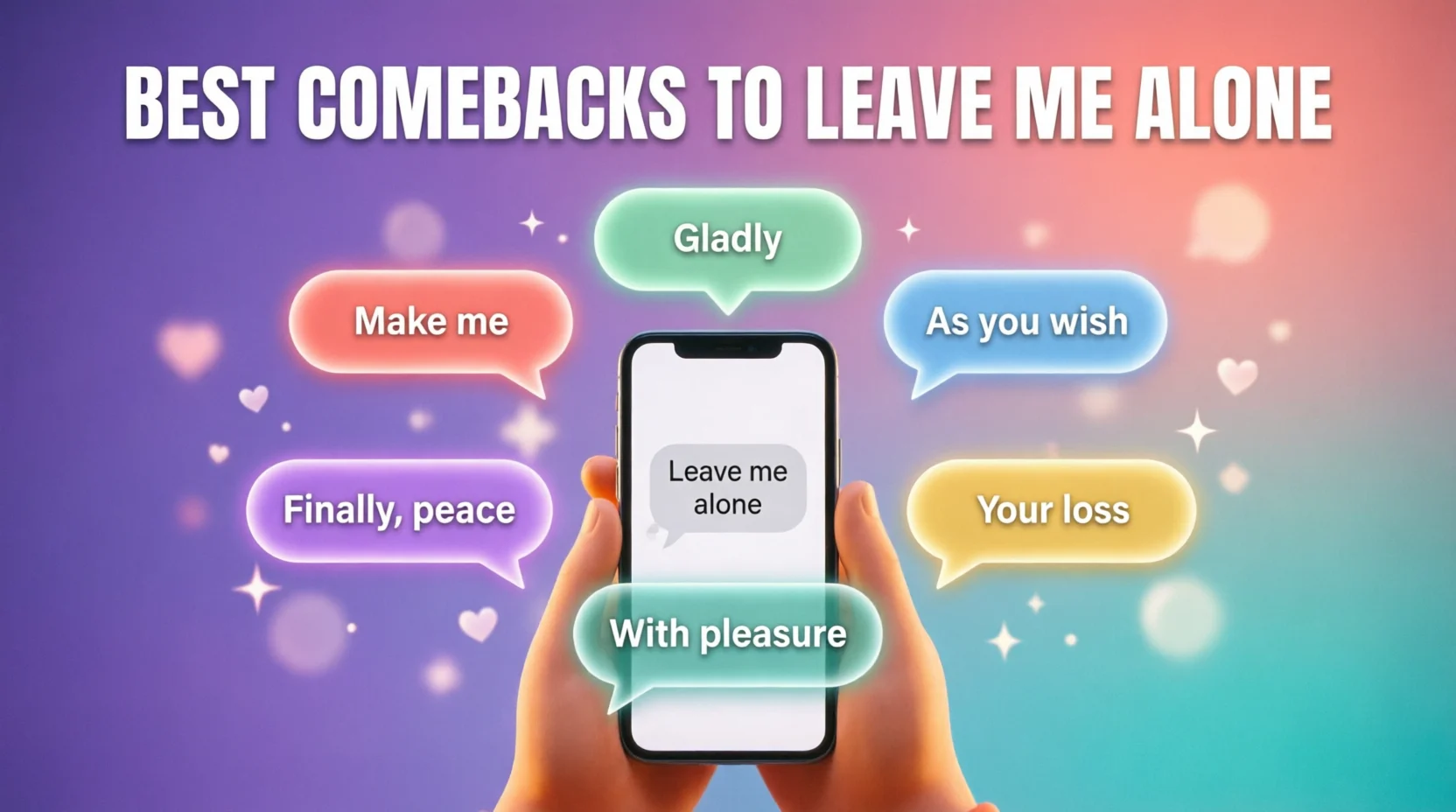
The best responses to witty comebacks to leave me alone help you set boundaries, shut down unwanted comments, or add humor without making things awkward. Whether you’re dealing with a nosy friend or someone who refuses to respect your space, the right comeback can make your point.
Top alternatives: “My peace isn’t up for debate,” “Please respect my personal space,” “I’m currently unavailable for nonsense,” “Take the hint, not another step,” “Silence is my favorite conversation.”
Ever had someone keep texting, asking questions, or pushing your buttons when all you want is a little peace? We’ve all been there. Whether it’s an overly curious friend, a persistent person in your DMs, a coworker who won’t stop interrupting, or someone who just doesn’t understand hints, knowing what to say can save you from an awkward conversation.
That’s where witty comebacks to leave me alone come in handy. The right response can communicate your boundaries without turning a minor annoyance into a full-blown argument. Sometimes, a little humor does the job. Other times, a confident one-liner or a polite but firm statement is exactly what you need.
This collection brings together funny, clever, sarcastic, professional, and confident replies for different situations. Pick your style, match the moment, and remember that you don’t owe everyone your time or attention. Your peace deserves protection, too!
1. Funny Responses to Leave Me Alone
Sometimes, humor gets the message across without making the situation unnecessarily tense. Use these replies when you want to be playful but still need some breathing room.
- I’m currently accepting applications for silence. Example: Use it when a chatty friend keeps interrupting your quiet time. Meaning: You want some peace with a little humor.
- My social battery is at one percent. Example: Send it when your friends keep inviting you into conversations after a long day. Meaning: You’re mentally tired and need time alone.
- Please contact me after my next lifetime. Example: Use it when someone keeps asking for your attention over silly matters. Meaning: You’re jokingly postponing further interaction.
- I’m on a break from people. Example: Say it when you need a quiet afternoon without company. Meaning: You want temporary distance from social interaction.
- My peace has a strict guest list. Example: Use it when someone keeps inserting themselves into your plans. Meaning: You’re choosing carefully who gets your time.
- The customer service department is closed. Example: Send it when someone expects instant answers to every message. Meaning: You’re unavailable and don’t want to entertain more requests.
- I’m buffering. Please try again never. Example: Use it when a friend won’t stop teasing you. Meaning: You’re playfully refusing to continue the interaction.
- Silence is my current subscription plan. Example: Say it when someone asks why you’re being quiet. Meaning: You’re enjoying your own company.
- My brain has left the group chat. Example: Use it when you’re overwhelmed by nonstop messages. Meaning: You need a break from the conversation.
- Please allow me to disappear professionally. Example: Send it when you want to leave a noisy group chat. Meaning: You’re stepping away without creating drama.
- I’m fully booked with doing absolutely nothing. Example: Use it when someone insists on making plans. Meaning: Your free time is reserved for yourself.
- Come back when silence is an option. Example: Say it when a friend keeps talking over everyone. Meaning: You want the noise and interruptions to stop.
2. Sarcastic Responses to Leave Me Alone
A little sarcasm can make your boundaries memorable when someone refuses to take a hint. Keep these replies light enough for the situation, especially when you want to avoid unnecessary conflict.
- Oh, look, my personal space has another visitor. Example: Use it when someone keeps hovering around you. Meaning: You’re pointing out their lack of distance sarcastically.
- Your timing is truly a work of art. Example: Say it when someone interrupts your quiet moment again. Meaning: You’re unimpressed by their interruption.
- Did I accidentally subscribe to unlimited interruptions? Example: Use it when someone keeps disturbing your work. Meaning: You want them to stop interrupting you.
- And here I was enjoying the silence. Example: Send it when a friend starts another unnecessary argument. Meaning: You preferred the peaceful moment before they arrived.
- Please, don’t let my silence stop your speech. Example: Use it when someone talks endlessly without noticing your discomfort. Meaning: You’re sarcastically highlighting their lack of awareness.
- What would I do without these unsolicited updates? Example: Say it when someone keeps sharing information you didn’t ask for. Meaning: You’re tired of unwanted commentary.
- My boundaries must be written in invisible ink. Example: Use it when someone repeatedly ignores your requests for space. Meaning: You’re frustrated that your limits aren’t being respected.
- Your dedication to interrupting is impressive. Example: Send it when a person keeps interrupting your conversations. Meaning: You’re criticizing their persistent interruptions.
- I see personal space is a foreign concept today. Example: Use it when someone stands too close after being asked to move. Meaning: You’re calling attention to their behavior.
- Thanks for the visit. The exit is that way. Example: Say it jokingly to a friend who has overstayed their welcome. Meaning: You’re ready for the interaction to end.
- My peace called, and it wants you to leave. Example: Use it when playful teasing has gone on too long. Meaning: You want your quiet time back.
- What a surprise, another conversation I didn’t request. Example: Send it when someone keeps starting unwanted discussions. Meaning: You’re making it clear that the interaction isn’t welcome.
3. Brutally Honest Responses to Leave Me Alone
When hints haven’t worked, direct language may be more effective than another joke. These replies are firm without relying on insults or personal attacks.
- I don’t want to continue this conversation. Example: Use it when someone keeps pushing a topic you’ve declined to discuss. Meaning: You’re clearly ending the conversation.
- Please stop contacting me. Example: Send it when repeated messages are unwanted. Meaning: You’re setting a clear communication boundary.
- I’ve said no, and my answer hasn’t changed. Example: Use it when someone keeps asking after you’ve declined. Meaning: Your decision is final.
- I’m not interested in explaining myself again. Example: Say it when someone repeatedly challenges your personal choices. Meaning: You won’t keep defending your decision.
- Your persistence isn’t changing my mind. Example: Use it when someone won’t accept your refusal. Meaning: Continued pressure won’t change your answer.
- I need space, and I expect you to respect that. Example: Send it when a friend keeps demanding your attention. Meaning: You’re asking for distance and respect.
- This conversation is over for me. Example: Use it when an argument keeps going in circles. Meaning: You’re choosing to disengage.
- Stop pushing a boundary I’ve already explained. Example: Say it when someone repeatedly ignores your limits. Meaning: You’re addressing their behavior directly.
- I won’t keep making room for unwanted attention. Example: Use it when someone repeatedly interrupts your personal time. Meaning: You’re prioritizing your comfort.
- You don’t have to agree, but you do have to respect my decision. Example: Send it when someone argues about your need for space. Meaning: Your boundary doesn’t require their approval.
- I’m done discussing this. Please move on. Example: Use it when someone keeps reopening a settled issue. Meaning: You want the topic to end.
- Respectfully, I want to be left alone. Example: Say it when you need to communicate your wishes without ambiguity. Meaning: You’re directly requesting privacy and distance.
4. Polite Responses to Leave Me Alone
Not every situation calls for sarcasm or bluntness. These polite replies help you protect your time while keeping the interaction respectful.
- I’d appreciate a little time to myself. Example: Use it when a friend wants to talk while you’re resting. Meaning: You’re kindly asking for personal time.
- Could we continue this another time? Example: Say it when you’re too busy to talk. Meaning: You’re postponing the discussion.
- I need a quiet moment right now, thank you. Example: Use it when someone approaches you during a break. Meaning: You want a peaceful pause.
- I hope you understand that I need some space. Example: Send it when a friend takes your silence personally. Meaning: You’re explaining your need for distance gently.
- I’d prefer to spend some time alone today. Example: Use it when declining an invitation. Meaning: You’re choosing solitude without criticizing anyone.
- Thank you for understanding that I’m unavailable. Example: Say it when you need to end a conversation courteously. Meaning: You’re communicating that your time is limited.
- Let’s give this conversation a little pause. Example: Use it when a discussion becomes tiring. Meaning: You want to step away temporarily.
- I need to focus on myself for a while. Example: Send it when someone expects constant communication. Meaning: You’re prioritizing your own needs.
- I appreciate your concern, but I need privacy. Example: Use it when someone asks personal questions. Meaning: You’re grateful for their concern but want discretion.
- I’d rather not discuss this right now. Example: Say it when someone brings up a sensitive subject. Meaning: You’re declining to talk about it at the moment.
- Please give me some time to recharge. Example: Use it after a busy social event. Meaning: You need rest before interacting again.
- I hope we can respect each other’s space. Example: Send it when a relationship needs healthier boundaries. Meaning: You want mutual respect and independence.
5. Professional Responses to Leave Me Alone
Workplace situations require a different approach. When colleagues interrupt, repeatedly message you, or push for personal information, professional wording can help you remain calm and clear.
- I’ll reach out when I’m available to discuss this. Example: Use it when a coworker keeps requesting an immediate meeting. Meaning: You’re setting expectations for future communication.
- I need to focus on my current priorities. Example: Say it when someone interrupts a task repeatedly. Meaning: You’re protecting your concentration.
- Please send your request by email, and I’ll review it when possible. Example: Use it when someone repeatedly approaches your desk. Meaning: You’re directing communication to a manageable channel.
- I’m unavailable for further discussion at the moment. Example: Send it when a work conversation needs to pause. Meaning: You’re professionally ending the interaction for now.
- Let’s schedule a suitable time to address this. Example: Use it when a colleague brings up an issue during a busy period. Meaning: You want a more appropriate time for discussion.
- I’d prefer to keep our conversation work-related. Example: Say it when a colleague asks intrusive personal questions. Meaning: You’re establishing a professional boundary.
- Please allow me to complete this task without interruption. Example: Use it when someone repeatedly distracts you. Meaning: You need uninterrupted working time.
- I’ll respond once I’ve had time to review the details. Example: Send it when someone demands an immediate answer. Meaning: You’re setting a realistic response expectation.
- Thank you for respecting my availability. Example: Use it when reminding coworkers that you have limited time. Meaning: You’re reinforcing a courteous workplace boundary.
- I’m not the appropriate person to discuss this with. Example: Say it when a coworker involves you in an unrelated dispute. Meaning: You’re declining involvement professionally.
- I need to return to my responsibilities now. Example: Use it when a workplace conversation runs too long. Meaning: You’re ending the discussion politely.
- Let’s keep communication focused on the task at hand. Example: Send it when a discussion becomes unnecessarily personal. Meaning: You’re bringing the conversation back to work.
6. Clever Responses to Leave Me Alone
Clever comebacks use wordplay and memorable phrasing to communicate your point without turning every exchange into an argument.
- My space isn’t a public comment section. Example: Use it when someone keeps commenting on your personal decisions. Meaning: Your life isn’t open for everyone’s opinions.
- Peace is the plan, and solitude is the schedule. Example: Send it when friends ask why you’re staying home. Meaning: You’re deliberately making time for yourself.
- Not every thought needs a reply. Example: Use it when someone keeps baiting you into debates. Meaning: You don’t feel obligated to respond to everything.
- My availability isn’t an open invitation. Example: Say it when someone assumes you’re free because you’re online. Meaning: Being reachable doesn’t mean you’re available.
- Privacy isn’t a puzzle for you to solve. Example: Use it when someone keeps asking personal questions. Meaning: You don’t owe them private information.
- Access to me requires respect, not persistence. Example: Send it when someone repeatedly demands your attention. Meaning: Respect matters more than repeatedly asking.
- I’m choosing peace over unnecessary plot twists. Example: Use it when a conversation starts becoming dramatic. Meaning: You’d rather avoid needless conflict.
- My boundaries aren’t a group project. Example: Say it when several people pressure you to change your mind. Meaning: Your personal limits are yours to decide.
- Silence is a complete sentence sometimes. Example: Use it when someone expects an explanation for every pause. Meaning: You can choose not to engage.
- You can’t interrupt a person who’s unavailable by choice. Example: Send it when someone keeps demanding your time. Meaning: You’re deliberately protecting your availability.
- My attention isn’t a free trial. Example: Use it when someone expects constant access to you. Meaning: Your time and attention have limits.
- The conversation has reached its natural conclusion. Example: Say it when a discussion keeps dragging on. Meaning: You’re signaling that it’s time to stop talking.
7. Confident Responses to Leave Me Alone
Confidence means expressing your needs without apologizing for having them. These responses work when you want to sound composed, self-assured, and firm.
- I’m comfortable with my decision. Example: Use it when someone questions your choice to spend time alone. Meaning: You trust your own judgment.
- I know what I need right now. Example: Say it when a friend insists they know what’s best for you. Meaning: You’re standing by your personal needs.
- I don’t need to justify my boundaries. Example: Use it when someone demands an explanation for your limits. Meaning: You believe your boundaries deserve respect.
- My time is valuable, and I choose how to spend it. Example: Send it when someone assumes you’ll always be available. Meaning: You’re taking ownership of your schedule.
- I’m not available for this conversation. Example: Use it when someone tries to draw you into an argument. Meaning: You’re confidently declining to participate.
- I can care about you and still need space. Example: Say it when a loved one mistakes your solitude for rejection. Meaning: Affection and independence can coexist.
- I’m choosing what feels right for me. Example: Use it when others criticize your need for distance. Meaning: You’re honoring your own preferences.
- No is a complete answer. Example: Send it when someone keeps demanding reasons for your refusal. Meaning: Your decision doesn’t need endless explanation.
- I won’t compromise my peace to please everyone. Example: Use it when people pressure you into unwanted plans. Meaning: You’re prioritizing your well-being.
- I’m setting a boundary, not starting a debate. Example: Say it when someone argues about your request for space. Meaning: You want your limit respected rather than challenged.
- I’m allowed to change my availability. Example: Use it when someone expects you to be accessible all the time. Meaning: You can decide when you’re available.
- I’ll engage when I’m ready, not when I’m pressured. Example: Send it when someone demands an immediate response. Meaning: You want to communicate on your own terms.
8. Chill and Casual Responses to Leave Me Alone
Sometimes, the easiest way to handle an interruption is to keep your response relaxed. These casual replies work well with friends, classmates, and people who usually understand your humor.
- I’m just doing my own thing today. Example: Use it when friends ask why you’re quiet. Meaning: You’re enjoying some independent time.
- Gonna take a little me-time. Example: Send it when you need a break from texting. Meaning: You want time to recharge.
- Catch you later, I’m logging off. Example: Use it when leaving an online conversation. Meaning: You’re stepping away without making it personal.
- I’m in my quiet era. Example: Say it when you’re avoiding unnecessary social plans. Meaning: You’re choosing a calmer routine.
- Nothing personal, just need some space. Example: Use it when a friend worries about your distance. Meaning: Your need for solitude isn’t necessarily about them.
- I’m keeping things low-key today. Example: Send it when declining a social invitation. Meaning: You prefer a relaxed day alone.
- Let’s talk another time. Example: Use it when you’re not ready for a conversation. Meaning: You’re postponing the interaction.
- Taking five from the world. Example: Say it when you need a short break. Meaning: You’re stepping away to relax.
- I’m off-duty socially. Example: Use it when friends keep messaging during your downtime. Meaning: You aren’t up for socializing right now.
- I’ll pop back in later. Example: Send it when you want to leave a group chat temporarily. Meaning: You’re taking a break without ending the friendship.
- Just need a little breathing room. Example: Use it when someone has been around you all day. Meaning: You’re asking for a little personal space.
- Today is a solo mission. Example: Say it when making plans to spend time alone. Meaning: You want to enjoy your own company.
9. Cute Responses to Leave Me Alone
Cute replies are useful when you want to communicate your need for space without sounding cold. They’re especially suitable for close friends and people who appreciate playful messages.
- Tiny human, big need for alone time. Example: Use it when your friends keep asking you to hang out. Meaning: You need solitude and are expressing it adorably.
- My little peace bubble needs protection. Example: Send it when someone interrupts your relaxing time. Meaning: You’re asking them to respect your calm space.
- Currently cuddling with my own company. Example: Use it when someone asks why you’re staying home. Meaning: You’re happy spending time by yourself.
- BRB, recharging my people battery. Example: Say it when leaving a busy group chat. Meaning: You’re taking time to recover your social energy.
- Please let this introvert bloom in peace. Example: Use it when you need quiet time after socializing. Meaning: You want room to grow and recharge.
- My blanket and I have important plans. Example: Send it when declining a casual invitation. Meaning: You’re choosing a cozy day at home.
- Sending hugs, but keeping my distance. Example: Use it when you care about someone but need some space. Meaning: You can be affectionate without being constantly available.
- I’m on a little happiness recharge mission. Example: Say it when you need time for your favorite hobbies. Meaning: You’re making space for activities that lift your mood.
- Let me have my peaceful little moment. Example: Use it when someone interrupts a relaxing activity. Meaning: You’re asking them to let you enjoy the moment.
- My heart says hi, my social battery says bye. Example: Send it when leaving a friendly conversation. Meaning: You still care but need to recharge.
- A little quiet time, please and thank you. Example: Use it when you want to pause a conversation gently. Meaning: You’re making a polite request with a sweet tone.
- I’m busy being a cozy little legend. Example: Say it when friends tease you for staying home. Meaning: You’re happily embracing your own company.
10. Flirty Responses to Leave Me Alone
Flirty replies can work when the other person is someone you like and the situation is genuinely playful. If they’ve seriously asked you to leave them alone, respect that request rather than treating it as an invitation.
- Fine, but don’t miss my attention too much. Example: Use it during playful teasing with someone you’re dating. Meaning: You’re jokingly suggesting your attention is appreciated.
- I’ll give you space, but I’m keeping the smile. Example: Send it when a crush playfully asks for a little breathing room. Meaning: You’re responding warmly while acknowledging their request.
- Your wish for peace is officially approved. Example: Use it when someone you’re flirting with needs a quiet evening. Meaning: You’re playfully agreeing to give them space.
- I’ll disappear gracefully, just this once. Example: Say it during lighthearted banter with a partner. Meaning: You’re teasing while agreeing to step away.
- Enjoy your quiet time, superstar. Example: Send it when your crush says they need a break. Meaning: You’re showing affection without demanding attention.
- I’ll let you miss my excellent company. Example: Use it when joking with a partner who wants a little alone time. Meaning: You’re playfully confident about your company.
- Space granted, charm still included. Example: Say it when a playful conversation is winding down. Meaning: You’re keeping the tone warm while stepping back.
- Go recharge; your favorite notification can wait. Example: Use it with someone who enjoys your playful texts. Meaning: You’re giving them time without demanding a reply.
- I’ll behave and let you have your moment. Example: Send it when someone you like is busy. Meaning: You’re showing playful restraint.
- Peace first, flirting later. Example: Use it when a partner needs to concentrate. Meaning: You’re willing to pause the banter until a better time.
- I’ll give you room to miss these jokes. Example: Say it when ending a fun conversation with a crush. Meaning: You’re teasing them about your humor.
- Enjoy your space; I’ll save my best smile for later. Example: Use it when parting on friendly terms with someone you like. Meaning: You’re ending warmly without pressuring them.
11. Dramatic Responses to Leave Me Alone
If your friends enjoy theatrical humor, a dramatic comeback can turn an ordinary request for space into a memorable moment. Use these when the atmosphere is playful, not during a serious disagreement.
- I must now retreat into my kingdom of silence. Example: Use it when leaving a noisy group gathering. Meaning: You’re dramatically announcing your departure.
- The curtains close on this conversation. Example: Say it when a discussion has gone on too long. Meaning: You’re declaring the interaction finished.
- My peace demands an immediate intermission. Example: Use it when you need a break from nonstop chatter. Meaning: You’re asking for a pause in a theatrical way.
- Tell the world I have chosen solitude. Example: Send it when declining another social invitation. Meaning: You’re making your decision sound grand and amusing.
- I shall return when the noise has vanished. Example: Use it when stepping away from a loud room. Meaning: You’re waiting for a calmer atmosphere.
- This humble soul requests a moment of silence. Example: Say it when friends keep teasing you. Meaning: You’re asking them to pause the jokes.
- My patience has officially entered intermission. Example: Use it when a conversation needs a break. Meaning: You’re playfully signaling that you’ve had enough.
- Let me vanish into the sunset of personal space. Example: Send it when leaving a group chat. Meaning: You’re making your exit sound dramatic.
- The royal schedule contains absolutely no interruptions. Example: Use it when joking about protecting your free time. Meaning: You’re pretending your downtime is an official appointment.
- I bid this conversation a peaceful farewell. Example: Say it when ending a lighthearted discussion. Meaning: You’re wrapping things up with theatrical politeness.
- My solitude awaits, and I must answer its call. Example: Use it when leaving friends to enjoy a quiet evening. Meaning: You’re dramatically choosing time alone.
- Until we meet again, respect the silence. Example: Send it when signing off from a playful conversation. Meaning: You’re requesting quiet until the next interaction.
12. Emotional Responses to Leave Me Alone
When emotions are involved, humor may not be enough. These replies help explain your feelings while asking for space in a considerate, honest way.
- I need time to understand how I’m feeling. Example: Use it after an upsetting conversation. Meaning: You’re taking space to process your emotions.
- I’m overwhelmed and need a little quiet. Example: Say it when several people expect your attention at once. Meaning: You’re explaining that you need a break.
- Please don’t take my need for space as a lack of care. Example: Send it to a loved one who worries when you go quiet. Meaning: You’re separating your feelings for them from your need for solitude.
- I can’t have this conversation while I’m feeling this way. Example: Use it when an argument becomes emotionally exhausting. Meaning: You want to return to the discussion when you’re calmer.
- I need time to collect my thoughts. Example: Say it when someone expects an immediate answer to a difficult question. Meaning: You’re asking for time to think clearly.
- I’m trying to protect my emotional energy right now. Example: Use it when repeated disagreements leave you drained. Meaning: You’re choosing to look after your emotional well-being.
- Please give me room to process everything. Example: Send it after receiving unexpected news. Meaning: You need space to absorb what happened.
- I care about this, but I need a pause. Example: Use it when a serious discussion becomes too intense. Meaning: You want to address the issue without rushing yourself.
- I don’t want to say something I don’t mean. Example: Say it when emotions are running high. Meaning: You’re pausing to avoid an impulsive response.
- My feelings need attention before this conversation continues. Example: Use it when you feel unheard during a disagreement. Meaning: You need emotional clarity before moving forward.
- I need some quiet before I can reconnect. Example: Send it when taking a short break from a close relationship. Meaning: You’re asking for temporary distance before talking again.
- Please respect my need to work through this privately. Example: Use it when someone keeps asking for details about a personal issue. Meaning: You want privacy while processing your feelings.
13. Sweet Responses to Leave Me Alone
Sweet responses are ideal when you want to preserve a caring relationship while communicating that you need time to yourself.
- I appreciate you, but I need a little me-time. Example: Use it when a close friend wants to spend the evening together. Meaning: You value the friendship but need personal time.
- Let’s catch up when I have more energy. Example: Send it when you’re too tired for a long conversation. Meaning: You want to reconnect when you’re feeling refreshed.
- Sending love, just taking a quiet moment. Example: Use it when family members wonder why you’re less talkative. Meaning: You’re offering reassurance while asking for space.
- You’re important to me, and so is my peace. Example: Say it when someone thinks your boundaries mean you care less. Meaning: You value both the relationship and your own needs.
- Give me a little time, and we’ll talk soon. Example: Use it when postponing a conversation with a friend. Meaning: You’re asking for a break without dismissing them.
- I need a quiet day to feel like myself again. Example: Send it after a tiring week. Meaning: You’re making room for rest and recovery.
- Thank you for caring enough to give me space. Example: Use it when someone respects your request for privacy. Meaning: You’re expressing gratitude for their understanding.
- Let’s pause now and reconnect with fresh minds. Example: Say it when a disagreement needs a break. Meaning: You want to continue later with a calmer attitude.
- I need some time alone, but I wish you well. Example: Use it when creating distance from someone without hostility. Meaning: You’re setting a boundary while remaining kind.
- A little space can help me show up better. Example: Send it when a loved one wants to talk continuously. Meaning: You believe rest helps you communicate more thoughtfully.
- I hope you can understand where I’m coming from. Example: Use it when explaining why you need a break. Meaning: You’re inviting empathy without demanding agreement.
- Let’s give each other room to breathe. Example: Say it when a friendship feels overwhelming. Meaning: You want a healthier balance between closeness and independence.
14. Short and Sassy Responses to Leave Me Alone
Sometimes, a short reply is all you need. These quick lines work well for texts, DMs, and everyday interactions when you don’t want to write a whole paragraph.
- Not today, thanks. Example: Use it when someone asks for your attention at a bad time. Meaning: You’re declining briefly and politely.
- Space, please. Example: Say it when someone keeps standing too close. Meaning: You want immediate personal space.
- I’m good on this conversation. Example: Use it when a discussion isn’t going anywhere. Meaning: You’re ready to stop talking.
- Respect the pause. Example: Send it when someone keeps messaging after you’ve asked for a break. Meaning: You want them to stop pushing.
- Read the room. Example: Use it when someone keeps joking despite your discomfort. Meaning: You want them to notice the situation and adjust.
- Not available for this. Example: Say it when someone tries to involve you in unnecessary drama. Meaning: You’re choosing not to participate.
- Peace over pressure. Example: Use it when someone insists you change your decision. Meaning: You prefer calm over being pushed.
- Please take the hint. Example: Send it when someone repeatedly ignores your attempts to end a conversation. Meaning: You want them to recognize your boundary.
- I’m signing off. Example: Use it when leaving an online discussion. Meaning: You’re ending your participation.
- My time, my choice. Example: Say it when someone questions your decision to be alone. Meaning: You’re asserting control over your time.
- That’s enough for today. Example: Use it when a conversation becomes exhausting. Meaning: You’re setting a limit on further discussion.
- Kindly give me room. Example: Send it when you want someone to step back. Meaning: You’re requesting space without being hostile.
15. Wise and Mature Responses to Leave Me Alone
Mature replies focus on clear boundaries instead of winning the last word. Use these when you want to end an interaction respectfully and avoid creating more tension.
- Not every disagreement needs to become an argument. Example: Use it when someone keeps trying to prove a point. Meaning: You prefer peace over unnecessary conflict.
- We can disagree without continuing this discussion. Example: Say it when a debate becomes repetitive. Meaning: You’re accepting different opinions while ending the exchange.
- I respect your perspective, and I need you to respect mine. Example: Use it when someone challenges your personal choices. Meaning: You want mutual respect.
- Taking space is healthier than forcing a conversation. Example: Send it when emotions are getting in the way of communication. Meaning: You’re choosing a pause over pressure.
- I’d rather step away than make this situation worse. Example: Use it when an argument starts escalating. Meaning: You’re choosing to prevent further conflict.
- We can revisit this when we’re both ready. Example: Say it when a serious discussion becomes unproductive. Meaning: You’re leaving room for a calmer conversation later.
- I don’t need the last word to know where I stand. Example: Use it when someone keeps trying to provoke a response. Meaning: You’re confident enough to disengage.
- Healthy relationships allow room for individuality. Example: Send it when someone expects constant access to you. Meaning: You believe closeness and independence can coexist.
- I can listen without agreeing to everything. Example: Use it when someone demands that you accept their opinion. Meaning: You’re open to listening while keeping your own judgment.
- Let’s respect the boundary and move forward. Example: Say it when a disagreement needs a clear ending. Meaning: You’re prioritizing respect over continued debate.
- A pause doesn’t have to mean a permanent goodbye. Example: Use it when a friend fears that needing space means ending the relationship. Meaning: You’re clarifying that temporary distance can be healthy.
- I’ll choose a peaceful exit over an unnecessary argument. Example: Send it when someone keeps trying to provoke you. Meaning: You’re deciding to disengage rather than escalate the situation.
FAQs About Witty Comebacks to Leave Me Alone
What does “leave me alone” really mean?
It usually means someone wants privacy, space, or an end to the current interaction.
Can “leave me alone” have a flirty meaning?
Sometimes, in playful banter, but it should never be assumed to mean romantic interest.
How do you professionally tell someone to leave you alone?
Say, “I need to focus right now. Please contact me later if necessary.”
What should you say if you don’t actually want to leave someone alone?
Be honest and ask if they’d be comfortable talking later instead of pressuring them.
Is humor appropriate when telling someone to leave you alone?
Yes, when the situation is lighthearted. Use direct language if someone ignores your boundaries.
What is a good comeback for someone who won’t leave you alone?
Try, “I’ve asked for space, and I need you to respect that.”
How do you tell a friend you need space without hurting them?
Explain that you value the friendship but need some time to recharge.
Should you respond to someone who keeps bothering you?
You can clearly ask them to stop. If they continue, disengage and seek support if needed.
Conclusion
The best responses to witty comebacks to leave me alone aren’t always the funniest or the sharpest. Sometimes, a playful one-liner can lighten the mood, while a calm and confident statement can make your boundaries unmistakable. The secret is knowing your audience, understanding the situation, and choosing words that reflect your personality without creating unnecessary drama.
Whether you’re replying to a persistent texter, dealing with interruptions at work, or asking a friend for breathing room, you have plenty of options. Try different styles until you find the ones that feel natural to you. Save your favorites, share this collection with a friend who needs a clever reply, and remember that protecting your peace is always worth it!