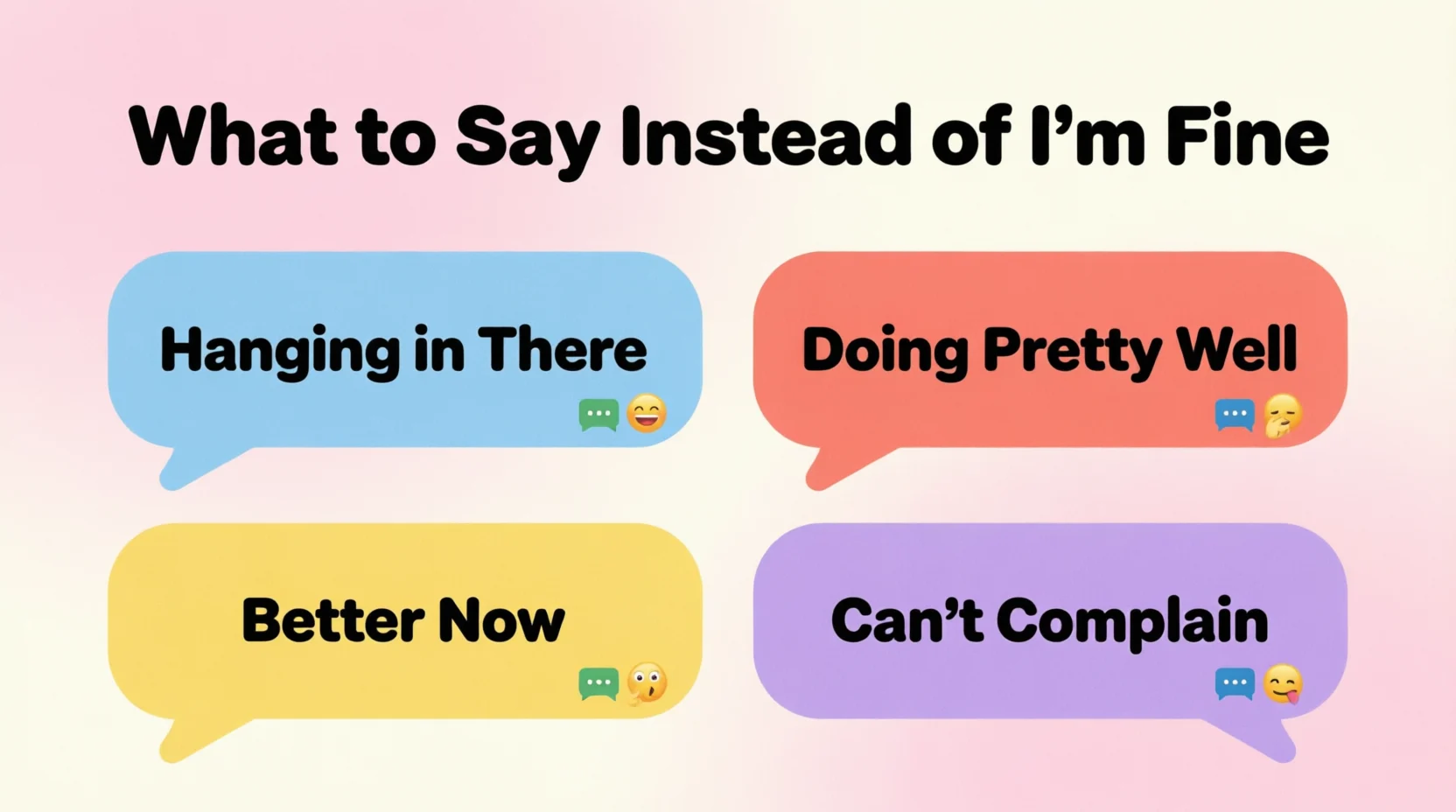
The best responses to what to say instead of I’m fine? Whether you’re texting a friend, or any other someone the right words can make your response feel more natural. Try these alternatives: “I’m doing pretty well,” “Hanging in there,” “Better now,” “Can’t complain,” and “I’ve had better days.”
Ever replied “I’m fine” when someone asked how you were, even though your brain had approximately 47 tabs open? We’ve all been there. Sometimes you’re genuinely doing great, sometimes you’re just tired, and sometimes you don’t feel like explaining your entire emotional situation in a text message.
Knowing the best responses to what to say instead of I’m fine can make everyday conversations feel warmer, more interesting, and more honest. Whether you’re chatting with friends, answering a coworker, replying to a crush in your DMs, or responding to someone who genuinely cares, there’s a better way to express yourself.
The trick is choosing words that match your mood without oversharing or sounding awkward. From funny one-liners to heartfelt answers, these alternatives help you communicate naturally. Because honestly, “I’m fine” deserves a little vacation from our vocabulary.
1. Funny Responses to Say Instead of I’m Fine
Sometimes a little humor makes an ordinary question much more entertaining. These playful replies work well with friends who appreciate your sense of humor.
- I’m functioning, so that’s a win.
Example: When a friend checks on you during a busy week.
Meaning: You’re managing life, even if things aren’t perfect. - Running on snacks and optimism.
Example: When you’re tired but trying to stay cheerful.
Meaning: You’re getting by with a little comfort and hope. - Alive and accepting compliments.
Example: When your best friend asks how you’re doing.
Meaning: You’re in a playful mood and ready for attention. - Somewhere between okay and needing a nap.
Example: When you’re exhausted after a long day.
Meaning: You’re doing reasonably well but could use some rest. - My brain is buffering, but we’re good.
Example: When someone catches you feeling mentally tired.
Meaning: You’re a little overwhelmed but keeping your humor. - Living the plot, one episode at a time.
Example: When life feels unpredictable and entertaining.
Meaning: You’re taking things as they come. - Professionally pretending to have it together.
Example: When a friend asks how adult life is going.
Meaning: You’re handling responsibilities with a sense of humor. - Not winning awards, but not losing sleep either.
Example: When you feel average rather than amazing.
Meaning: Things are reasonably stable. - My coffee and I are doing great.
Example: When you’re sleepy and need caffeine.
Meaning: You’re joking about relying on your favorite drink. - A solid seven out of ten today.
Example: When someone wants an honest but lighthearted update.
Meaning: You’re doing well enough without claiming perfection. - Emotionally, I’m on airplane mode.
Example: When you want a funny way to describe a quiet mood.
Meaning: You’re taking a break from emotional demands. - Still here, still trying, still hungry.
Example: When chatting casually with someone who knows you well.
Meaning: You’re managing life and keeping things light.
2. Honest Responses Instead of I’m Fine
You don’t always have to pretend everything is perfect. These replies let you express your actual feelings without sharing more than you’re comfortable with.
- I’m doing okay, just a little tired.
Example: When someone checks on you after a long day.
Meaning: You’re mostly okay but need some rest. - It’s been a bit of a day.
Example: When work or school has been stressful.
Meaning: You’re acknowledging a difficult day without explaining everything. - I’m managing, one thing at a time.
Example: When you’re dealing with several responsibilities.
Meaning: You’re taking life step by step. - Honestly, I’ve had better days.
Example: When a trusted friend asks about your mood.
Meaning: Things aren’t ideal, and you’re willing to admit it. - I’m okay, but I have a lot on my mind.
Example: When you’re distracted by personal concerns.
Meaning: You’re functioning while thinking through something important. - A little overwhelmed, but I’ll get through it.
Example: When deadlines or responsibilities are piling up.
Meaning: You’re struggling with pressure but staying hopeful. - I’m feeling a bit off today.
Example: When you can’t quite explain your mood.
Meaning: You don’t feel like yourself right now. - Taking things slowly today.
Example: When you need a quieter day.
Meaning: You’re giving yourself permission to move at a comfortable pace. - Not my best day, but I’m hanging in there.
Example: When you’re having a difficult day.
Meaning: Things are challenging, but you’re coping. - I’ve got a few things to work through.
Example: When you’re sorting out personal matters.
Meaning: You’re dealing with concerns that may take time. - I’m feeling better than I was yesterday.
Example: When you’re gradually recovering from a stressful period.
Meaning: You’re noticing positive progress. - Thanks for asking. I’m figuring things out.
Example: When someone shows genuine interest in your well-being.
Meaning: You appreciate their concern while keeping your answer private.
3. Casual Responses Instead of I’m Fine
Keep things simple when you’re chatting with classmates, coworkers, acquaintances, or friends you speak to regularly.
- Pretty good, thanks!
Example: When a classmate casually asks how you are.
Meaning: You’re doing well and keeping the exchange friendly. - Can’t complain.
Example: During a quick conversation with a neighbor.
Meaning: Things are going well enough. - Doing alright. You?
Example: When greeting a friend over text.
Meaning: You’re okay and interested in their day too. - All good on my end.
Example: When someone checks whether everything is okay.
Meaning: Things are going smoothly for you. - Not too bad!
Example: When someone asks how your morning is going.
Meaning: You’re feeling reasonably positive. - Same old, same old.
Example: When catching up with someone you know well.
Meaning: Life is carrying on as usual. - Just taking it easy.
Example: When you’re enjoying a relaxed afternoon.
Meaning: You’re keeping things low-key. - I’m doing pretty well, actually.
Example: When you’re in a good mood and want to share it.
Meaning: You’re feeling positive. - Getting through the day!
Example: When chatting during a busy workday.
Meaning: You’re managing your daily responsibilities. - Nothing much to report.
Example: When an acquaintance asks for a quick update.
Meaning: Nothing particularly exciting is happening. - Just keeping busy.
Example: When someone asks how life has been lately.
Meaning: Your days have been filled with activities. - I’m good, just chilling.
Example: When texting a friend on a quiet evening.
Meaning: You’re relaxed and comfortable.
4. Polite Responses Instead of I’m Fine
These thoughtful alternatives help you sound courteous without making a simple greeting unnecessarily formal.
- I’m doing well, thank you for asking.
Example: When responding to an acquaintance.
Meaning: You appreciate their question and feel positive. - Very well, thanks. How about yourself?
Example: During a polite face-to-face greeting.
Meaning: You’re answering courteously and returning the interest. - I’m well, and I hope you are too.
Example: When greeting someone you haven’t seen recently.
Meaning: You’re expressing goodwill. - Doing nicely, thank you.
Example: When speaking with a neighbor or family acquaintance.
Meaning: You’re offering a warm, respectful answer. - Things are going well so far.
Example: When someone asks how your week is going.
Meaning: Your circumstances are generally positive. - I’m keeping well, thank you.
Example: When speaking with someone in a more formal setting.
Meaning: You’re communicating that you’re doing okay. - Quite well, thanks for checking in.
Example: When someone takes time to ask about you.
Meaning: You acknowledge their consideration. - I’m doing fine, and I appreciate you asking.
Example: When responding to a thoughtful message.
Meaning: You’re being polite and appreciative. - All is well, thank you.
Example: When answering a brief professional greeting.
Meaning: You’re indicating that things are in order. - I’m well enough, thank you kindly.
Example: When you want to sound gentle and courteous.
Meaning: You’re doing reasonably well and remaining polite. - I’ve been doing well lately.
Example: When reconnecting with someone after a while.
Meaning: Your recent days have been positive. - I’m having a pleasant day, thank you.
Example: When someone asks about your day in person.
Meaning: You’re sharing a positive update respectfully.
5. Professional Responses Instead of I’m Fine
At work, a slightly more polished answer can sound natural while keeping the conversation focused.
- I’m doing well, thank you.
Example: When your manager greets you before a meeting.
Meaning: You’re responding professionally and positively. - Things are going smoothly so far.
Example: When a colleague asks how your project is progressing.
Meaning: Your work is moving forward without major problems. - I’m well, thanks for checking in.
Example: When replying to a workplace message.
Meaning: You appreciate the concern and feel okay. - Keeping busy, but making good progress.
Example: When someone asks about your workload.
Meaning: You’re occupied and accomplishing tasks. - I’m doing well and ready for the day.
Example: During a morning team meeting.
Meaning: You’re positive and prepared to work. - All good here, thank you.
Example: When responding to a brief check-in from a teammate.
Meaning: Everything is fine on your end. - It’s been productive so far.
Example: When discussing your workday with a supervisor.
Meaning: You’ve been making useful progress. - I’m managing my priorities well.
Example: When asked how you’re handling several assignments.
Meaning: You’re keeping your responsibilities organized. - Things are on track at the moment.
Example: When giving a quick project update.
Meaning: Current plans are progressing as expected. - I’m well, and I hope your day is going smoothly too.
Example: When greeting a professional contact.
Meaning: You’re courteous and considerate. - Doing well, with a full schedule today.
Example: When a coworker asks how things are going.
Meaning: You’re positive but busy. - I’m making steady progress, thank you.
Example: When discussing a task with your supervisor.
Meaning: You’re focused on consistent improvement.
6. Flirty Responses Instead of I’m Fine
When your crush asks how you’re doing, a little charm can turn a basic exchange into a fun moment. Use these when the interest feels mutual.
- Better now that you’re here.
Example: When your crush messages you unexpectedly.
Meaning: Their attention has brightened your mood. - I was fine, but now I’m smiling.
Example: When someone you like sends a sweet text.
Meaning: Their message has made you happy. - Pretty good. Wanna make my day better?
Example: When playful flirting is already part of your conversations.
Meaning: You’re inviting them to keep the fun going. - Doing well, but your message helped.
Example: When your crush checks on you.
Meaning: You enjoy hearing from them. - I’d tell you, but it’s more fun if you guess.
Example: When you want to tease someone playfully.
Meaning: You’re keeping the exchange light and intriguing. - A little better after seeing your name pop up.
Example: When you receive a message from someone special.
Meaning: Their attention gives you a little happiness. - Good, but I’m accepting compliments today.
Example: When you want a cheeky reply to your crush.
Meaning: You’re playfully encouraging some affection. - I’m good. How are you, cutie?
Example: When you already use affectionate nicknames together.
Meaning: You’re showing warmth and interest. - Not bad, but this conversation has potential.
Example: When chatting with someone you find attractive.
Meaning: You’re hinting that you’re enjoying the interaction. - Doing fine, just missing some good company.
Example: When you want to suggest spending time together.
Meaning: You’re expressing interest in companionship. - I’d say great, but I haven’t heard your best joke yet.
Example: When teasing someone who enjoys making you laugh.
Meaning: You’re encouraging playful conversation. - Pretty happy now. Guess who gets the credit?
Example: When someone you like has cheered you up.
Meaning: You’re hinting that they have a positive effect on you.
7. Cute Responses Instead of I’m Fine
These sweet, cheerful replies are perfect for close friends, family members, and people who make everyday conversations feel special.
- I’m doing little happy dances today.
Example: When you’re having a particularly good day.
Meaning: You’re feeling cheerful and playful. - Pretty good, like a sunny little day.
Example: When you want a gentle, positive response.
Meaning: You’re feeling peaceful and content. - I’m okay, sending smiles your way.
Example: When replying to a caring friend.
Meaning: You’re sharing warmth and positivity. - A tiny bit tired, a whole lot grateful.
Example: When you’re tired but appreciating the good things in life.
Meaning: You’re acknowledging fatigue while feeling thankful. - My heart feels lighter today.
Example: When you’re feeling emotionally better.
Meaning: You’re experiencing a sense of relief. - I’m doing good things, one little step at a time.
Example: When you’re making steady personal progress.
Meaning: You’re celebrating small achievements. - Cozy, calm, and content.
Example: When you’re enjoying a peaceful day at home.
Meaning: You’re feeling comfortable and relaxed. - I’m feeling like a little ray of sunshine.
Example: When you’re in an especially cheerful mood.
Meaning: You’re feeling bright and optimistic. - Good vibes and soft blankets over here.
Example: When you’re enjoying a relaxing evening.
Meaning: You’re comfortable and in a cozy mood. - I’m okay, and that’s enough for today.
Example: When you’re practicing self-kindness on an ordinary day.
Meaning: You’re accepting your current feelings without pressure. - A little sleepy, a little smiley.
Example: When you’re tired but still happy.
Meaning: You’re feeling relaxed and cheerful. - Doing well and collecting tiny joys.
Example: When you’re appreciating small positive moments.
Meaning: You’re choosing to notice everyday happiness.
8. Sarcastic Responses Instead of I’m Fine
A little sarcasm can be entertaining among people who understand your humor. Keep it friendly so your reply doesn’t sound unnecessarily dismissive.
- Oh, just thriving in my own little way.
Example: When a friend asks how you’re managing a busy week.
Meaning: You’re joking about your imperfect but manageable routine. - Living the dream, allegedly.
Example: When someone asks how work is going.
Meaning: You’re humorously questioning how exciting daily life really is. - Five stars, would experience today again.
Example: When you’ve had an unexpectedly good day.
Meaning: You’re giving an exaggeratedly positive review of your day. - My life is under new management.
Example: When you’re reorganizing your routine.
Meaning: You’re joking that you’re trying a fresh approach. - Surviving on vibes and questionable decisions.
Example: When laughing about a hectic week with friends.
Meaning: You’re admitting that your routine isn’t perfectly organized. - Absolutely fabulous, according to my calendar.
Example: When your schedule is packed with commitments.
Meaning: You’re making fun of how busy you are. - I’m a work in progress, emphasis on progress.
Example: When you’re learning from recent mistakes.
Meaning: You’re acknowledging your imperfections with confidence. - Just another episode of my daily sitcom.
Example: When something funny or inconvenient happens.
Meaning: You’re treating everyday problems as comedy. - Mentally on vacation, physically at work.
Example: When you’re tired during a long workday.
Meaning: You’re joking about needing a break. - My to-do list is winning, but I’m negotiating.
Example: When you’re behind on several tasks.
Meaning: You’re humorously admitting that responsibilities are challenging. - I’m doing spectacularly average.
Example: When your day feels completely ordinary.
Meaning: You’re describing an average mood with dry humor. - Ask me again after a snack.
Example: When you’re hungry and need a mood boost.
Meaning: You’re suggesting that food might improve your mood.
9. Confident Responses Instead of I’m Fine
Confidence doesn’t require pretending life is perfect. These responses show that you’re comfortable with yourself and where you stand.
- I’m doing well and staying focused.
Example: When someone asks about your current priorities.
Meaning: You’re positive and intentional about your goals. - I’m in a good place right now.
Example: When discussing your general well-being.
Meaning: You’re feeling stable and content. - I’m making progress, and that’s what matters.
Example: When you’re working toward a personal goal.
Meaning: You value growth over perfection. - I’m feeling good about where I’m headed.
Example: When discussing a new plan or opportunity.
Meaning: You’re optimistic about your direction. - Taking care of myself and moving forward.
Example: When someone asks how you’re doing after a busy period.
Meaning: You’re prioritizing your well-being and progress. - I’m doing better than I give myself credit for.
Example: When reflecting on your recent achievements.
Meaning: You’re recognizing your own efforts. - I’m focused on what I can control.
Example: When facing uncertain circumstances.
Meaning: You’re choosing a practical, grounded attitude. - Steady, strong, and moving forward.
Example: When you want to share an encouraging update.
Meaning: You’re feeling determined and resilient. - I’m learning, growing, and getting there.
Example: When discussing a new challenge.
Meaning: You’re confident in your ongoing development. - I’m proud of the progress I’ve made.
Example: When someone asks how a personal project is going.
Meaning: You’re acknowledging your achievements. - Doing well on my own terms.
Example: When describing a lifestyle that suits you.
Meaning: You’re comfortable making your own choices. - I’m good, and I’m working toward even better.
Example: When sharing a positive but realistic update.
Meaning: You’re satisfied with the present and motivated about the future.
10. Emotional Responses Instead of I’m Fine
When someone genuinely cares about you, a thoughtful answer can help you express feelings that a simple greeting doesn’t capture.
- I’m okay, just feeling a little sensitive today.
Example: When you’re emotionally affected by recent events.
Meaning: You’re acknowledging that your feelings are close to the surface. - It’s been an emotional week, honestly.
Example: When a trusted friend asks about your recent days.
Meaning: You’ve experienced several emotionally demanding moments. - I’m trying to give myself some grace.
Example: When you’re learning to be less critical of yourself.
Meaning: You’re practicing patience and self-compassion. - I’m feeling a lot, but I’m taking it slowly.
Example: When several emotions are happening at once.
Meaning: You’re allowing yourself time to process your feelings. - Some things are heavy, but I’m working through them.
Example: When you’re dealing with personal challenges.
Meaning: You’re being honest without sharing private details. - I’m grateful, even if today feels complicated.
Example: When your day includes both good and difficult moments.
Meaning: You’re recognizing positive things alongside challenges. - I’m learning to listen to myself more.
Example: When you’re paying closer attention to your emotional needs.
Meaning: You’re becoming more aware of your feelings. - A little lost, but still finding my way.
Example: When you’re uncertain about a decision or change.
Meaning: You’re experiencing uncertainty while remaining hopeful. - I’m doing my best with what I have today.
Example: When you’re trying not to put too much pressure on yourself.
Meaning: You’re accepting your current limits. - I could use a little kindness today.
Example: When you want gentle support from someone you trust.
Meaning: You’re communicating a need for compassion. - I’m not fully okay, but I appreciate you asking.
Example: When a close friend checks in sincerely.
Meaning: You’re being honest and acknowledging their concern. - I’m taking time to understand how I feel.
Example: When you don’t yet know how to explain your mood.
Meaning: You’re giving yourself room to process your emotions.
11. Sweet Responses Instead of I’m Fine
These warm replies work when you want to show appreciation and make the person asking feel valued.
- I’m doing well, and it’s lovely of you to ask.
Example: When someone thoughtfully checks in on you.
Meaning: You’re feeling okay and appreciate their kindness. - Better for having someone check on me.
Example: When a caring friend reaches out.
Meaning: Their attention makes you feel supported. - I’m good, thanks for thinking of me.
Example: When someone messages you unexpectedly.
Meaning: You’re expressing gratitude for their thoughtfulness. - Feeling grateful for the little things today.
Example: When you’re enjoying a peaceful moment.
Meaning: You’re appreciating simple pleasures. - I’m doing well, and I hope you are too.
Example: When responding to someone you care about.
Meaning: You’re sharing positivity and returning their concern. - My day’s been brighter than expected.
Example: When something positive has improved your mood.
Meaning: You’re pleasantly surprised by how things are going. - I’m okay, especially now that we’ve talked.
Example: When catching up with a close friend.
Meaning: Their company has helped you feel better. - I’m feeling peaceful and thankful today.
Example: When you’re enjoying a quiet, comfortable day.
Meaning: You’re experiencing calm and gratitude. - Doing well, with a little extra appreciation for good people.
Example: When reflecting on supportive relationships.
Meaning: You’re grateful for the people in your life. - I’m good, and your message was a lovely surprise.
Example: When someone reaches out unexpectedly.
Meaning: You’re happy they thought of you. - A little tired, but surrounded by good thoughts.
Example: When you’re winding down after a busy day.
Meaning: You’re tired but maintaining a positive outlook. - I’m doing okay, and I’m glad you asked.
Example: When someone makes you feel comfortable opening up.
Meaning: You’re appreciating their interest and care.
12. Creative Responses Instead of I’m Fine
Want something more original than the usual greeting? These imaginative alternatives give your answer a little personality.
- Currently operating at a comfortable speed.
Example: When you want a quirky way to describe an ordinary day.
Meaning: You’re moving through life at a manageable pace. - My personal weather forecast says partly sunny.
Example: When your mood is mixed but generally positive.
Meaning: You’re feeling some happiness alongside ordinary challenges. - The plot is developing nicely.
Example: When life is changing in interesting ways.
Meaning: You’re curious about what comes next. - Somewhere between a fresh start and a coffee break.
Example: When you’re trying to reset during a busy day.
Meaning: You’re ready for a small pause and a new beginning. - My inner playlist is mostly upbeat today.
Example: When music reflects your cheerful mood.
Meaning: You’re feeling positive and energized. - Collecting moments, not worrying about perfection.
Example: When you’re enjoying life without overthinking everything.
Meaning: You’re prioritizing experiences over unrealistic expectations. - Currently in my peaceful little chapter.
Example: When your life feels calm after a busy period.
Meaning: You’re enjoying a quieter phase. - The batteries are charged enough for today.
Example: When you have some energy but still need rest.
Meaning: You’re feeling capable without being completely energized. - A few loose ends, but the story continues.
Example: When you’re working through unfinished tasks.
Meaning: Your life isn’t perfectly organized, but you’re moving forward. - My mood is giving a soft-launch comeback.
Example: When you’re gradually feeling better.
Meaning: Your energy and happiness are returning slowly. - Currently editing my next chapter.
Example: When you’re making personal changes.
Meaning: You’re shaping what comes next in your life. - A little unfinished, but full of possibilities.
Example: When you’re beginning something new.
Meaning: You’re embracing growth and uncertainty.
13. Short Responses Instead of I’m Fine
Sometimes you’re busy, replying quickly, or simply don’t want to type a paragraph. These short alternatives keep things natural.
- Doing well!
Example: When replying to a quick greeting.
Meaning: You’re feeling positive. - Pretty good!
Example: When a friend asks how your day is going.
Meaning: Things are going reasonably well. - Hanging in there.
Example: When you’re managing a demanding day.
Meaning: You’re coping with current challenges. - All is good.
Example: When someone checks whether you’re okay.
Meaning: Things are going smoothly. - Can’t complain!
Example: When making casual conversation.
Meaning: You’re reasonably satisfied. - Feeling great!
Example: When you’re in a particularly good mood.
Meaning: You’re genuinely happy. - Getting by.
Example: When things are ordinary or slightly difficult.
Meaning: You’re managing your day. - Better today.
Example: When you’re feeling more positive than yesterday.
Meaning: Your mood has improved. - Taking it easy.
Example: When you’re having a relaxed day.
Meaning: You’re keeping things comfortable and low-pressure. - Doing my best.
Example: When you’re facing a few challenges.
Meaning: You’re making a sincere effort. - Feeling peaceful.
Example: When you’re calm and content.
Meaning: You’re enjoying a sense of inner calm. - One day at a time.
Example: When you’re dealing with an uncertain period.
Meaning: You’re focusing on the present rather than everything at once.
14. Responses That Keep the Conversation Going
A good answer can do more than respond to a question. It can give the other person an easy way to continue chatting.
- I’m good! What’s been the highlight of your day?
Example: When catching up with a friend.
Meaning: You’re positive and interested in their experiences. - Pretty well. What about you?
Example: When someone greets you over text.
Meaning: You’re returning the question and inviting a response. - Doing okay! Anything exciting happening with you?
Example: When starting a casual conversation.
Meaning: You’re open to hearing their news. - Better now that I’ve had a break. How’s your day?
Example: When reconnecting after a busy afternoon.
Meaning: You’re sharing a quick update and keeping the exchange going. - Not bad! What have you been up to lately?
Example: When messaging someone you haven’t spoken to recently.
Meaning: You’re interested in their recent activities. - I’m doing well. Got any fun plans coming up?
Example: When chatting before the weekend.
Meaning: You’re inviting them to talk about future plans. - Pretty good, actually. How have you been?
Example: When reconnecting with an old friend.
Meaning: You’re offering a friendly update and showing interest. - I’m alright. Tell me something good from your day.
Example: When a friend needs a conversation starter.
Meaning: You’re encouraging them to share a positive moment. - Doing well! How’s everything on your side?
Example: When speaking with a long-distance friend.
Meaning: You’re asking about their general well-being. - I’m good. What’s keeping you busy these days?
Example: When catching up with an acquaintance.
Meaning: You’re showing interest in their life. - Feeling pretty positive. What’s your mood today?
Example: When talking with someone who enjoys sharing feelings.
Meaning: You’re inviting an open, friendly exchange. - I’m doing okay. Want to catch up sometime?
Example: When you want to reconnect with someone.
Meaning: You’re opening the door to a longer conversation.
15. Responses When You’re Not Actually Fine
You can be honest without sharing every detail. These replies help you communicate your needs while deciding how much you want to reveal.
- Honestly, I’m having a rough day.
Example: When a trusted person asks how you really feel.
Meaning: You’re acknowledging that things are difficult. - I’m not feeling my best right now.
Example: When you’re emotionally or mentally drained.
Meaning: You’re being honest about your current state. - Could we talk for a little while?
Example: When you want company or someone to listen.
Meaning: You’re asking for connection and support. - I’m dealing with something personal at the moment.
Example: When you want privacy without pretending everything is fine.
Meaning: You’re setting a respectful boundary. - It’s a lot right now, but I don’t want to explain everything yet.
Example: When you’re not ready to discuss a difficult situation.
Meaning: You’re acknowledging your feelings while protecting your privacy. - I could really use someone to listen.
Example: When you want to talk without immediately receiving advice.
Meaning: You’re asking for attentive support. - I’m feeling overwhelmed and need a little time.
Example: When you need space to collect your thoughts.
Meaning: You’re communicating your emotional needs clearly. - I’m not ready to talk about it, but thanks for asking.
Example: When someone checks in before you’re ready to share.
Meaning: You’re setting a boundary while appreciating their concern. - Today has been harder than I expected.
Example: When an ordinary day becomes emotionally demanding.
Meaning: You’re acknowledging that things haven’t gone smoothly. - I’m working through some feelings right now.
Example: When you’re trying to understand your emotions.
Meaning: You’re giving yourself time to process what is happening. - I don’t feel great, but I’d appreciate some company.
Example: When you don’t want to be alone with your thoughts.
Meaning: You’re asking for companionship without needing a full conversation. - Thank you for checking on me. That means a lot.
Example: When someone shows genuine concern during a difficult time.
Meaning: You’re expressing gratitude for their support.
FAQs
What Does “I’m Fine” Usually Mean?
It usually means someone is okay, but context and tone can suggest other feelings.
What Can I Say Instead of “I’m Fine”?
Try “I’m doing well,” “Hanging in there,” or “I’ve had better days.”
What Does It Mean When Someone Says “I’m Fine” But Sounds Upset?
They may be upset, tired, or simply not ready to discuss their feelings.
What Should I Say Instead of “I’m Fine” to My Crush?
Try “Better now that you’re here” or “Your message made me smile.”
What Is a Professional Alternative to “I’m Fine”?
Say “I’m doing well, thank you” or “Things are going smoothly.”
What If I’m Not Actually Fine?
Try “I’m having a rough day” or “I could use someone to listen.”
Is Humor Appropriate When Someone Asks How I Am?
Yes, if the conversation is lighthearted and the other person appreciates your humor.
How Do I Reply Without Sharing Personal Details?
Say “I’m managing, thanks for asking” or “I’m working through a few things.”
Is “Hanging in There” a Positive or Negative Response?
It’s generally neutral, suggesting that things may be challenging but manageable.
How Can I Make My Answer Sound More Natural?
Match your response to your real mood, the relationship, and the situation.
Conclusion
You don’t have to answer every “How are you?” with the same old “I’m fine.” A funny one-liner can make a friend laugh, a thoughtful response can strengthen a connection, and an honest answer can help someone understand what you need.
The best responses to what to say instead of I’m fine are the ones that sound like you. Choose something casual when you’re busy, something playful when you’re joking around, or something heartfelt when you trust the person asking.
Save your favorite replies, try a few in your next conversation, and remember that you don’t owe everyone a detailed explanation of your feelings. Which alternative is your favorite? Share it with someone who needs a fresh reply