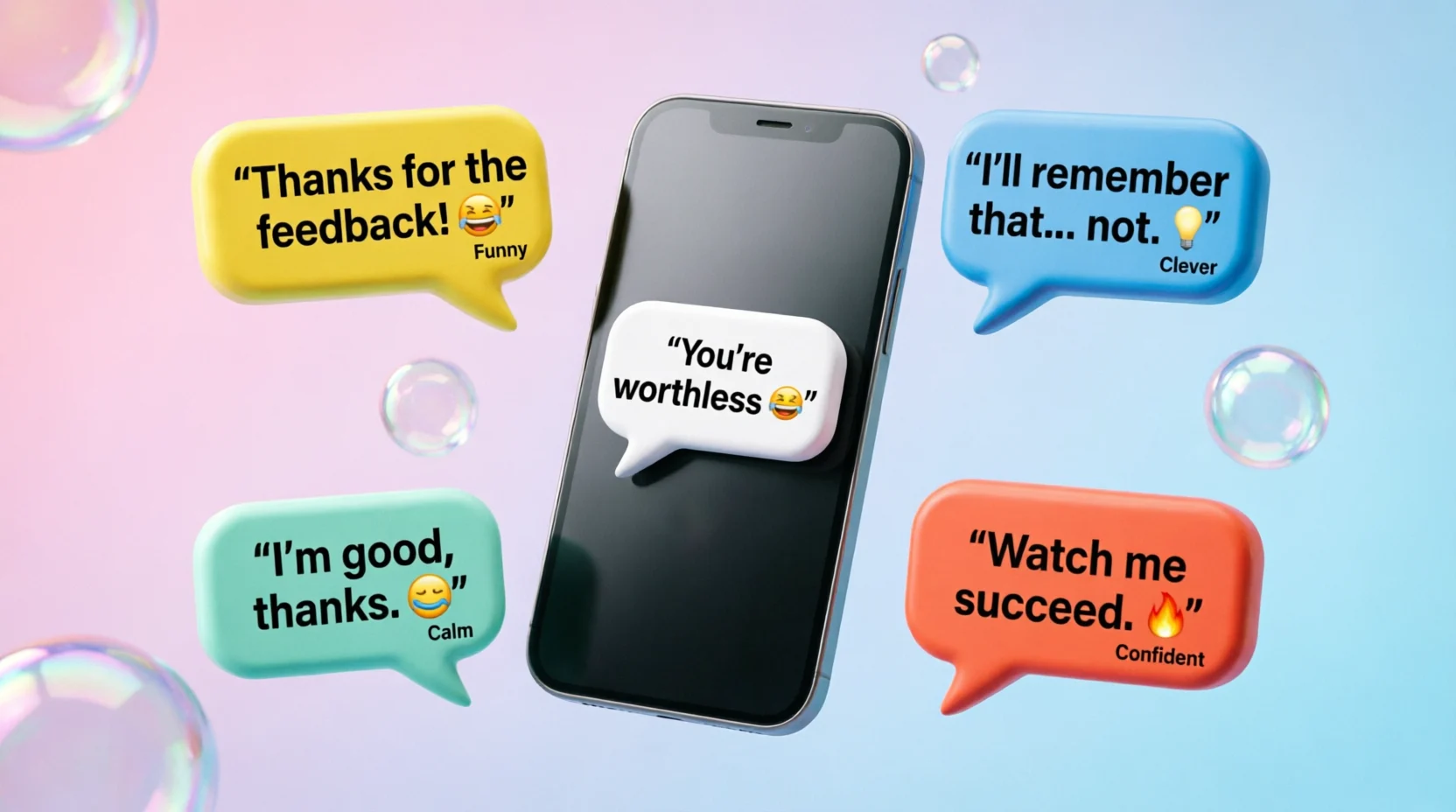
The best responses to effectively respond to hate comments are calm, clever, funny, or confident without giving unnecessary attention to negativity. Pick a reply that matches the situation and your personality.
Top alternatives: Thanks for the feedback, I’ll keep that in mind, Appreciate your opinion, Noted, Anyway, moving on
A nasty comment can show up anywhere: under your latest post, in a group chat, inside your DMs, at work, or even from someone you thought was a friend. Sometimes the comment is genuinely hurtful, while other times it is just someone looking for attention. The right reply can help you stay confident without turning a small comment into a full-blown internet episode.
You do not always need the perfect comeback either. Sometimes a funny one-liner works. Sometimes silence says enough. And sometimes a calm, confident response makes the other person realize they picked the wrong target.
Whether you want something polite, clever, sarcastic, professional, or lightly humorous, these ready-to-use replies give you plenty of options. Pick your mood, copy the line, and keep your peace.
Funny Responses
Thanks for the free engagement.
Use this when someone leaves negativity that still helps your post get attention.
Meaning: You are jokingly turning their negativity into a benefit.
I’ll add that to my fan mail.
Use this when a negative comment feels oddly enthusiastic.
Meaning: You are treating their attention as amusing rather than hurtful.
That was almost inspirational.
Use this when someone tries very hard to insult you.
Meaning: You are humorously refusing to take the comment seriously.
Thanks for stopping by.
Use this when you want a light response to an unnecessary comment.
Meaning: You are keeping things casual instead of getting defensive.
Well, that certainly was a sentence.
Use this when a comment is unnecessarily dramatic.
Meaning: You are playfully pointing out how over-the-top it sounds.
I’ll pretend I asked.
Use this when someone gives an unwanted opinion.
Meaning: You are jokingly showing that their opinion was not requested.
Noted with absolutely no panic.
Use this when someone expects their criticism to upset you.
Meaning: You are showing that you remain completely unbothered.
That comment had a lot of confidence.
Use this when someone makes a bold negative statement.
Meaning: You are humorously questioning their certainty.
You really logged in for this?
Use this when someone spends time writing something unnecessarily negative.
Meaning: You are joking about the effort they put into negativity.
Well, my day continues.
Use this when you want to show that their comment changed nothing.
Meaning: You are calmly making it clear that you are moving on.
Thanks for the plot twist.
Use this when a comment comes completely out of nowhere.
Meaning: You are treating the negativity like an unexpected story moment.
Internet points awarded for effort.
Use this when someone clearly wanted attention.
Meaning: You are humorously acknowledging their attempt without taking it seriously.
Polite Responses
Thanks for sharing your perspective.
Use this when you want to acknowledge criticism without agreeing with it.
Meaning: You are responding respectfully while keeping your position.
I appreciate the feedback.
Use this when the comment contains something worth considering.
Meaning: You are showing maturity and openness.
I understand where you’re coming from.
Use this when you want to recognize another viewpoint.
Meaning: You are validating their perspective without accepting the negativity.
Thanks for letting me know.
Use this when you want a simple, neutral response.
Meaning: You are acknowledging the comment without inviting an argument.
I’ll keep that in mind.
Use this when you do not want to debate the issue.
Meaning: You are politely closing the conversation.
We may simply see things differently.
Use this when you disagree but want to remain respectful.
Meaning: You are accepting that different opinions can exist.
I respect your opinion.
Use this when someone expresses criticism without crossing a major line.
Meaning: You are keeping your response mature and composed.
Thanks for your honesty.
Use this when someone gives direct criticism.
Meaning: You are acknowledging their honesty without necessarily agreeing.
I hear you.
Use this when you want a short and calm response.
Meaning: You are showing that you received the message.
That’s fair feedback to consider.
Use this when some part of the criticism may be useful.
Meaning: You are separating useful feedback from unnecessary negativity.
I appreciate you taking the time to comment.
Use this when you want to remain especially courteous.
Meaning: You are responding with grace rather than hostility.
Let’s agree to disagree.
Use this when the discussion is going nowhere.
Meaning: You are politely ending the disagreement.
Confident Responses
I know who I am, and that’s enough.
Use this when someone tries to make you question yourself.
Meaning: You are showing strong self-confidence.
You don’t have to understand me.
Use this when someone criticizes your choices or personality.
Meaning: You are comfortable being yourself.
Your opinion doesn’t define me.
Use this when criticism becomes personal.
Meaning: You are separating your identity from someone else’s judgment.
I’m comfortable with my choices.
Use this when someone questions a decision you made.
Meaning: You are standing firmly behind yourself.
I’m not here to impress everyone.
Use this when someone dislikes your style or personality.
Meaning: You recognize that universal approval is impossible.
I’ll keep being myself.
Use this when negativity targets your individuality.
Meaning: You refuse to change simply to satisfy critics.
Confidence does not require permission.
Use this when someone tries to undermine your self-belief.
Meaning: You are reminding yourself that confidence comes from within.
I’m good with where I stand.
Use this when someone wants you to defend your choices.
Meaning: You are calmly showing that you feel secure.
I don’t need everyone’s approval.
Use this when criticism is focused on gaining acceptance.
Meaning: You are comfortable without outside validation.
I’ll take what’s useful and leave the rest.
Use this when a comment mixes criticism with unnecessary negativity.
Meaning: You are choosing useful feedback while ignoring insults.
That doesn’t change my direction.
Use this when someone tries to discourage your goals.
Meaning: You are staying focused despite negativity.
I’m still moving forward.
Use this when someone hopes their comment will stop you.
Meaning: You are showing resilience and determination.
Sarcastic Responses
Wow, what a groundbreaking observation.
Use this when someone states an obvious criticism as if it is profound.
Meaning: You are lightly mocking the importance of their comment.
Thank you for that deeply requested opinion.
Use this when someone gives advice nobody asked for.
Meaning: You are playfully highlighting that their opinion was unsolicited.
I’ll alert the committee immediately.
Use this when someone acts like their opinion carries huge importance.
Meaning: You are jokingly exaggerating their influence.
Your concern has been carefully ignored.
Use this when you want a dry, playful response.
Meaning: You are making it clear that the comment will not affect you.
I’ll file that under “interesting.”
Use this when someone says something you find unhelpful.
Meaning: You are acknowledging it without giving it importance.
What would we do without your commentary?
Use this when someone constantly gives unwanted opinions.
Meaning: You are sarcastically highlighting their unnecessary input.
A truly unforgettable contribution.
Use this when a comment is particularly unnecessary.
Meaning: You are humorously exaggerating its importance.
I’ll lose exactly zero sleep over this.
Use this when someone expects their comment to bother you.
Meaning: You are showing that their words have little effect.
That sounded better in your head, didn’t it?
Use this when someone makes an awkward or poorly thought-out remark.
Meaning: You are playfully questioning their judgment.
You really thought that needed to be said?
Use this when a comment adds nothing useful.
Meaning: You are calling out the unnecessary negativity.
Bold choice of words.
Use this when someone makes an unnecessarily harsh statement.
Meaning: You are subtly pointing out their tone.
And yet, here we are.
Use this when someone creates unnecessary drama.
Meaning: You are responding with dry humor rather than emotion.
Clever Responses
Criticism is useful when it comes with substance.
Use this when someone offers a vague or personal insult.
Meaning: You are asking for meaningful feedback instead of negativity.
Opinions are easy; perspective takes thought.
Use this when someone makes a shallow judgment.
Meaning: You are encouraging more thoughtful communication.
Not every comment deserves a reaction.
Use this when you want to stay above unnecessary drama.
Meaning: You are choosing emotional control over conflict.
You can disagree without being disrespectful.
Use this when criticism crosses into rude territory.
Meaning: You are setting a clear boundary.
Interesting perspective, but I’ll pass.
Use this when you want to dismiss an opinion politely.
Meaning: You are acknowledging it without accepting it.
That says more about the comment than it does about me.
Use this when criticism reveals more about the commenter.
Meaning: You are refusing to internalize their negativity.
A reaction is not always a response.
Use this when someone expects you to argue.
Meaning: You are choosing thoughtful communication instead of impulse.
I prefer conversations that actually go somewhere.
Use this when a discussion becomes repetitive or pointless.
Meaning: You are declining to participate in pointless conflict.
Feedback and disrespect are two different things.
Use this when criticism becomes insulting.
Meaning: You are drawing a boundary around acceptable communication.
You made your point. I’m still choosing differently.
Use this when someone repeatedly pushes their opinion.
Meaning: You acknowledge their view while maintaining your decision.
Being loud does not make an opinion correct.
Use this when someone becomes overly aggressive.
Meaning: You are reminding them that volume does not equal truth.
I’ll consider the useful part.
Use this when a comment contains both valid feedback and negativity.
Meaning: You are focusing only on what can help you.
Chill And Casual Responses
All good.
Use this when you want to keep a minor negative comment from becoming serious.
Meaning: You are showing that you are not bothered.
No worries.
Use this when you want a relaxed response.
Meaning: You are keeping the situation light.
It’s all good on my end.
Use this when someone expects you to react emotionally.
Meaning: You are calmly reassuring them that you are fine.
We’re cool.
Use this when you want to close a small disagreement.
Meaning: You are choosing peace over unnecessary tension.
Fair enough.
Use this when you can accept that someone has a different opinion.
Meaning: You are acknowledging their view without debating.
Noted.
Use this when you want the shortest possible acknowledgment.
Meaning: You received the comment and do not feel the need to explain yourself.
No hard feelings.
Use this when you want to keep things friendly.
Meaning: You are refusing to carry unnecessary resentment.
It happens.
Use this when the negativity is minor and not worth discussing.
Meaning: You are treating the situation as insignificant.
We’re good over here.
Use this when someone tries to disturb your peace.
Meaning: You are showing that you are doing just fine.
Nothing personal.
Use this when you want to keep disagreement from becoming emotional.
Meaning: You are separating the issue from personal feelings.
Anyway, life goes on.
Use this when you want to move past the comment.
Meaning: You are refusing to dwell on negativity.
I’m just here enjoying my day.
Use this when someone tries to interrupt your good mood.
Meaning: You are choosing positivity over confrontation.
Funny Comebacks
I’ll recover from this somehow.
Use this when someone delivers a mild insult.
Meaning: You are jokingly pretending the comment was devastating.
Someone woke up with opinions today.
Use this when a person is unusually critical.
Meaning: You are playfully calling attention to their mood.
Please hold while I pretend to be offended.
Use this when the comment is clearly not serious enough to hurt you.
Meaning: You are using humor to show you are unbothered.
That almost ruined my imaginary day.
Use this when you want an exaggerated joke.
Meaning: You are making their negativity seem completely insignificant.
Adding that to my collection of internet moments.
Use this when someone posts a memorable comment.
Meaning: You are turning the situation into something humorous.
My feelings have submitted a formal complaint.
Use this when someone tries to insult you.
Meaning: You are jokingly pretending your feelings are deeply offended.
I’ll be thinking about this for approximately three seconds.
Use this when someone expects their comment to stay on your mind.
Meaning: You are showing that you will quickly forget it.
That was almost emotionally significant.
Use this when you want a dry humorous comeback.
Meaning: You are joking that the comment barely affected you.
The comment section has entered its dramatic era.
Use this when several people are being negative.
Meaning: You are humorously describing the growing drama.
I survived worse comment sections.
Use this when online negativity is getting excessive.
Meaning: You are showing that criticism does not intimidate you.
I’ll notify my imaginary publicist.
Use this when someone acts like their criticism is headline-worthy.
Meaning: You are joking about the importance of their comment.
Thank you for your audition.
Use this when someone is clearly trying to get attention.
Meaning: You are humorously suggesting they performed for an audience.
Professional Responses
Thank you for your feedback.
Use this when responding to criticism in a workplace setting.
Meaning: You are maintaining professionalism while acknowledging their message.
I appreciate you raising the concern.
Use this when someone brings up a legitimate workplace issue.
Meaning: You are showing that concerns can be discussed constructively.
Let’s focus on the specific issue.
Use this when criticism becomes too personal.
Meaning: You are redirecting the conversation toward facts.
I’m happy to discuss this professionally.
Use this when someone becomes confrontational at work.
Meaning: You are setting a respectful communication standard.
Could you clarify your concern?
Use this when a critical comment is vague.
Meaning: You are asking for useful details instead of assumptions.
Let’s keep the discussion constructive.
Use this when the conversation starts becoming hostile.
Meaning: You are encouraging productive communication.
I’ll take that feedback into consideration.
Use this when you want to acknowledge criticism without agreeing.
Meaning: You are keeping the response neutral and professional.
I understand your perspective.
Use this when a colleague expresses disagreement.
Meaning: You recognize their viewpoint without surrendering yours.
Let’s address the facts directly.
Use this when someone makes personal claims.
Meaning: You are steering the discussion toward evidence.
I prefer to resolve concerns respectfully.
Use this when someone communicates aggressively.
Meaning: You are setting a professional boundary.
Thank you for bringing this to my attention.
Use this when criticism highlights something worth reviewing.
Meaning: You are responding with maturity and openness.
I believe we can discuss this more productively.
Use this when a conversation becomes unnecessarily tense.
Meaning: You are encouraging a calmer approach.
Flirty Responses
Are you always this interested in me?
Use this when someone’s negative comment seems oddly focused on you.
Meaning: You are turning their attention into playful teasing.
You could just say you noticed me.
Use this when someone keeps commenting on your posts.
Meaning: You are playfully suggesting their attention is flattering.
That sounded almost like admiration.
Use this when criticism seems mixed with fascination.
Meaning: You are jokingly reframing their attention.
You seem to have me on your mind a lot.
Use this when someone repeatedly talks about you.
Meaning: You are teasing them about their focus on you.
Should I be flattered by all this attention?
Use this when someone keeps engaging with your content.
Meaning: You are playfully treating their attention as flattering.
You could just leave a compliment next time.
Use this when you want to turn negativity into light teasing.
Meaning: You are inviting a friendlier tone.
I didn’t know I was living rent-free today.
Use this when someone seems unusually focused on you.
Meaning: You are joking that you occupy their thoughts.
That’s a lot of attention for someone who claims not to care.
Use this when someone insists they are uninterested but keeps commenting.
Meaning: You are teasing the contradiction.
You’re making it hard to ignore you.
Use this when someone keeps seeking your attention.
Meaning: You are playfully acknowledging their persistence.
You sure know how to start a conversation.
Use this when someone uses teasing as an opening.
Meaning: You are turning the interaction into playful banter.
Was that your way of saying hello?
Use this when someone opens with a teasing comment.
Meaning: You are giving the interaction a playful twist.
I’ll take the attention, thanks.
Use this when you want to respond confidently and playfully.
Meaning: You are treating their attention as harmless amusement.
Cute Responses
Aww, I’ll try not to take it personally.
Use this when someone makes a mild negative remark.
Meaning: You are keeping the response soft and lighthearted.
Sending you a little peace anyway.
Use this when you want to respond kindly to negativity.
Meaning: You are choosing kindness instead of matching their tone.
Hope your day gets better.
Use this when someone seems unusually irritated.
Meaning: You are responding with compassion rather than hostility.
No bad vibes from me.
Use this when you want to keep the interaction positive.
Meaning: You are refusing to return negative energy.
I’ll keep smiling.
Use this when someone tries to bring down your mood.
Meaning: You are protecting your positivity.
Wishing you a good one.
Use this when you want to end a negative exchange politely.
Meaning: You are closing the conversation with kindness.
It’s okay, we’re all human.
Use this when someone makes an unnecessarily harsh remark.
Meaning: You are choosing understanding over conflict.
I hope something makes you smile today.
Use this when someone appears genuinely unhappy.
Meaning: You are responding with warmth.
No worries, friend.
Use this when the comment is minor and you want to stay friendly.
Meaning: You are refusing to create unnecessary tension.
Keeping the good energy over here.
Use this when someone brings negativity to your space.
Meaning: You are choosing positivity.
You’re allowed your opinion.
Use this when you want a gentle response to disagreement.
Meaning: You acknowledge their freedom to think differently.
Take care of yourself.
Use this when you want to end the exchange gracefully.
Meaning: You are choosing a peaceful ending.
Brutal But Classy Responses
You made your point. You can leave it there.
Use this when someone keeps repeating the same criticism.
Meaning: You are firmly asking them to stop.
I’m not interested in proving myself to you.
Use this when someone demands an explanation for your choices.
Meaning: You are confidently refusing unnecessary validation.
You’re entitled to your opinion, not control over mine.
Use this when someone tries to dictate your decisions.
Meaning: You are establishing a clear boundary.
I don’t argue with people committed to misunderstanding me.
Use this when someone deliberately twists your words.
Meaning: You are refusing to participate in a pointless argument.
That level of negativity is not my responsibility.
Use this when someone projects their frustration onto you.
Meaning: You are separating yourself from their emotional burden.
You can dislike me without disrespecting me.
Use this when criticism becomes insulting.
Meaning: You are demanding basic respect.
I’m not changing just because you’re uncomfortable.
Use this when someone dislikes your confidence or choices.
Meaning: You are standing firm without insulting them.
Your approval was never part of my plan.
Use this when someone assumes you need their validation.
Meaning: You are confidently rejecting the need for approval.
I’m comfortable leaving this conversation here.
Use this when the discussion has become unproductive.
Meaning: You are ending the exchange firmly.
You’re welcome to feel that way.
Use this when someone expresses strong dislike.
Meaning: You acknowledge their feelings without accepting their judgment.
I have better things to spend my energy on.
Use this when someone tries to drag you into an argument.
Meaning: You are prioritizing your peace.
We clearly want different things from this conversation.
Use this when the other person wants conflict while you do not.
Meaning: You are recognizing the mismatch and stepping away.
Creative Responses
That comment deserves its own little documentary.
Use this when someone leaves an unusually dramatic remark.
Meaning: You are humorously exaggerating how memorable it is.
Adding this to the unexpected chapter of my day.
Use this when criticism arrives unexpectedly.
Meaning: You are treating it like an amusing life moment.
That certainly took the conversation somewhere.
Use this when a comment changes the mood dramatically.
Meaning: You are playfully acknowledging the unexpected direction.
A plot development I did not order.
Use this when someone creates unnecessary drama.
Meaning: You are turning the situation into a funny story moment.
Interesting way to introduce yourself.
Use this when someone opens with a rude comment.
Meaning: You are humorously questioning their approach.
That belongs in the comment-section hall of fame.
Use this when someone leaves a particularly memorable remark.
Meaning: You are playfully celebrating its absurdity.
Well, that was an unexpected side quest.
Use this when a conversation goes completely off track.
Meaning: You are using internet-style humor to stay relaxed.
You brought a whole storyline to one comment.
Use this when someone overexplains their negativity.
Meaning: You are joking about the amount of drama involved.
I see we’re writing fan fiction about my life today.
Use this when someone makes assumptions about you.
Meaning: You are pointing out that their claims are imaginary.
That interpretation deserves a creative writing award.
Use this when someone completely misunderstands a situation.
Meaning: You are humorously calling out their imagination.
Unexpected, unnecessary, but certainly memorable.
Use this when someone leaves an odd negative comment.
Meaning: You are acknowledging it without letting it bother you.
And that concludes today’s episode.
Use this when you want to end a dramatic exchange.
Meaning: You are humorously signaling that the conversation is over.
Dramatic Responses
Well, I suppose I’ll survive.
Use this when someone delivers a minor insult dramatically.
Meaning: You are jokingly exaggerating the impact.
My character development continues.
Use this when criticism gives you another funny life lesson.
Meaning: You are turning negativity into personal growth humor.
What a moment for the history books.
Use this when someone makes a particularly dramatic comment.
Meaning: You are exaggerating its importance for comedic effect.
I may never emotionally recover.
Use this when someone makes a harmless teasing remark.
Meaning: You are playfully pretending to be devastated.
The drama has officially arrived.
Use this when a conversation suddenly becomes intense.
Meaning: You are humorously acknowledging the tension.
Someone cue the dramatic music.
Use this when a comment feels unnecessarily serious.
Meaning: You are making light of the situation.
This deserves a commercial break.
Use this when an argument becomes unnecessarily long.
Meaning: You are jokingly asking for a pause.
What an emotional journey this comment has been.
Use this when someone writes an intense criticism.
Meaning: You are humorously exaggerating its emotional weight.
I’ll need several business days to process that.
Use this when someone says something unexpectedly rude.
Meaning: You are jokingly pretending the comment requires serious processing.
Someone alert the newspapers.
Use this when a person acts like their opinion is historic.
Meaning: You are playfully exaggerating their importance.
The storyline just got complicated.
Use this when a comment creates unnecessary drama.
Meaning: You are treating the situation like entertainment.
And somehow, we made it dramatic.
Use this when a simple disagreement becomes intense.
Meaning: You are pointing out how unnecessarily serious things became.
Emotional Responses
That was hurtful, but I’ll choose peace.
Use this when a comment genuinely affects you.
Meaning: You are honestly acknowledging your feelings without attacking back.
I hope you realize words can affect people.
Use this when someone crosses an emotional boundary.
Meaning: You are encouraging them to consider the impact of their words.
I expected better from you.
Use this when criticism comes from someone you trusted.
Meaning: You are expressing disappointment rather than anger.
That wasn’t necessary.
Use this when someone says something unnecessarily hurtful.
Meaning: You are clearly communicating that their behavior crossed a line.
I’m going to step away from this conversation.
Use this when the exchange becomes emotionally draining.
Meaning: You are protecting your emotional well-being.
I don’t want negativity between us.
Use this when you still value the relationship.
Meaning: You are choosing peace and connection.
I’d rather talk when we’re both calmer.
Use this when emotions are running high.
Meaning: You are asking for a healthier conversation later.
I understand you’re upset, but please respect me.
Use this when someone expresses anger disrespectfully.
Meaning: You are acknowledging emotion while setting a boundary.
That comment stayed with me more than you probably realize.
Use this when someone may not understand the impact of their words.
Meaning: You are honestly communicating emotional impact.
I’m not going to respond from anger.
Use this when you feel tempted to argue.
Meaning: You are choosing emotional control.
I hope we can handle disagreements with more kindness.
Use this when you want to repair communication.
Meaning: You are encouraging respectful disagreement.
I’m choosing to let this go.
Use this when you want emotional closure.
Meaning: You are releasing the conflict instead of continuing it.
Sweet Responses
I’m choosing kindness even when it’s difficult.
Use this when someone is openly negative toward you.
Meaning: You are refusing to mirror their behavior.
No hard feelings from me.
Use this when you want to close a disagreement warmly.
Meaning: You are choosing forgiveness or emotional distance.
I hope things get better for you.
Use this when someone seems to be carrying frustration.
Meaning: You are responding with compassion.
I’ll keep wishing you well.
Use this when you want to end a negative exchange peacefully.
Meaning: You are refusing to hold onto resentment.
You don’t have to like me, and that’s okay.
Use this when someone expresses dislike.
Meaning: You are accepting differences without hostility.
I’d rather spread kindness than negativity.
Use this when you want to make your values clear.
Meaning: You are choosing a positive approach.
I hope you find something worth smiling about today.
Use this when you want a gentle response to negativity.
Meaning: You are offering kindness without engaging in conflict.
We can disagree and still be respectful.
Use this when someone has a different opinion.
Meaning: You are promoting healthy communication.
I’m not upset with you.
Use this when you want to lower the tension.
Meaning: You are showing that you do not want ongoing conflict.
Sending good energy your way.
Use this when you want to respond positively to negativity.
Meaning: You are choosing warmth instead of retaliation.
Take care and stay well.
Use this when you want to end the interaction gracefully.
Meaning: You are closing the conversation without hostility.
Peace is more important to me than winning an argument.
Use this when someone wants to keep debating.
Meaning: You are prioritizing calm over being right.
Short And Direct Responses
Noted.
Use this when you want a brief acknowledgment.
Meaning: You received the comment without inviting more discussion.
Fair enough.
Use this when you accept that someone sees things differently.
Meaning: You acknowledge their perspective without agreeing.
I disagree.
Use this when you want to state your position clearly.
Meaning: You are calmly expressing a different viewpoint.
That’s your opinion.
Use this when someone presents a personal judgment as fact.
Meaning: You are reminding them that opinions are subjective.
I’m good, thanks.
Use this when someone tries to make you feel insecure.
Meaning: You are showing that you are comfortable with yourself.
No thanks.
Use this when you want to reject unsolicited negativity.
Meaning: You are setting a simple boundary.
We see it differently.
Use this when you disagree without wanting an argument.
Meaning: You are accepting the difference in perspective.
I’ll pass on the negativity.
Use this when someone tries to pull you into conflict.
Meaning: You are choosing not to participate.
Moving on.
Use this when you want to close the exchange immediately.
Meaning: You are refusing to give the comment more attention.
All noted.
Use this when you want a slightly more formal version of “Noted.”
Meaning: You acknowledge the message without engaging further.
No argument from me.
Use this when you do not want to continue a debate.
Meaning: You are calmly stepping away from the conflict.
Take care.
Use this when you want a simple ending.
Meaning: You are closing the interaction politely.
Calm Boundary-Setting Responses
Please keep the conversation respectful.
Use this when someone crosses a clear line.
Meaning: You are directly asking for respectful communication.
I’m happy to discuss the issue, not insults.
Use this when criticism becomes personal.
Meaning: You are separating constructive discussion from disrespect.
That tone isn’t necessary.
Use this when someone becomes unnecessarily aggressive.
Meaning: You are calmly challenging their delivery.
Let’s keep this respectful.
Use this when you want a short boundary.
Meaning: You are setting a clear expectation for the conversation.
I won’t continue a disrespectful conversation.
Use this when someone refuses to communicate appropriately.
Meaning: You are making your limit clear.
You can disagree without attacking me.
Use this when someone confuses criticism with insults.
Meaning: You are asking them to separate disagreement from personal attacks.
I’m not available for this kind of negativity.
Use this when you want to protect your peace.
Meaning: You are refusing to engage with harmful communication.
If you want to talk, let’s do it respectfully.
Use this when you are willing to resolve the issue.
Meaning: You are leaving the door open for healthier communication.
I’m stepping away from this now.
Use this when the exchange is becoming unproductive.
Meaning: You are ending the conversation without escalating it.
That crosses a boundary for me.
Use this when someone says something personally disrespectful.
Meaning: You are clearly identifying unacceptable behavior.
I won’t match that energy.
Use this when someone is trying to provoke you.
Meaning: You are choosing not to mirror their negativity.
This conversation can end here.
Use this when you want to firmly close the exchange.
Meaning: You are taking control of the conversation’s ending.
FAQs
What does “hate comment” mean?
A hate comment is a negative, insulting, or hostile remark directed at someone.
What is the best response to a hate comment?
A calm, confident, or humorous reply usually works better than an angry reaction.
Should I respond to every hate comment?
No. Sometimes ignoring, deleting, or blocking is the healthiest response.
Can a funny response work?
Yes, humor can keep the situation light when the comment is not serious or threatening.
What if the hate comment really hurts?
You can acknowledge your feelings, step away, and avoid replying while emotional.
What is a professional response to hate comments?
Try “Thank you for your feedback” or “Let’s keep the discussion constructive.”
Can hate comments be interpreted as attention?
Sometimes repeated negative comments show that someone is paying close attention to your content.
What if I do not actually mean my response?
Choose a neutral reply such as “Noted” instead of pretending to feel something you do not.
Is sarcasm a good idea?
Sarcasm can work with friends, but it may escalate conflict in serious situations.
Should I defend myself online?
Defend yourself when clarification matters, but you do not need to answer every negative opinion.
Conclusion
The best responses to effectively respond to hate comments are not always the sharpest ones. Sometimes a clever joke works, sometimes a calm boundary is better, and sometimes saying nothing is the strongest choice. What matters most is staying in control of your own response.
A good comeback can show confidence, humor, personality, and emotional maturity without turning every disagreement into an argument. Try different tones depending on the person and situation, then choose the reply that feels natural to you.
Save this list for the next unexpected comment, share it with a friend who needs a few good comebacks, and keep your favorite responses ready for the next time the comment section gets interesting.