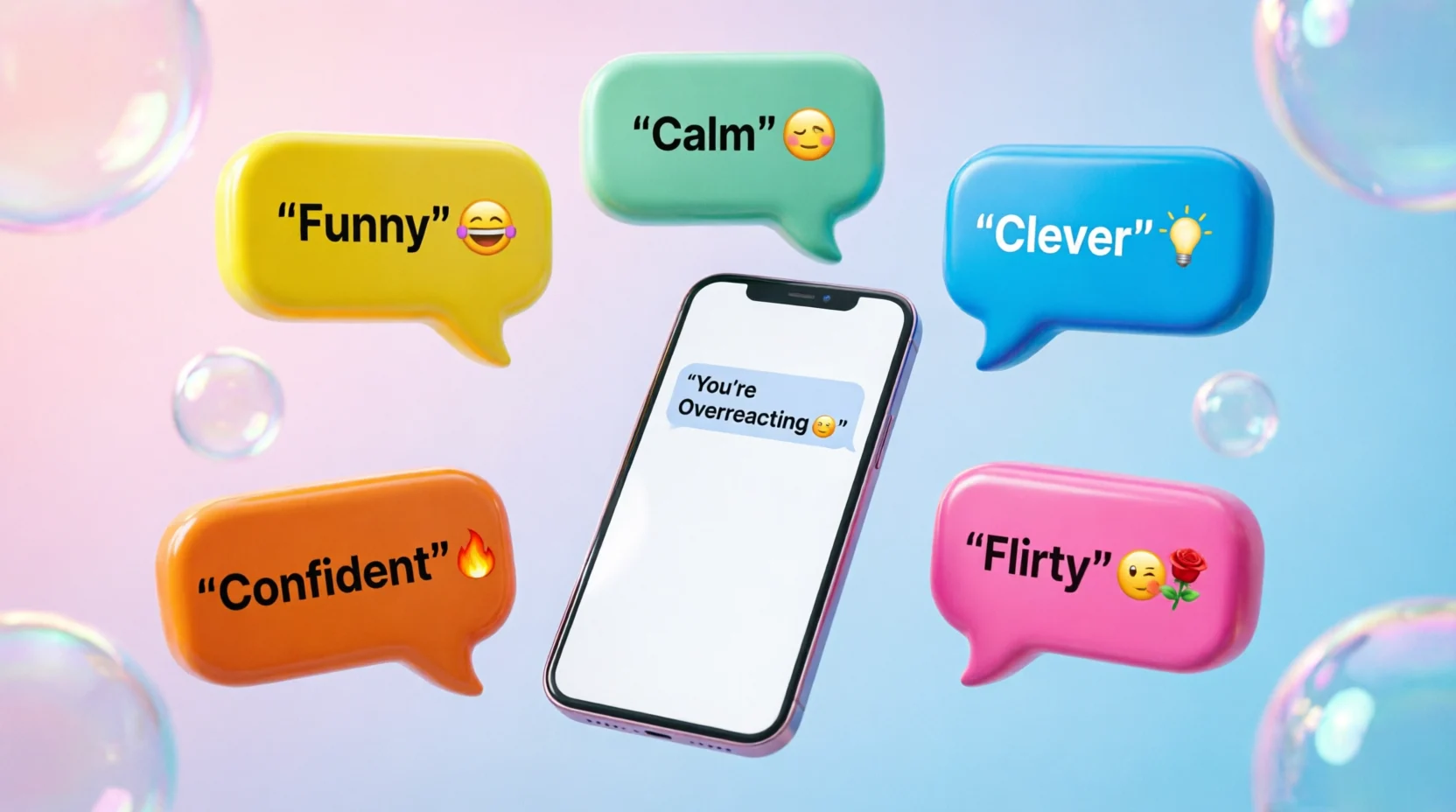
The best responses to “you’re overreacting” depend on whether you want to stay calm, make a joke, set a boundary, or push back confidently. Here are some easy options to keep in your back pocket.
Top alternatives: “I see it differently,” “I’m reacting to what happened,” “Let’s talk about it calmly,” “Maybe, but my feelings are still valid,” “I’d rather explain than argue.”
Ever explained why something bothered you, only to hear, “You’re overreacting”? Yep, that sentence can turn a simple text, DM, friendship moment, workplace disagreement, or crush conversation into a whole situation.
Sometimes the comment is harmless teasing, but other times it can make you feel dismissed when you are simply trying to explain yourself.That is why knowing the best responses to youre overreacting can save you from typing a five-paragraph essay while running on pure emotion.
The right reply can be funny, calm, confident, flirty, or direct, depending on the person and the moment. You do not always need the perfect comeback. Sometimes you just need a response that says, “I heard you, but I still stand by how I feel.” Here are plenty of options for every kind of conversation.
Funny Responses
“I prefer the term emotionally invested.”
Use this when you want to turn the accusation into a playful joke.
Meaning: You are admitting you care without accepting the criticism.
“Give me a minute, I’m auditioning for a drama series.”
Use this when the situation is genuinely lighthearted.
Meaning: You are joking about your dramatic reaction.
“Overreacting? I call it premium enthusiasm.”
Use this with friends who enjoy playful banter.
Meaning: You are humorously reframing your reaction.
“My emotions came with extra features.”
Use this when someone teases you about being expressive.
Meaning: You are making your emotional side sound funny.
“I would calm down, but the plot is getting good.”
Use this when the conversation feels more amusing than serious.
Meaning: You are playfully embracing the drama.
“Okay, but where is my award for best reaction?”
Use this when you want to make the moment less tense.
Meaning: You are jokingly accepting the accusation.
“I’m not overreacting. I’m providing commentary.”
Use this when your friends are teasing you.
Meaning: You are turning your reaction into a humorous observation.
“My feelings clearly skipped the chill class.”
Use this when you want to laugh at yourself.
Meaning: You recognize that you may be reacting strongly.
“Let me finish my emotional TED Talk first.”
Use this when you need a moment to explain yourself.
Meaning: You want to be heard before moving on.
“I’m just adding seasoning to the situation.”
Use this for playful conversations with close friends.
Meaning: You are joking about making things more intense.
“Apparently, my reaction has entered its main-character era.”
Use this for casual texting or social media banter.
Meaning: You are humorously acknowledging your strong reaction.
“Relax, I’m just keeping the conversation interesting.”
Use this when someone is teasing you about your response.
Meaning: You are using humor to lower the tension.
Witty Responses
“Maybe we have different definitions of reasonable.”
Use this when you disagree but want to stay composed.
Meaning: You believe your reaction makes sense from your perspective.
“Interesting take, but I’m not convinced.”
Use this when someone dismisses your reaction too quickly.
Meaning: You politely challenge their opinion.
“I understand your perspective, but mine exists too.”
Use this during a disagreement with someone close.
Meaning: You are reminding them that your viewpoint matters.
“That’s one interpretation of what happened.”
Use this when you do not agree with their characterization.
Meaning: You are calmly leaving room for another perspective.
“Maybe the reaction makes more sense with the full context.”
Use this when someone knows only part of the story.
Meaning: You want them to consider the circumstances.
“You noticed the reaction, but not what caused it.”
Use this when someone focuses only on your response.
Meaning: You want attention placed on the original issue.
“I hear you, but I still disagree.”
Use this when you want to disagree without creating another argument.
Meaning: You acknowledge them without changing your position.
“Maybe, or maybe I’m responding exactly how I need to.”
Use this when someone questions your emotional response.
Meaning: You are confidently defending your reaction.
“Let’s discuss the reason before judging the reaction.”
Use this when the original issue needs attention.
Meaning: You want the cause addressed first.
“You can call it overreacting; I call it having a response.”
Use this when you want a clever but direct reply.
Meaning: You are refusing to dismiss your feelings.
“That depends on which side of the story you heard.”
Use this when context is missing from the conversation.
Meaning: You believe the situation is more complicated than it appears.
“A different reaction does not automatically make mine wrong.”
Use this when someone compares your response with theirs.
Meaning: You are defending emotional differences.
Sarcastic Responses
“Thanks for the professional emotional assessment.”
Use this when someone is being unnecessarily dismissive.
Meaning: You are sarcastically pointing out their judgment.
“Wow, I almost forgot you’re the official reaction referee.”
Use this with someone who enjoys sarcastic humor.
Meaning: You are teasing them for policing your emotions.
“Good to know my feelings have been reviewed and rejected.”
Use this when you want a dry comeback.
Meaning: You are highlighting how dismissive their comment feels.
“Should I submit my reaction for approval next time?”
Use this when someone acts like your response needs permission.
Meaning: You are sarcastically defending your independence.
“I’ll try to schedule my emotions better next time.”
Use this when the comment is clearly unfair.
Meaning: You are making fun of the expectation that you stay perfectly calm.
“Noted. I’ll consult the emotional handbook.”
Use this when someone is being overly critical.
Meaning: You are joking about their unnecessary judgment.
“My apologies for having an actual reaction.”
Use this when someone dismisses your feelings.
Meaning: You are sarcastically calling attention to their attitude.
“I didn’t realize we were grading reactions today.”
Use this when the conversation becomes unnecessarily judgmental.
Meaning: You are questioning why your response is being evaluated.
“Thanks, Doctor Feelings.”
Use this only with someone who understands your humor.
Meaning: You are playfully mocking their emotional diagnosis.
“I’ll alert the media about my dramatic response.”
Use this when the situation is minor and playful.
Meaning: You are exaggerating the moment for humor.
“Clearly, my emotions need a permission slip.”
Use this when someone tries to control how you respond.
Meaning: You are sarcastically rejecting emotional control.
“I’ll add that to my list of opinions I didn’t request.”
Use this when you want a sharper response.
Meaning: You are making it clear that their judgment was unwanted.
Calm Responses
“I understand you see it differently.”
Use this when you want to keep a disagreement peaceful.
Meaning: You acknowledge their view without dismissing your own.
“I’m willing to talk about it calmly.”
Use this when the conversation is becoming tense.
Meaning: You want discussion rather than an argument.
“Let’s focus on what happened instead of labeling my reaction.”
Use this when you want a productive conversation.
Meaning: You want to address the actual issue.
“Maybe we should slow down and talk about it.”
Use this when emotions are running high.
Meaning: You prefer understanding over immediate conflict.
“I hear what you’re saying.”
Use this when you want to acknowledge their comment.
Meaning: You are listening without necessarily agreeing.
“My reaction may be different from yours.”
Use this when both people respond differently to the same event.
Meaning: You recognize that people process situations differently.
“I’d rather explain why I reacted that way.”
Use this when you feel misunderstood.
Meaning: You want to provide context instead of arguing.
“Let’s not dismiss the issue because of my reaction.”
Use this when the original problem is being ignored.
Meaning: You want the conversation to stay focused.
“I’m not trying to create an argument.”
Use this when someone thinks you are intentionally causing conflict.
Meaning: You want your intentions to be understood.
“We can disagree without dismissing each other.”
Use this when you want respectful communication.
Meaning: You are asking for mutual respect.
“I’m calm enough to talk about it.”
Use this when someone assumes you cannot have a reasonable conversation.
Meaning: You are showing emotional control.
“Let’s figure out what actually bothered me.”
Use this when you want to move toward a solution.
Meaning: You are focusing on understanding the emotion.
Confident Responses
“I know what I felt, and I’m comfortable saying it.”
Use this when someone tries to make you doubt yourself.
Meaning: You trust your own emotional experience.
“You don’t have to agree with my reaction.”
Use this when someone challenges your perspective.
Meaning: You are confident without demanding agreement.
“I’m allowed to react differently than you would.”
Use this when someone compares your response with theirs.
Meaning: You are defending your individuality.
“I said what I meant, and I stand by it.”
Use this when you want a firm response.
Meaning: You are confident about what you communicated.
“My feelings are mine to understand.”
Use this when someone tries to define your emotions.
Meaning: You are taking ownership of your emotional experience.
“You can disagree without deciding how I should feel.”
Use this when someone becomes controlling.
Meaning: You are setting a respectful boundary.
“I’m not asking you to feel the same way.”
Use this when someone refuses to understand your reaction.
Meaning: You only want your feelings respected.
“I know the difference between reacting and communicating.”
Use this when you are explaining yourself thoughtfully.
Meaning: You believe you are expressing rather than simply lashing out.
“I’m confident enough to say when something bothers me.”
Use this when someone labels honesty as overreaction.
Meaning: You view emotional honesty as a strength.
“You heard my reaction; now hear the reason behind it.”
Use this when someone focuses on your tone.
Meaning: You want the underlying concern acknowledged.
“I don’t need permission to have boundaries.”
Use this when your reaction involves a personal limit.
Meaning: You are firmly protecting your boundaries.
“Being expressive does not make me unreasonable.”
Use this when someone confuses emotion with irrationality.
Meaning: You reject the idea that strong feelings automatically mean you are wrong.
Polite Responses
“I understand that it may look that way to you.”
Use this when you want to disagree respectfully.
Meaning: You acknowledge their perspective without accepting it.
“I appreciate your perspective, but I see it differently.”
Use this in respectful disagreements with friends or family.
Meaning: You are politely maintaining your viewpoint.
“Maybe we can talk about what caused my reaction.”
Use this when you want a constructive conversation.
Meaning: You are redirecting attention to the actual issue.
“I respect your opinion, even if I disagree.”
Use this when the conversation needs maturity.
Meaning: You are separating disagreement from disrespect.
“I may have reacted strongly, but I’d still like to explain.”
Use this when you think your delivery could have been better.
Meaning: You accept possible intensity while defending your point.
“Thanks for telling me how you see it.”
Use this when you want to keep things civil.
Meaning: You acknowledge their perspective without surrendering yours.
“I’d appreciate it if we could discuss it without labels.”
Use this when someone repeatedly calls you dramatic.
Meaning: You are requesting respectful communication.
“I understand your concern.”
Use this when the other person genuinely seems worried.
Meaning: You are showing that you are listening.
“Let’s talk when we’re both ready to listen.”
Use this when the conversation is becoming unproductive.
Meaning: You prefer a calmer discussion later.
“I’m happy to explain what bothered me.”
Use this when someone is willing to listen.
Meaning: You are inviting understanding instead of conflict.
“I don’t want this to become an argument.”
Use this when you want to lower the tension.
Meaning: You are choosing peace over winning.
“I hear you, and I hope you can hear me too.”
Use this when you want balanced communication.
Meaning: You are asking for mutual understanding.
Professional Responses
“I’d prefer to focus on the issue rather than my reaction.”
Use this during a workplace disagreement.
Meaning: You are keeping the conversation professional.
“Let’s review the situation objectively.”
Use this when emotions are affecting a work discussion.
Meaning: You want facts and context considered.
“I understand your perspective, but I have a different concern.”
Use this when respectfully disagreeing with a colleague.
Meaning: You are presenting another viewpoint professionally.
“Could we discuss what specifically caused the concern?”
Use this when someone dismisses your response.
Meaning: You want the underlying issue clarified.
“I’m open to feedback about my communication.”
Use this when workplace feedback is appropriate.
Meaning: You show maturity without accepting an unfair label.
“Let’s keep the discussion focused on the facts.”
Use this when a conversation becomes personal.
Meaning: You want to return to objective details.
“I’d like to explain the reasoning behind my response.”
Use this when your reaction needs professional context.
Meaning: You are asking for space to clarify your position.
“I appreciate the feedback, but I see the situation differently.”
Use this when receiving criticism at work.
Meaning: You acknowledge feedback while maintaining your perspective.
“Perhaps we can address the underlying concern directly.”
Use this when someone focuses on your emotional response.
Meaning: You want to solve the actual problem.
“I’m happy to discuss this constructively.”
Use this when you want to reset a tense workplace conversation.
Meaning: You are encouraging respectful problem-solving.
“I believe my concern is worth discussing.”
Use this when your issue is being minimized.
Meaning: You are professionally asserting that your concern matters.
“Let’s find a solution rather than debate my reaction.”
Use this when the conversation needs to become productive.
Meaning: You are redirecting attention toward resolution.
Direct Responses
“I’m reacting because something bothered me.”
Use this when someone needs a straightforward explanation.
Meaning: You are connecting your response to a real concern.
“You may not see it the way I do.”
Use this when your perspectives clearly differ.
Meaning: You recognize that people can interpret events differently.
“My reaction has a reason.”
Use this when someone dismisses you without asking why.
Meaning: You are reminding them that your response has context.
“I’d rather explain than be dismissed.”
Use this when someone refuses to hear you out.
Meaning: You want communication instead of judgment.
“That may be your opinion, but it is not my experience.”
Use this when someone tells you how you should feel.
Meaning: You distinguish their opinion from your lived experience.
“Let’s talk about what happened.”
Use this when you want to skip unnecessary drama.
Meaning: You want to address the facts.
“I’m not going to pretend it didn’t bother me.”
Use this when someone expects you to ignore an issue.
Meaning: You are honestly acknowledging your feelings.
“I said what bothered me for a reason.”
Use this when someone dismisses your complaint.
Meaning: You believe the concern deserves attention.
“You can disagree with me, but don’t dismiss me.”
Use this when you need to establish a boundary.
Meaning: You are asking for disagreement without disrespect.
“I’m not looking for an argument.”
Use this when your honesty is mistaken for confrontation.
Meaning: You want communication rather than conflict.
“I’m telling you how it felt from my side.”
Use this when someone questions your emotional response.
Meaning: You are sharing your perspective rather than claiming absolute truth.
“If something bothers me, I’m going to say it.”
Use this when you want to sound firm and self-assured.
Meaning: You are committing to honest communication.
Chill And Casual Responses
“Maybe a little, but I’m good.”
Use this when the situation is not worth a serious argument.
Meaning: You lightly acknowledge your reaction and move on.
“Fair enough, I’ll chill.”
Use this when someone makes a reasonable point.
Meaning: You are willing to relax without making things awkward.
“Okay, okay, maybe I added some extra drama.”
Use this with close friends during a minor disagreement.
Meaning: You are playfully admitting you may have exaggerated.
“I’m fine, just had a moment.”
Use this when your reaction has already passed.
Meaning: You are reassuring the other person that things are okay.
“Maybe I felt it more than you did.”
Use this when you want to explain different emotional reactions.
Meaning: You recognize that the same event can affect people differently.
“All good, I just wanted to say my piece.”
Use this when you want to end the discussion peacefully.
Meaning: You have expressed yourself and are ready to move on.
“No worries, we see it differently.”
Use this when you do not want to continue debating.
Meaning: You accept the disagreement without resentment.
“I’ll take a breath and reset.”
Use this when you realize you need a moment.
Meaning: You are choosing to calm yourself before continuing.
“Okay, point taken.”
Use this when their comment has some truth to it.
Meaning: You acknowledge their perspective without overexplaining.
“Maybe I was doing a little too much.”
Use this when you can laugh at your own reaction.
Meaning: You are casually admitting you may have gone overboard.
“It’s fine, I’m not making it a whole thing.”
Use this when you want to keep the moment light.
Meaning: You are signaling that the issue is not becoming bigger.
“We’re good. I just needed to vent.”
Use this when you were simply expressing frustration.
Meaning: You clarify that your reaction was temporary.
Flirty Responses
“Maybe you just bring out my dramatic side.”
Use this with someone you already share playful chemistry with.
Meaning: You are turning the criticism into flirtatious teasing.
“You make it hard to act normal.”
Use this when the conversation is clearly playful.
Meaning: You are suggesting they have an effect on you.
“If I’m overreacting, maybe you should stop being so distracting.”
Use this when you want a cheeky flirt.
Meaning: You jokingly blame them for your reaction.
“I only react like this around people I actually care about.”
Use this when you want to add emotional warmth.
Meaning: You imply that their importance affects your reaction.
“Maybe I’m just giving you extra attention.”
Use this when teasing someone you like.
Meaning: You turn the situation into a playful compliment.
“You noticed my reaction, so you must be paying attention.”
Use this when you want a clever flirt.
Meaning: You are teasing them for noticing you closely.
“Maybe you secretly enjoy my dramatic moments.”
Use this when the other person likes playful banter.
Meaning: You are teasing them about enjoying your personality.
“I could calm down, but then where’s the fun?”
Use this for lighthearted flirting.
Meaning: You are playfully refusing to become too serious.
“You say overreacting, I say keeping you interested.”
Use this when you want a confident playful reply.
Meaning: You are joking that your reactions keep their attention.
“Maybe you like me a little dramatic.”
Use this when you already have comfortable chemistry.
Meaning: You are turning the accusation into playful flirtation.
“You bring out emotions I usually keep quiet.”
Use this when you want a softer romantic tone.
Meaning: You are hinting that they matter to you.
“If I’m reacting this much, you must be important.”
Use this when you want to add a sweet flirtatious twist.
Meaning: You imply that their importance explains your reaction.
Cute Responses
“Okay, maybe my feelings got a little excited.”
Use this when you want a soft and playful response.
Meaning: You are making your emotional reaction sound endearing.
“I’m just a little sensitive sometimes.”
Use this with someone who understands your personality.
Meaning: You are gently acknowledging your emotional side.
“My heart got involved before my brain did.”
Use this when emotions clearly took over.
Meaning: You are admitting that feelings influenced your reaction.
“Oops, my emotions got ahead of me.”
Use this when you want to soften the situation.
Meaning: You acknowledge a strong response without making it heavy.
“I’m working on my calm face.”
Use this when you want to make someone smile.
Meaning: You are playfully admitting you reacted strongly.
“Maybe I just care a tiny bit too much.”
Use this when the issue involves someone important.
Meaning: You are expressing care in a gentle way.
“My feelings are just a little loud today.”
Use this when you want a cute metaphor.
Meaning: You are describing strong emotions playfully.
“I’ll be okay, promise.”
Use this when someone seems concerned about your reaction.
Meaning: You reassure them while acknowledging the moment.
“I’m allowed one tiny emotional moment.”
Use this when you want to keep things light.
Meaning: You are asking for a little patience.
“Maybe I just needed a hug and a snack.”
Use this with close friends during a minor emotional moment.
Meaning: You are humorously suggesting comfort would help.
“My feelings were just being extra adorable.”
Use this when playful banter is already happening.
Meaning: You are turning the criticism into cute humor.
“Okay, I’ll put my emotions back in their little box.”
Use this when joking with someone you trust.
Meaning: You are playfully acknowledging your strong feelings.
Sweet Responses
“I may react strongly because I genuinely care.”
Use this when the situation involves someone important to you.
Meaning: You connect your reaction with genuine concern.
“I just wanted you to understand how I felt.”
Use this when your intention was connection rather than conflict.
Meaning: You want emotional understanding.
“I’m not trying to make things difficult.”
Use this when someone misunderstands your intentions.
Meaning: You are reassuring them that you want peace.
“I care about us enough to be honest.”
Use this during an important relationship conversation.
Meaning: You see honesty as part of maintaining trust.
“I’d rather tell you than keep it inside.”
Use this when you are opening up emotionally.
Meaning: You prefer honest communication over silence.
“Maybe my reaction was strong, but my feelings were real.”
Use this when your delivery may have been intense.
Meaning: You distinguish the strength of your reaction from the validity of your feelings.
“I hope you can understand where I’m coming from.”
Use this when you want empathy rather than agreement.
Meaning: You are asking them to consider your perspective.
“I’m not against you. I just felt hurt.”
Use this when a disagreement becomes personal.
Meaning: You clarify that your reaction came from hurt, not hostility.
“I want us to understand each other better.”
Use this when you care about the relationship.
Meaning: You are choosing connection over winning.
“I’m expressing myself because you matter to me.”
Use this when the other person is important.
Meaning: You connect emotional honesty with caring.
“I don’t want my reaction to hide what I’m actually trying to say.”
Use this when the conversation has become tense.
Meaning: You want the deeper message understood.
“I just want to feel heard.”
Use this when you feel dismissed.
Meaning: You are asking for empathy rather than an argument.
Emotional Responses
“Maybe I am reacting strongly because this really hurt me.”
Use this when the situation has genuine emotional weight.
Meaning: You are explaining the emotion behind your reaction.
“It may seem small to you, but it affected me.”
Use this when someone minimizes your experience.
Meaning: You are explaining that impact can differ between people.
“I’m trying to explain my feelings, not create a problem.”
Use this when someone misunderstands emotional honesty.
Meaning: You want your vulnerability taken seriously.
“I wish you would understand before judging my reaction.”
Use this when you feel emotionally dismissed.
Meaning: You are asking for empathy first.
“Sometimes the reaction comes from everything that happened before it.”
Use this when one event is part of a bigger pattern.
Meaning: You are explaining that context matters.
“I’m not asking you to fix it. I just want you to understand.”
Use this when you need emotional support.
Meaning: You want empathy rather than immediate solutions.
“I know how I felt in that moment.”
Use this when someone tells you your emotions were unnecessary.
Meaning: You trust your own emotional experience.
“It hurt more than you probably realized.”
Use this when the other person underestimated the impact.
Meaning: You are gently revealing the depth of your feelings.
“I’m trying to communicate instead of shutting down.”
Use this when you are making an effort to be open.
Meaning: You are choosing communication despite feeling vulnerable.
“I may not express it perfectly, but I mean what I’m saying.”
Use this when emotions make communication difficult.
Meaning: You want your message understood beyond its delivery.
“I don’t want my feelings to be treated like an inconvenience.”
Use this when you feel repeatedly dismissed.
Meaning: You are setting an emotional boundary.
“I just needed someone to hear me without judging me.”
Use this when the conversation feels emotionally exhausting.
Meaning: You are asking for understanding and emotional safety.
Clever Responses
“The reaction is only one chapter of the story.”
Use this when someone judges you based on one moment.
Meaning: You are reminding them that context matters.
“Maybe the reaction deserves context before criticism.”
Use this when someone jumps to conclusions.
Meaning: You want the circumstances considered first.
“Different people have different emotional volume settings.”
Use this when explaining different reactions.
Meaning: You are saying people naturally respond with different intensity.
“You’re evaluating the response without examining the trigger.”
Use this when someone ignores what caused the issue.
Meaning: You want attention on the reason behind your reaction.
“A strong reaction and an unreasonable reaction are not always the same.”
Use this when someone equates intensity with irrationality.
Meaning: You are making a thoughtful distinction.
“Maybe we should separate emotion from the actual issue.”
Use this when a disagreement becomes complicated.
Meaning: You want to examine the problem clearly.
“You can question my reaction without questioning my reality.”
Use this when someone dismisses what happened to you.
Meaning: You are protecting your perspective.
“My response can be imperfect without being meaningless.”
Use this when you admit your delivery was not ideal.
Meaning: You still believe your underlying concern matters.
“Sometimes the reaction is information, not the entire problem.”
Use this when you want a thoughtful comeback.
Meaning: You are saying emotions can reveal underlying concerns.
“Maybe the better question is why I reacted that way.”
Use this when someone labels you instead of listening.
Meaning: You want curiosity instead of judgment.
“Your calm response does not make my emotional response invalid.”
Use this when comparing different reactions.
Meaning: You reject the idea that one reaction is automatically correct.
“Understanding the reaction starts with understanding the situation.”
Use this when you want a logical discussion.
Meaning: You believe context should come before judgment.
Playful Responses
“Oops, my drama subscription renewed.”
Use this when joking with friends about a minor reaction.
Meaning: You are playfully admitting you got a little dramatic.
“Hold on, I’m emotionally buffering.”
Use this when you need a funny pause.
Meaning: You need a moment to process what happened.
“My chill mode is currently unavailable.”
Use this when you are joking about being annoyed.
Meaning: You are playfully admitting you are not feeling calm.
“I’ll return to normal shortly.”
Use this when you want to make the situation less serious.
Meaning: You are reassuring them that your reaction will pass.
“Please allow my feelings to load.”
Use this for internet-style humor.
Meaning: You are joking that you need time to process emotions.
“My emotional software needs an update.”
Use this when you want a nerdy playful comeback.
Meaning: You are humorously acknowledging your reaction.
“I’m just adding a little flavor to the conversation.”
Use this when friends tease you about being expressive.
Meaning: You are turning your reaction into playful entertainment.
“Okay, I’ll lower the emotional volume.”
Use this when you want to soften the mood.
Meaning: You are jokingly agreeing to calm down.
“Drama detected. I repeat, drama detected.”
Use this when the conversation is clearly playful.
Meaning: You are making fun of the situation rather than escalating it.
“My inner narrator got carried away.”
Use this when you want a clever humorous excuse.
Meaning: You are joking about overthinking the moment.
“I promise the season finale is coming.”
Use this when friends are teasing you about a dramatic situation.
Meaning: You are playfully exaggerating the moment.
“Okay, okay, I’ll stop writing the emotional screenplay.”
Use this when you want to laugh at yourself.
Meaning: You are acknowledging that you may have overthought things.
Boundary-Setting Responses
“Please don’t dismiss my feelings by calling them an overreaction.”
Use this when you want to communicate a clear boundary.
Meaning: You are asking for your feelings to be taken seriously.
“You can disagree with me without minimizing how I feel.”
Use this during a serious disagreement.
Meaning: You want respectful disagreement.
“I’m willing to discuss my reaction, but not be mocked for it.”
Use this when someone is making fun of your emotions.
Meaning: You are setting a boundary around respectful communication.
“If you want to understand me, ask what caused the reaction.”
Use this when someone labels you instead of listening.
Meaning: You are inviting a more constructive conversation.
“I won’t argue about whether I’m allowed to feel something.”
Use this when someone keeps challenging your emotions.
Meaning: You refuse to debate the existence of your feelings.
“My feelings are not up for dismissal.”
Use this when you need a firm but concise reply.
Meaning: You are clearly protecting your emotional boundaries.
“We can talk when the conversation is respectful.”
Use this when someone becomes insulting.
Meaning: You are willing to continue only with respectful communication.
“I’m open to feedback, but not labels.”
Use this when someone repeatedly calls you dramatic.
Meaning: You welcome useful input while rejecting dismissive labels.
“If my reaction concerns you, tell me why without dismissing me.”
Use this when you want specific feedback.
Meaning: You are asking for constructive communication.
“I deserve to be heard even when you disagree.”
Use this when you feel ignored in a conversation.
Meaning: You are asserting your right to respectful communication.
“Let’s discuss the issue without making my emotions the problem.”
Use this when the focus has shifted away from the original concern.
Meaning: You want the actual issue addressed.
“I’m willing to listen when I feel respected.”
Use this when the conversation has become dismissive.
Meaning: You are making respect a condition for productive communication.
Sweet And Confident Responses
“I know myself well enough to know when something bothers me.”
Use this when someone questions your emotional awareness.
Meaning: You trust your understanding of your own feelings.
“I can be calm and still care deeply.”
Use this when someone assumes caring means overreacting.
Meaning: You are separating emotional depth from loss of control.
“I’m not trying to win. I’m trying to be understood.”
Use this when a disagreement starts feeling competitive.
Meaning: You prioritize connection over being right.
“I can respect your view while honoring mine.”
Use this when you want a mature response.
Meaning: You are balancing confidence with respect.
“I’m allowed to care about things differently than you do.”
Use this when someone minimizes your concern.
Meaning: You recognize different emotional priorities.
“My feelings deserve a conversation, not a dismissal.”
Use this when you want to communicate firmly but kindly.
Meaning: You are asking for emotional respect.
“I’m not ashamed of caring.”
Use this when someone makes you feel bad for being emotional.
Meaning: You view caring as something positive.
“I’d rather be honest than pretend I’m unaffected.”
Use this when you want to be emotionally authentic.
Meaning: You choose honesty over hiding your feelings.
“Maybe I feel deeply, and I’m okay with that.”
Use this when someone criticizes your emotional intensity.
Meaning: You accept your personality without apology.
“I can own my reaction without ignoring what caused it.”
Use this when you want a balanced response.
Meaning: You can acknowledge your behavior while addressing the issue.
“I’m learning how to communicate my feelings better.”
Use this when you want to show emotional growth.
Meaning: You recognize that communication can improve over time.
“You don’t have to understand everything to respect how I feel.”
Use this when someone struggles to relate to your reaction.
Meaning: You are asking for respect rather than complete agreement.
FAQs
What does “you’re overreacting” mean?
It usually means someone thinks your emotional response is stronger than the situation requires.
What is a good response to “you’re overreacting”?
Try, “Maybe, but I’d still like to explain why this bothered me.”
Can “you’re overreacting” be flirty?
Yes, especially when it is playful teasing between two people with mutual chemistry.
What should I say if I am actually overreacting?
Try, “Okay, maybe I got carried away. Let me calm down and think about it.”
What is a professional response to “you’re overreacting”?
Say, “I understand your perspective. I’d like to explain the concern behind my response.”
Is humor a good response to “you’re overreacting”?
Yes, if the situation is light. Avoid jokes when someone is genuinely hurt or upset.
How do I respond without starting an argument?
Say, “I hear you. Let’s talk about what happened instead of arguing about my reaction.”
What if someone keeps saying I’m overreacting?
Set a boundary with, “We can disagree, but I do not want my feelings dismissed.”
Conclusion
Knowing the right reply to “you’re overreacting” can completely change the energy of a conversation. You can keep things funny with friends, confident with someone who challenges you, sweet with someone you care about, or professional when the situation calls for maturity. The goal is not always to deliver the sharpest comeback. Sometimes the strongest response is simply explaining yourself clearly and refusing to let your feelings be brushed aside.
Save these responses for your next text, DM, group chat, or awkward conversation. Pick the one that sounds most like you, make it your own, and keep the conversation moving with confidence. Share this list with someone who always needs the perfect comeback!