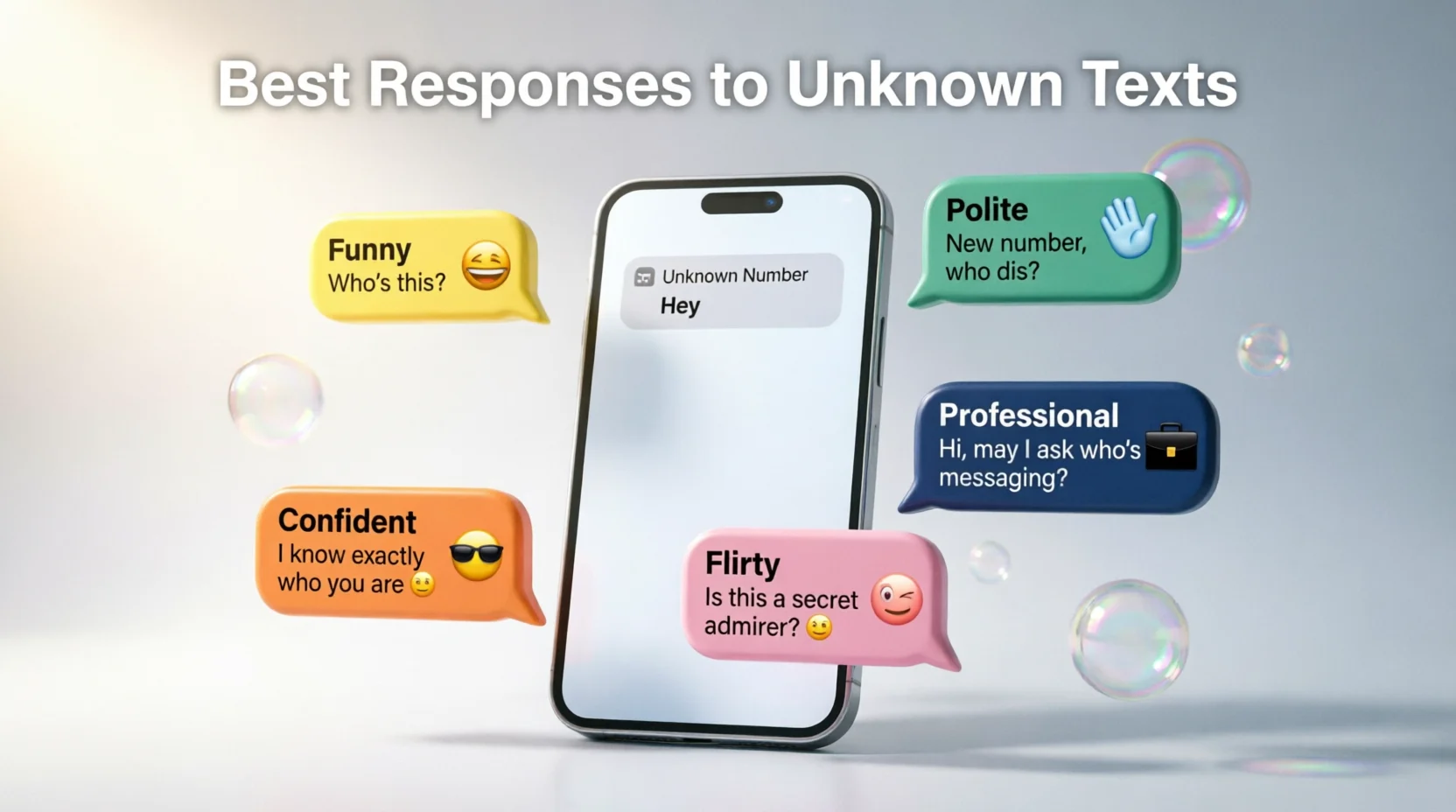
The best responses to responding to unknown texts depend on who might be messaging you and how comfortable you feel replying. Whether it’s a mysterious “Hey,” an unfamiliar number, or a random DM, keep your response natural, confident, and safe.
Top replies: “Who’s this?”, “Hey, may I know who’s texting?”, “Do we know each other?”, “Sorry, I don’t recognize this number.”, “What’s this about?”
Ever received a random “Hey” from an unknown number and immediately started wondering who it could be? Maybe it’s an old friend with a new number, a coworker you forgot to save, a delivery update, or someone who has absolutely no business texting you. Suddenly, one tiny notification becomes a whole mystery!
Knowing the best responses to responding to unknown texts can help you handle these unexpected messages without sounding rude, awkward, or overly curious. The right reply depends on the situation. You might want to be polite, make a joke, set a boundary, or figure out who’s behind that mysterious message.
Of course, not every unknown text deserves a response. If a message looks suspicious, asks for personal information, or contains an unexpected link, it’s safer not to engage. But when a reply makes sense, having a few clever lines ready can save you from the classic “Who even is this?” moment. Let’s find your perfect response!
1. Funny Responses to Unknown Texts
Sometimes, a little humor makes an awkward situation much easier. These replies are perfect for harmless messages that leave you wondering who just appeared in your notifications.
- “New phone, who dis?”
Example: Use it when an unfamiliar number texts you casually.
Meaning: You want the sender to identify themselves in a playful way. - “Did I win something, or is this a mystery?”
Example: Send it when a random message arrives without context.
Meaning: You’re joking about the unexpected contact. - “Please identify yourself before I start guessing.”
Example: Use it when you genuinely have no idea who is texting.
Meaning: You want an introduction without making things awkward. - “My contacts have no record of this plot twist.”
Example: Try it when an unknown sender suddenly says hello.
Meaning: You’re treating the unexpected message like a funny surprise. - “Is this a secret mission?”
Example: Use it when someone sends a mysterious opening message.
Meaning: You’re inviting them to explain themselves humorously. - “You have entered the unknown-number department.”
Example: Send it when a friend might be using a new number.
Meaning: You’re making light of the unfamiliar contact. - “Wait, let me consult my imaginary detective.”
Example: Use it when you’re curious but don’t recognize the sender.
Meaning: You’re playfully trying to solve the mystery. - “I need a name before this episode continues.”
Example: Try it when someone texts without introducing themselves.
Meaning: You want the conversation to make sense before continuing. - “Plot twist: I don’t know who you are.”
Example: Use it for an unexpected but harmless message.
Meaning: You’re openly acknowledging the mystery with humor. - “Welcome to my inbox. Please state your business.”
Example: Send it when a random text catches you off guard.
Meaning: You’re asking for clarification in a playful tone. - “My phone says stranger danger, so introduce yourself.”
Example: Use it with someone you suspect might be a friend.
Meaning: You’re joking while asking them to identify themselves. - “Okay, mysterious texter, your turn.”
Example: Try it when someone sends a vague greeting.
Meaning: You’re encouraging them to explain who they are.
2. Polite Responses to Unknown Texts
When you want to sound respectful without pretending you recognize someone, a simple and friendly reply works best. These options are suitable for everyday situations.
- “Hi! May I know who’s texting?”
Example: Use it when an unfamiliar number sends a greeting.
Meaning: You want to identify the sender politely. - “Hello, I don’t have this number saved. Who is this?”
Example: Send it when you receive a message from a new contact.
Meaning: You’re asking for their identity without sounding unfriendly. - “Hi there! Could you please introduce yourself?”
Example: Use it when the sender starts a conversation without context.
Meaning: You want a clear introduction before continuing. - “Sorry, I don’t recognize this number.”
Example: Try it when someone seems to know you.
Meaning: You’re explaining why you need clarification. - “Hello! Could you remind me how we know each other?”
Example: Use it when the person might be an old acquaintance.
Meaning: You’re giving them an opportunity to refresh your memory. - “Hi, may I ask what this message is regarding?”
Example: Send it when the text doesn’t explain its purpose.
Meaning: You’re requesting context respectfully. - “Thanks for reaching out. Could you tell me your name?”
Example: Use it when the message seems genuine but unfamiliar.
Meaning: You’re acknowledging the contact while seeking identification. - “Hello! I think I may have missed saving your contact.”
Example: Try it when the sender could be someone you know.
Meaning: You’re leaving room for a genuine connection. - “Would you mind telling me who this is?”
Example: Send it when you want a straightforward, courteous reply.
Meaning: You’re asking for identification in a gentle way. - “Hi! I don’t have enough context to recognize this conversation.”
Example: Use it when a message refers to something unfamiliar.
Meaning: You need more information before responding meaningfully. - “Hello, could you please share your name and reason for messaging?”
Example: Try it when you want clarity about an unexpected contact.
Meaning: You’re asking for both identity and purpose. - “Hi! Happy to clarify once I know who I’m speaking with.”
Example: Use it when the sender asks a question without introducing themselves.
Meaning: You’re being cooperative while maintaining a reasonable boundary.
3. Professional Responses to Unknown Texts
Unknown messages can arrive during work hours, from potential clients, or through business contacts using personal numbers. Keep your reply concise and professional.
- “Hello, may I ask who this is, please?”
Example: Use it when an unfamiliar number contacts you during business hours.
Meaning: You’re requesting identification professionally. - “Good morning. Could you please identify yourself?”
Example: Send it when a message arrives without a name or signature.
Meaning: You’re maintaining a formal tone while seeking clarity. - “Thank you for reaching out. May I know the purpose of your message?”
Example: Use it when a sender contacts you about an unspecified matter.
Meaning: You’re asking for the subject before proceeding. - “Hello, I don’t recognize this number. Could you provide your name and organization?”
Example: Try it when the message may be work-related.
Meaning: You’re requesting professional identification. - “Could you please share some context regarding your message?”
Example: Use it when someone refers to an unknown project or meeting.
Meaning: You’re asking for relevant background information. - “Good afternoon. How may I assist you?”
Example: Send it when you suspect the message may concern business.
Meaning: You’re offering assistance without assuming the sender’s identity. - “Please let me know which matter you’re contacting me about.”
Example: Use it when the sender mentions a previous discussion.
Meaning: You’re requesting enough information to understand the subject. - “Would you mind sharing your full name for my reference?”
Example: Try it when you need to identify a possible business contact.
Meaning: You’re asking for a clear, professional introduction. - “Hello, could you confirm how you obtained my contact details?”
Example: Use it when an unexpected business message raises questions.
Meaning: You’re seeking transparency about how the sender reached you. - “Thank you. I’ll need to verify your identity before proceeding.”
Example: Send it when the message requests action on an important matter.
Meaning: You’re prioritizing verification before taking action. - “Could you please send the relevant details through an official channel?”
Example: Use it when a message concerns sensitive workplace information.
Meaning: You’re moving the discussion to a more appropriate channel. - “I appreciate your message. Please clarify your request so I can respond appropriately.”
Example: Try it when a professional text lacks essential information.
Meaning: You’re inviting a clear and useful explanation.
4. Confident Responses to Unknown Texts
Confidence means being comfortable asking questions and setting expectations. You don’t need to apologize for not recognizing an unfamiliar number.
- “Who am I speaking with?”
Example: Use it when someone starts a conversation without introducing themselves.
Meaning: You’re directly asking for their identity. - “Please introduce yourself first.”
Example: Send it when the sender expects you to recognize them.
Meaning: You’re setting a simple expectation for the conversation. - “I don’t recognize this number. What’s your name?”
Example: Use it when you want an immediate, clear answer.
Meaning: You’re confidently requesting identification. - “Let’s start with introductions.”
Example: Try it when someone jumps straight into a request.
Meaning: You’re establishing a sensible starting point. - “I need a little context before I can respond.”
Example: Send it when a vague message leaves you confused.
Meaning: You’re asking for information before engaging further. - “Whoever you are, please get to the point.”
Example: Use it when an unfamiliar sender keeps sending vague messages.
Meaning: You’re prioritizing clarity and direct communication. - “I’m happy to talk once I know who this is.”
Example: Try it when the message appears potentially legitimate.
Meaning: You’re open to conversation but want identification first. - “A name would make this conversation much easier.”
Example: Send it when the sender seems to expect recognition.
Meaning: You’re confidently pointing out what’s missing. - “Before we continue, please tell me who you are.”
Example: Use it when the conversation is becoming personal.
Meaning: You’re setting a clear boundary. - “I prefer knowing who’s contacting me.”
Example: Try it when an unknown sender asks personal questions.
Meaning: You’re expressing your preference without hostility. - “Please explain why you’re messaging me.”
Example: Send it when the purpose of a message is unclear.
Meaning: You’re requesting a straightforward explanation. - “I’ll decide how to proceed once I have the details.”
Example: Use it when someone pressures you to respond quickly.
Meaning: You’re keeping control of your decision.
5. Sarcastic Responses to Unknown Texts
A little sarcasm can be entertaining when the message seems harmless and you want to show some personality. Keep these replies for casual situations, not sensitive or potentially threatening messages.
- “Oh, a mystery. Exactly what my day needed.”
Example: Use it when a random number sends a vague greeting.
Meaning: You’re teasing the sender for being unclear. - “And you are…?”
Example: Send it when someone expects you to know who they are.
Meaning: You’re asking for an introduction with a dry tone. - “My crystal ball is currently unavailable.”
Example: Use it when the sender gives no identifying details.
Meaning: You’re joking that you can’t magically recognize them. - “Did introductions go out of style?”
Example: Try it when someone starts chatting without sharing their name.
Meaning: You’re pointing out the missing introduction sarcastically. - “That’s an interesting way to enter someone’s inbox.”
Example: Use it when an unfamiliar sender opens with something unexpected.
Meaning: You’re highlighting the unusual approach. - “Should I know you, or is this a surprise guest appearance?”
Example: Send it when a random contact seems overly familiar.
Meaning: You’re questioning the sender’s familiarity with humor. - “Mystery level: unnecessarily high.”
Example: Try it when the message contains no useful information.
Meaning: You’re teasing the sender for being vague. - “An introduction would be a refreshing plot development.”
Example: Use it when someone repeatedly avoids identifying themselves.
Meaning: You’re sarcastically encouraging them to share their name. - “My saved contacts would like a word.”
Example: Send it when an unknown number suddenly appears.
Meaning: You’re joking about the sender’s absence from your contacts. - “I see we’re skipping the basic introduction chapter.”
Example: Use it when someone jumps into conversation immediately.
Meaning: You’re teasing them for overlooking a social courtesy. - “The suspense is impressive. The information, not so much.”
Example: Try it when a message keeps you guessing.
Meaning: You’re humorously asking for more useful details. - “Please submit your identity for review.”
Example: Use it when a friend might appreciate playful sarcasm.
Meaning: You’re pretending the sender needs official approval.
6. Flirty Responses to Unknown Texts
An unfamiliar message can sometimes turn into a fun conversation, especially when the sender seems friendly. If you’re interested, keep things light while finding out who you’re talking to.
- “Well, hello, mystery person.”
Example: Use it when an unfamiliar sender opens with a friendly greeting.
Meaning: You’re showing curiosity with a playful hint of charm. - “Should I be curious about you?”
Example: Try it when the message feels friendly and intriguing.
Meaning: You’re inviting the sender to introduce themselves. - “A mysterious entrance? Interesting choice.”
Example: Send it when someone starts chatting without identifying themselves.
Meaning: You’re responding with lighthearted curiosity. - “First, tell me your name. Then we’ll see.”
Example: Use it when you want to be playful but cautious.
Meaning: You’re keeping the conversation open without rushing. - “Is there a story behind this unexpected text?”
Example: Try it when the sender seems interested in talking.
Meaning: You’re encouraging them to explain their reason for messaging. - “You have my attention for one introduction.”
Example: Send it when you want a witty, confident opening.
Meaning: You’re inviting the sender to make a good first impression. - “Mystery is interesting, but names are better.”
Example: Use it when someone seems playful but hasn’t introduced themselves.
Meaning: You’re mixing curiosity with a request for clarity. - “Are we about to become friends, or should I guess first?”
Example: Try it when the tone feels casual and welcoming.
Meaning: You’re playfully exploring the sender’s intentions. - “Okay, you’ve made me curious. Who are you?”
Example: Send it when you genuinely want to know who’s messaging.
Meaning: You’re showing interest without pretending to recognize them. - “That entrance deserves an explanation.”
Example: Use it when the first message catches your attention.
Meaning: You’re encouraging a fun introduction. - “I like a little mystery, with a name attached.”
Example: Try it when you want to sound charming and direct.
Meaning: You’re showing playful interest while asking for identification. - “Let’s start with your name and see where the conversation goes.”
Example: Send it when you’re open to getting acquainted.
Meaning: You’re inviting a conversation without making promises.
7. Chill and Casual Responses to Unknown Texts
Not every random message needs a clever comeback. Sometimes, a relaxed reply is the easiest way to find out who’s texting.
- “Hey, who’s this?”
Example: Use it when someone sends a simple hello.
Meaning: You’re asking for identification in a casual way. - “Hey! New number?”
Example: Send it when the sender might be someone you know.
Meaning: You’re checking whether they’ve changed their contact details. - “Hi, remind me who this is?”
Example: Try it when you suspect you’ve spoken before.
Meaning: You’re asking for a quick reminder. - “What’s up? I don’t have this number saved.”
Example: Use it when you want to keep the tone friendly.
Meaning: You’re welcoming the conversation while explaining the confusion. - “Hey there, how do we know each other?”
Example: Send it when the sender seems familiar with you.
Meaning: You’re casually asking about your connection. - “Sorry, who’s messaging?”
Example: Try it when you need a quick answer.
Meaning: You’re requesting the sender’s name without formality. - “Hey! Give me a hint.”
Example: Use it when the sender might be an old friend.
Meaning: You’re inviting them to help you recognize them. - “I don’t recognize the number. What’s your name?”
Example: Send it when you want to keep things simple.
Meaning: You’re asking for the missing information directly. - “Did you get a new number?”
Example: Try it when the sender might be a saved contact using another phone.
Meaning: You’re checking whether their contact details have changed. - “Hey, what’s this about?”
Example: Use it when the text has no clear purpose.
Meaning: You’re asking for the reason behind the message. - “Hi! Can you remind me where we met?”
Example: Send it when the sender sounds like an acquaintance.
Meaning: You’re trying to place the person in your memory. - “Hey, just need a little context.”
Example: Use it when the message is too vague to understand.
Meaning: You’re requesting clarification in a relaxed tone.
8. Short and Direct Responses to Unknown Texts
When you don’t want to spend time figuring out a mysterious message, short replies can get straight to the point.
- “Who’s this?”
Example: Use it when an unknown number sends a greeting.
Meaning: You’re asking for the sender’s identity immediately. - “Your name, please?”
Example: Send it when someone starts a conversation without introducing themselves.
Meaning: You’re requesting a quick introduction. - “Do I know you?”
Example: Use it when the sender seems unexpectedly familiar.
Meaning: You’re checking whether you have an existing connection. - “What’s this about?”
Example: Try it when the message doesn’t explain its purpose.
Meaning: You’re asking the sender to get to the point. - “Please identify yourself.”
Example: Send it when you prefer direct communication.
Meaning: You’re requesting clear identification. - “New number?”
Example: Use it when you suspect the sender is a friend.
Meaning: You’re checking whether their contact details have changed. - “Who am I texting?”
Example: Try it when you want to establish who’s on the other end.
Meaning: You’re seeking clarity about the conversation. - “Can you clarify?”
Example: Send it when the message is confusing or incomplete.
Meaning: You’re asking for more information. - “Please provide some context.”
Example: Use it when someone references an unknown topic.
Meaning: You’re requesting background information. - “I don’t recognize this number.”
Example: Try it when you want to explain your confusion.
Meaning: You’re letting the sender know you need identification. - “How did you get my number?”
Example: Send it when you don’t understand why someone contacted you.
Meaning: You’re asking how the sender obtained your contact details. - “Please introduce yourself.”
Example: Use it when you want a straightforward starting point.
Meaning: You’re asking the sender to identify themselves before continuing.
9. Creative Responses to Unknown Texts
Want something more memorable than the usual “Who is this?” These creative replies add personality while still asking the sender to explain themselves.
- “Every good story starts with a name.”
Example: Use it when someone sends a mysterious opening message.
Meaning: You’re inviting the sender to begin with an introduction. - “Your first clue, please.”
Example: Send it when the message feels like a guessing game.
Meaning: You’re playfully asking for identifying information. - “The floor is yours, mysterious stranger.”
Example: Use it when you want the sender to explain themselves.
Meaning: You’re handing over the conversation with a playful tone. - “Let’s unlock this conversation. Who are you?”
Example: Try it when the sender’s identity isn’t obvious.
Meaning: You’re framing the introduction as a small mystery to solve. - “A name would complete this little puzzle.”
Example: Send it when an unknown contact appears unexpectedly.
Meaning: You’re asking for identification in a creative way. - “Your inbox entrance has raised questions.”
Example: Use it when someone sends an unexpected message.
Meaning: You’re expressing curiosity about their appearance in your messages. - “Please reveal the character behind the screen.”
Example: Try it when you want a playful introduction.
Meaning: You’re asking the sender to identify themselves. - “Let’s skip the mystery and get to the introduction.”
Example: Send it when you prefer clarity over guessing.
Meaning: You’re encouraging a direct introduction. - “Name first, plot second.”
Example: Use it when the sender launches into a story.
Meaning: You’re asking who they are before hearing the details. - “My curiosity is ready. Is your introduction?”
Example: Try it when you want a lighthearted opening.
Meaning: You’re inviting the sender to share their identity. - “Every mystery needs a useful clue.”
Example: Send it when someone sends a vague message.
Meaning: You’re asking for information that helps you recognize them. - “Let’s give this conversation a proper beginning.”
Example: Use it when you want a more thoughtful opening.
Meaning: You’re encouraging a clear and friendly introduction.
10. Boundary-Setting Responses to Unknown Texts
You don’t owe every unfamiliar number your time or personal details. These replies help you stay respectful while making your comfort level clear.
- “Please tell me who you are before we continue.”
Example: Use it when an unknown sender keeps messaging without identifying themselves.
Meaning: You’re making identification a condition for continuing. - “I’m not comfortable sharing personal details with an unknown number.”
Example: Send it when someone asks about your private life.
Meaning: You’re protecting your privacy. - “Could you explain why you’re contacting me?”
Example: Use it when the message seems unexpected or intrusive.
Meaning: You’re asking the sender to explain their intentions. - “I’d prefer not to continue without knowing who this is.”
Example: Try it when the sender avoids introducing themselves.
Meaning: You’re setting a clear limit on the conversation. - “Please keep your messages relevant and respectful.”
Example: Use it when an unfamiliar contact sends inappropriate comments.
Meaning: You’re stating your expectations for communication. - “I don’t respond to messages that lack context.”
Example: Send it when someone repeatedly sends vague texts.
Meaning: You’re choosing not to engage without an explanation. - “Please contact me only if there’s a legitimate reason.”
Example: Use it when the message feels unnecessary or unwelcome.
Meaning: You’re limiting unwanted contact. - “I won’t share verification codes or private information.”
Example: Try it when an unknown sender requests account details.
Meaning: You’re protecting sensitive information from misuse. - “Please use an official channel if this concerns business.”
Example: Send it when an unfamiliar person claims to represent an organization.
Meaning: You’re directing the discussion toward a verifiable channel. - “I’m not interested in continuing this conversation.”
Example: Use it when you want to end an unwanted exchange.
Meaning: You’re clearly communicating that you don’t wish to continue. - “Please don’t contact me again.”
Example: Send it when someone repeatedly contacts you against your wishes.
Meaning: You’re establishing a firm no-contact boundary. - “I won’t respond further unless I can verify who you are.”
Example: Use it when the message involves sensitive requests.
Meaning: You’re making verification necessary before further engagement.
11. Responses to Unknown Texts From Possible Scammers
Unexpected messages may pretend to be from a bank, delivery company, employer, or government agency. Don’t click suspicious links or share passwords, payment details, or verification codes. Use these replies only when a response is necessary; often, not responding is safer.
- “Please contact me through your official channel.”
Example: Use it when someone claims to represent a company.
Meaning: You’re asking for a more verifiable way to communicate. - “I don’t verify accounts through unsolicited text messages.”
Example: Send it when an unknown sender requests account confirmation.
Meaning: You’re refusing an unexpected verification request. - “I’ll contact the organization directly to confirm this.”
Example: Use it when a message claims there’s a problem with your account.
Meaning: You’re choosing independent verification rather than trusting the text. - “I won’t share any verification codes.”
Example: Try it when someone asks you to send a one-time code.
Meaning: You’re protecting your accounts from unauthorized access. - “Please provide a verifiable reference through an official channel.”
Example: Use it when someone claims an urgent case needs attention.
Meaning: You’re requesting independently checkable information. - “I don’t open unexpected links from unknown numbers.”
Example: Send it when a message contains a suspicious URL.
Meaning: You’re explaining your approach to digital safety. - “I’ll check this directly with the company.”
Example: Use it when someone claims you’ve missed a payment.
Meaning: You’re confirming the claim independently. - “I’m not making payments based on an unsolicited text.”
Example: Try it when an unknown sender requests money urgently.
Meaning: You’re refusing to make financial decisions without verification. - “Please send any legitimate request through the appropriate official process.”
Example: Use it when a message demands immediate action.
Meaning: You’re directing the sender toward a formal procedure. - “I won’t provide personal details to an unverified contact.”
Example: Send it when someone asks for your address or identification details.
Meaning: You’re keeping private information secure. - “I’ll verify the sender before taking any action.”
Example: Use it when a text claims to come from your workplace.
Meaning: You’re prioritizing identity checks over urgency. - “I’m ending this conversation until the message is verified.”
Example: Try it when the sender keeps pressuring you to act.
Meaning: You’re stepping away from a potentially unsafe interaction.
12. Responses to Unknown Texts From an Old Friend
Sometimes an unfamiliar number belongs to someone you’ve known for years. These friendly replies make it easy to reconnect without pretending you remember everything.
- “Hey! Is this someone I know?”
Example: Use it when a friendly message feels familiar.
Meaning: You’re inviting the sender to identify themselves. - “Have we met before, or do I need a clue?”
Example: Send it when you suspect an old acquaintance is texting.
Meaning: You’re making the introduction feel relaxed. - “Hey! Did you change your number?”
Example: Use it when the sender might be a friend with a new phone.
Meaning: You’re checking whether their contact details changed. - “Give me a hint. I’m trying to place the number.”
Example: Try it when you almost recognize the contact.
Meaning: You’re asking for a reminder in a friendly way. - “I feel like I should recognize this number!”
Example: Send it when the message sounds familiar.
Meaning: You’re expressing curiosity about the sender’s identity. - “Hey, remind me how we know each other.”
Example: Use it when someone refers to shared memories.
Meaning: You’re asking them to refresh your memory. - “Is this an old friend checking in?”
Example: Try it when the message feels warm and familiar.
Meaning: You’re suggesting a possible connection without assuming. - “Tell me your name before I guess incorrectly.”
Example: Send it when several people come to mind.
Meaning: You’re inviting a direct answer instead of guessing. - “Long time no see, maybe? Who’s this?”
Example: Use it when the sender might be someone from your past.
Meaning: You’re combining warmth with a request for identification. - “I might need a reminder, but I’m happy to hear from you.”
Example: Try it when you want to sound welcoming.
Meaning: You’re showing openness while admitting you don’t recognize the number. - “Wait, is this someone from school?”
Example: Send it when the message reminds you of an old classmate.
Meaning: You’re checking a possible shared connection. - “Help me solve the mystery, then let’s catch up.”
Example: Use it when you’re excited about possibly reconnecting.
Meaning: You’re inviting the sender to identify themselves and continue chatting.
13. Responses to Unknown Texts From a Possible Crush
An unexpected message might come from someone you find interesting. You can be warm and playful without revealing too much before you know who you’re talking to.
- “Hey! I wasn’t expecting a mystery message today.”
Example: Use it when an unfamiliar text feels like a pleasant surprise.
Meaning: You’re showing curiosity with a friendly tone. - “Okay, first question: who are you?”
Example: Send it when you want to keep the conversation light.
Meaning: You’re asking for identification without sounding too serious. - “You’ve got my attention. Introduce yourself.”
Example: Use it when the opening message intrigues you.
Meaning: You’re expressing interest while requesting an introduction. - “Should I know you from somewhere?”
Example: Try it when you think the sender may be an acquaintance.
Meaning: You’re exploring whether you have a shared connection. - “I’m curious, but I need a name first.”
Example: Send it when you’re interested in learning more.
Meaning: You’re balancing curiosity with a sensible boundary. - “That’s one way to start a conversation.”
Example: Use it when the sender opens with a surprising message.
Meaning: You’re acknowledging the unexpected approach playfully. - “Tell me who you are and I’ll stop guessing.”
Example: Try it when you have a few possible people in mind.
Meaning: You’re inviting a reveal with a lighthearted tone. - “A proper introduction might win you some points.”
Example: Send it when you want to encourage a confident introduction.
Meaning: You’re teasing the sender while asking for clarity. - “I’m listening. Who’s behind the mystery?”
Example: Use it when you’re open to chatting.
Meaning: You’re inviting the sender to explain themselves. - “Let’s make this less mysterious and more interesting.”
Example: Try it when the opening message is vague.
Meaning: You’re encouraging a more engaging conversation. - “I like meeting people, so start with your name.”
Example: Send it when you’re open to a new connection.
Meaning: You’re welcoming conversation while setting a clear starting point. - “First introductions, then we’ll see where this goes.”
Example: Use it when you want to remain open-minded.
Meaning: You’re showing interest without committing to anything.
14. Responses to Unknown Texts When You’re Busy
You don’t have to stop everything to solve an unexpected message. These replies help you acknowledge a text while protecting your time and attention.
- “Hi, who’s this? I’m a little busy right now.”
Example: Use it when a new message arrives during work or study time.
Meaning: You’re requesting identification while explaining your availability. - “Please tell me your name and I’ll reply when I can.”
Example: Send it when you can’t have a full conversation.
Meaning: You’re asking for context without promising an immediate response. - “I can’t chat right now. What’s this about?”
Example: Use it when the message may need a quick answer.
Meaning: You’re asking for the purpose while keeping your time protected. - “I’m occupied at the moment. Could you leave some context?”
Example: Try it when the sender hasn’t explained their message.
Meaning: You’re requesting information for later. - “I’ll check this when I’m free. Who’s messaging?”
Example: Send it when you need to postpone the conversation.
Meaning: You’re asking for identification before returning to the message. - “Please send the main details in one message.”
Example: Use it when an unfamiliar sender keeps sending short updates.
Meaning: You’re asking for a concise explanation. - “I may not reply immediately, but please explain the reason for texting.”
Example: Try it when you need to set expectations about response time.
Meaning: You’re being transparent about your availability. - “Can you share the context so I can review it later?”
Example: Send it when you can’t focus on an unexpected conversation.
Meaning: You’re requesting details without starting a long exchange. - “I’m away from my phone for a while. Who is this?”
Example: Use it when you want to delay further conversation.
Meaning: You’re asking for the sender’s identity while managing expectations. - “If it’s important, please explain briefly.”
Example: Try it when you need to determine whether the message requires attention.
Meaning: You’re requesting the essential details first. - “I’ll respond when I have time and understand the message.”
Example: Send it when the sender expects an immediate answer.
Meaning: You’re setting a realistic expectation for your reply. - “Please leave your name and reason for contacting me.”
Example: Use it when you’re handling several messages at once.
Meaning: You’re asking for the information needed to respond later.
15. Responses to Unknown Texts When You Don’t Want to Reply
Sometimes the best response is no response at all. If a message feels suspicious, unwanted, or intrusive, you can protect your peace without explaining yourself.
- “I’m not interested in continuing this conversation.”
Example: Use it when you want to end an unwanted exchange.
Meaning: You’re clearly communicating your decision. - “Please don’t message me again.”
Example: Send it when an unknown contact repeatedly reaches out.
Meaning: You’re setting a firm communication boundary. - “I don’t wish to engage with unknown contacts.”
Example: Use it when you prefer to keep your conversations limited.
Meaning: You’re explaining your general preference. - “Please respect my privacy.”
Example: Try it when someone asks intrusive questions.
Meaning: You’re making your privacy expectations clear. - “I won’t be responding further.”
Example: Send it when you want to close the conversation.
Meaning: You’re communicating that the exchange is over. - “I don’t believe this conversation is necessary.”
Example: Use it when the sender’s message has no clear purpose.
Meaning: You’re declining to continue an unhelpful exchange. - “Please use an appropriate channel if you need to contact me.”
Example: Try it when a message claims to concern an official matter.
Meaning: You’re directing legitimate communication elsewhere. - “I prefer not to communicate with unidentified contacts.”
Example: Send it when someone refuses to share their name.
Meaning: You’re stating your boundary clearly. - “I’m ending this conversation here.”
Example: Use it when you want to stop an uncomfortable exchange.
Meaning: You’re closing the interaction without inviting further discussion. - “This number isn’t available for personal conversations.”
Example: Try it when an unfamiliar sender repeatedly seeks personal contact.
Meaning: You’re limiting the kind of communication you accept. - “I won’t be sharing any personal information.”
Example: Send it when an unknown contact requests private details.
Meaning: You’re protecting your personal information. - “No reply is needed after this message.”
Example: Use it when you want to end the exchange firmly.
Meaning: You’re making it clear that you don’t want further contact.
Remember, you can also ignore, block, or report suspicious messages. You don’t need to send a boundary-setting text if responding could encourage further contact.
FAQs About Responding to Unknown Texts
What Does Responding to an Unknown Text Mean?
It means replying to a message from a number or person you don’t immediately recognize.
What Is the Best Reply to an Unknown Number?
“Hi, may I know who’s texting?” is a polite, simple way to ask.
How Do You Respond to an Unknown Text Without Being Rude?
Ask who the sender is, explain that you don’t recognize the number, and keep your tone friendly.
Can an Unknown Text Be Flirty?
Yes, but only when the message seems welcome. Ask who the sender is before getting personal.
How Do You Reply Professionally to an Unknown Text?
Say, “Hello, could you please share your name and the purpose of your message?”
What If You Don’t Want to Continue the Conversation?
You can politely decline, stop replying, or block the number if the messages are unwanted.
Is Humor Appropriate When Replying to Unknown Texts?
Humor works for harmless messages, but avoid joking when a text seems threatening or suspicious.
What Should You Never Share With an Unknown Number?
Never share passwords, verification codes, financial details, or sensitive personal information.
Should You Reply to a Suspicious Unknown Text?
Usually, no. Avoid links, don’t share information, and verify claims through official channels.
How Do You Respond If an Unknown Number Says “Hey”?
Try “Hey! I don’t have this number saved. Who’s this?”
Conclusion
Unknown texts don’t have to turn into awkward conversations or guessing games. With the right response, you can sound funny, confident, polite, professional, or simply uninterested, depending on what the situation calls for. The best responses to responding to unknown texts are the ones that feel natural to you while respecting your time, privacy, and comfort.
Save your favorite replies for the next unexpected notification, and don’t be afraid to keep things short when you don’t have enough context. Remember, you don’t owe every stranger a conversation, and a little curiosity doesn’t mean you have to share personal details. Try a few of these responses, make them your own, and share your favorite with someone who always gets mysterious texts!