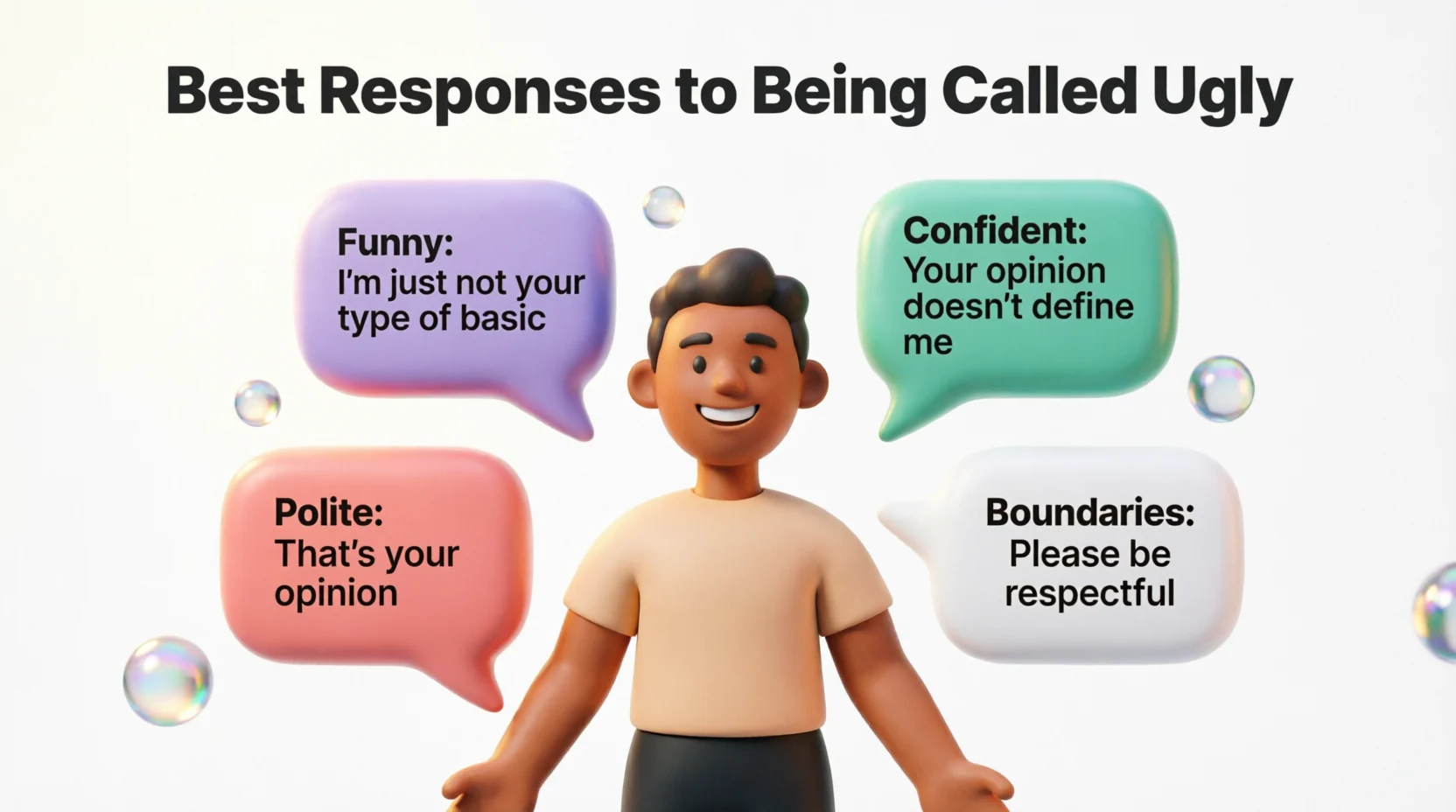
The best responses to ways to handle being called ugly are confident, witty, and calm replies that protect your self-respect without turning the moment into an argument. You can use humor, a clever comeback, or a simple boundary depending on who says it and how you feel.
Top 5 responses: “Good thing your opinion doesn’t define me,” “I’m not here to impress you,” “That’s an interesting thing to say out loud,” “I like myself just fine,” “Let’s work on being kinder instead.”
Getting called ugly can catch you off guard. Maybe someone makes a rude comment in a group chat, a classmate tries to embarrass you, a stranger leaves an unnecessary remark online, or a friend crosses the line while joking around. Suddenly, you’re searching for the perfect response while your brain loads like a slow internet connection.
The truth is that you don’t owe anyone a clever comeback, and you certainly don’t have to prove your worth to someone being unkind. Still, knowing the best responses to ways to handle being called ugly can help you feel prepared, protect your boundaries, and keep an awkward moment from ruining your day.
Whether you prefer funny one-liners, confident replies, polite responses, or sharp comebacks, there’s an option for every situation. The goal isn’t to insult someone back. It’s to respond in a way that reflects your personality, keeps your dignity intact, and reminds you that another person’s opinion doesn’t define you.
1. Funny Responses to Being Called Ugly
Humor can take the tension out of an uncomfortable moment. These replies work best when you feel comfortable joking and want to keep the situation light without putting yourself down.
- Good thing I’m not auditioning for your approval.
Example: Use it when someone makes an unnecessary comment about your appearance in a casual group setting.
Meaning: You show that their opinion isn’t something you need to impress. - And yet, here you are discussing me.
Example: Try this when someone keeps bringing up your looks to get attention.
Meaning: You humorously point out that they’re giving you plenty of attention. - Thanks for today’s completely unnecessary review.
Example: Use it when a classmate or acquaintance offers an unsolicited opinion.
Meaning: You highlight how pointless their comment was without starting a fight. - Was that your final answer?
Example: Say this with a playful tone when someone expects you to look embarrassed.
Meaning: You make their insult sound like an unconvincing attempt at a joke. - I’ll add that to my collection of things I didn’t ask for.
Example: Use it when someone randomly criticizes your appearance.
Meaning: You show that their comment has little value to you. - Wow, did you rehearse that one?
Example: Try this when someone delivers a predictable insult.
Meaning: You poke fun at how unoriginal their remark sounds. - Breaking news: Someone has an opinion.
Example: Use it when a person acts as though their judgment is important news.
Meaning: You make their comment seem ordinary and unimportant. - My confidence seems to be bothering you more than my face.
Example: Try this when someone continues criticizing you despite your calm reaction.
Meaning: You suggest that their real issue may be your self-assurance. - That’s a lot of commentary for someone who wasn’t asked.
Example: Use it when someone interrupts a conversation to criticize your looks.
Meaning: You point out that their opinion was unsolicited. - I didn’t realize we were holding a beauty competition.
Example: Say this when someone compares your appearance with someone else’s.
Meaning: You refuse to participate in unnecessary comparisons. - Anyway, back to the interesting part of my day.
Example: Use it to move past a rude comment during a conversation.
Meaning: You show that their insult doesn’t deserve the spotlight. - Thanks for the comedy show. What’s the next act?
Example: Try this when someone is clearly trying to entertain others by teasing you.
Meaning: You use humor to expose the comment as an attempt to get laughs.
2. Confident Responses to Being Called Ugly
Confidence doesn’t mean pretending that rude comments never hurt. It means remembering that your value is bigger than another person’s judgment.
- I like myself just fine.
Example: Use it when someone expects you to feel insecure about your appearance.
Meaning: You communicate self-acceptance without needing to defend yourself. - Your opinion doesn’t define me.
Example: Say this when someone tries to make you question your self-worth.
Meaning: You separate your identity from another person’s judgment. - I’m comfortable being myself.
Example: Use it when someone criticizes you for looking different from their preferences.
Meaning: You express comfort with your individuality. - I don’t need everyone’s approval to feel good about myself.
Example: Try this when a person repeatedly seeks a reaction from you.
Meaning: You make it clear that outside validation isn’t a requirement for your confidence. - I’m more than my appearance.
Example: Use it when someone reduces your value to how you look.
Meaning: You remind them that your personality, character, and abilities matter too. - I’m not interested in competing over appearances.
Example: Say this when someone tries to compare your looks with another person’s.
Meaning: You refuse to treat people like competitors in a beauty contest. - I know my worth, and it isn’t up for debate.
Example: Use it when someone keeps questioning your value.
Meaning: You establish that your self-respect isn’t something they get to decide. - I don’t have to be everyone’s type.
Example: Try this when someone suggests that everyone should find you attractive.
Meaning: You acknowledge that preferences differ without taking them personally. - I’m happy being the person I am.
Example: Use it when you want to respond warmly but firmly.
Meaning: You express self-acceptance without attacking anyone. - I won’t apologize for looking like myself.
Example: Say this when someone makes you feel as though you should change your appearance.
Meaning: You stand up for your right to exist comfortably as yourself. - I’m not measuring my worth by your standards.
Example: Use it when someone tries to impose their personal beauty standards on you.
Meaning: You reject the idea that their preferences determine your value. - I respect myself too much to argue about my looks.
Example: Try this when you want to end a pointless discussion.
Meaning: You prioritize self-respect over winning an argument.
3. Brutal but Respectful Comebacks
Sometimes you need a response with a little edge. These lines are direct enough to stop an unnecessary comment without relying on personal attacks.
- That says more about your manners than my appearance.
Example: Use it when someone makes a rude remark in front of others.
Meaning: You shift attention from your looks to their behavior. - Being rude isn’t a personality upgrade.
Example: Say this when someone thinks insulting people makes them impressive.
Meaning: You challenge their behavior without attacking their appearance. - You could have kept that thought to yourself.
Example: Try it when someone shares an unnecessary opinion about your looks.
Meaning: You remind them that not every thought needs to be spoken. - If kindness were the goal, you missed it.
Example: Use it when a person tries to disguise an insult as honesty.
Meaning: You highlight the lack of kindness in their approach. - You don’t have to like me, but you do need to be respectful.
Example: Say this when someone repeatedly makes personal remarks.
Meaning: You establish a clear boundary between personal preferences and acceptable behavior. - That comment was unnecessary, and you know it.
Example: Use it when the other person understands that their remark was hurtful.
Meaning: You directly call out the behavior. - I expected a conversation, not an unsolicited judgment.
Example: Try this when someone interrupts a normal discussion to criticize your looks.
Meaning: You point out how inappropriate their comment was. - You can have an opinion without making it everyone’s problem.
Example: Say this when someone loudly shares their negative opinion.
Meaning: You challenge their decision to impose their judgment on others. - Respect costs nothing, yet somehow it’s missing here.
Example: Use it when someone is openly disrespectful.
Meaning: You emphasize that basic courtesy should not be difficult. - I’m not accepting criticism from someone who can’t offer basic courtesy.
Example: Try this when a person’s delivery is more insulting than helpful.
Meaning: You refuse to treat disrespect as meaningful feedback. - Your comment doesn’t make you look better.
Example: Use it when someone insults you to make themselves look superior.
Meaning: You point out that putting others down doesn’t improve anyone. - Let’s not confuse cruelty with confidence.
Example: Say this when someone acts proud of making hurtful remarks.
Meaning: You distinguish genuine confidence from unkind behavior.
4. Sarcastic Responses to Being Called Ugly
Sarcasm can help you respond with a little attitude while keeping your composure. Choose these replies when the situation is light enough for sarcasm.
- Oh, thank you for that groundbreaking observation.
Example: Use it when someone states their opinion as though they’ve discovered something remarkable.
Meaning: You mock the unnecessary importance they’re giving their comment. - I’ll be sure to lose sleep over that.
Example: Try this when someone expects their insult to ruin your mood.
Meaning: You communicate that their opinion won’t control your day. - And this was supposed to accomplish what, exactly?
Example: Say this when someone makes a remark just to get a reaction.
Meaning: You question the purpose behind their comment. - What a fascinating use of your free time.
Example: Use it when someone spends time criticizing your appearance.
Meaning: You sarcastically suggest that their priorities are questionable. - I’ll file that under opinions nobody requested.
Example: Try this when someone shares a random negative judgment.
Meaning: You dismiss the comment without treating it as a serious assessment. - I’m amazed you thought that needed to be said.
Example: Use it when someone makes an obviously unnecessary remark.
Meaning: You express disbelief at their lack of consideration. - Should I expect a full report next?
Example: Say this when someone keeps commenting on different aspects of your appearance.
Meaning: You make their excessive commentary sound ridiculous. - Thank you for your very unofficial opinion.
Example: Use it when someone acts like their judgment is an established fact.
Meaning: You remind them that their statement is merely personal opinion. - Was that meant to impress me?
Example: Try this when someone seems proud of their insult.
Meaning: You question whether their behavior deserves any admiration. - I didn’t know my appearance was today’s main topic.
Example: Say this when a group keeps discussing how you look.
Meaning: You draw attention to their unnecessary focus on you. - What an unexpected contribution to absolutely nothing.
Example: Use it when someone makes a comment that adds no value to the conversation.
Meaning: You sarcastically dismiss the remark as unhelpful. - Anyway, does anyone have something useful to add?
Example: Try this when you want to redirect a group conversation.
Meaning: You signal that you’re ready to move on to something more worthwhile.
5. Polite Responses to Being Called Ugly
You can stand up for yourself without being rude. These responses are especially useful when you want to remain composed around acquaintances, relatives, or people you don’t know well.
- That’s not a very kind thing to say.
Example: Use it when someone makes a hurtful remark in a casual conversation.
Meaning: You identify the problem without insulting the person. - I’d appreciate it if you didn’t comment on my appearance.
Example: Say this when someone repeatedly discusses how you look.
Meaning: You set a clear and respectful boundary. - Everyone has different opinions, and that’s okay.
Example: Use it when someone shares a negative personal preference.
Meaning: You acknowledge differences without accepting disrespect. - Let’s keep the conversation respectful.
Example: Try this when a discussion begins turning into personal criticism.
Meaning: You redirect the interaction toward basic courtesy. - I’d rather focus on something more meaningful.
Example: Use it when you want to leave the subject behind.
Meaning: You choose a more productive conversation instead of arguing. - I don’t think that comment was necessary.
Example: Say this when someone criticizes your looks without being asked.
Meaning: You gently but firmly question their decision to speak. - Please don’t make personal remarks about me.
Example: Use it when someone repeatedly crosses a personal boundary.
Meaning: You clearly state which behavior needs to stop. - We can disagree without being unkind.
Example: Try this when someone claims they’re simply expressing an opinion.
Meaning: You separate honest differences from disrespectful behavior. - I’d prefer that we treat each other with respect.
Example: Use it with a friend or acquaintance whose comment crossed a line.
Meaning: You express a reasonable expectation for future interactions. - I’m comfortable with who I am, thank you.
Example: Say this when you want to respond calmly and end the discussion.
Meaning: You communicate self-acceptance without escalating the situation. - Let’s leave appearance out of this conversation.
Example: Use it when a discussion becomes unnecessarily personal.
Meaning: You guide the conversation back to a more appropriate subject. - I hope we can speak to each other more thoughtfully.
Example: Try this when you want to preserve a relationship while addressing hurtful behavior.
Meaning: You encourage kindness without pretending the comment was acceptable.
6. Professional Responses to Being Called Ugly
Appearance-based insults have no place in a professional environment. If a colleague, customer, or supervisor makes a personal remark, keep your response composed and focused on workplace expectations.
- Let’s keep our conversation professional.
Example: Use it when a colleague makes a personal comment during a meeting.
Meaning: You redirect the interaction toward appropriate workplace behavior. - My appearance isn’t relevant to this discussion.
Example: Say this when someone brings your looks into a work-related conversation.
Meaning: You establish that personal judgments are unrelated to the task. - I’d prefer to keep our feedback work-related.
Example: Use it when a colleague disguises a personal insult as feedback.
Meaning: You clarify what constructive professional feedback should address. - Please keep personal comments out of our working relationship.
Example: Try this when a colleague repeatedly makes remarks about your appearance.
Meaning: You set a clear boundary while maintaining a professional tone. - Let’s return to the matter we’re here to discuss.
Example: Use it when someone makes an inappropriate comment during a meeting.
Meaning: You bring attention back to the professional agenda. - I expect respectful communication in the workplace.
Example: Say this when a coworker’s remark crosses a clear line.
Meaning: You communicate a reasonable standard for workplace interactions. - That remark isn’t appropriate for this setting.
Example: Use it when someone makes an appearance-based joke in front of colleagues.
Meaning: You identify the comment as unsuitable for a professional environment. - I’d like us to focus on performance, not personal appearance.
Example: Try this when a discussion about your work turns personal.
Meaning: You emphasize relevant, job-related criteria. - Please address any work concerns directly and respectfully.
Example: Use it when someone mixes personal criticism with professional feedback.
Meaning: You encourage clear communication without personal attacks. - I don’t believe that comment contributes to our work.
Example: Say this when an insult interrupts a productive discussion.
Meaning: You highlight that the remark has no professional value. - Let’s maintain appropriate boundaries.
Example: Use it when a colleague repeatedly makes personal remarks.
Meaning: You reinforce the need for respectful professional relationships. - If this continues, I’ll consider raising the concern through the appropriate channels.
Example: Use it when repeated workplace comments continue despite your requests to stop.
Meaning: You communicate that persistent inappropriate behavior may need formal attention.
7. Clever Responses to Being Called Ugly
Clever replies work by changing the focus of the conversation. Rather than getting drawn into an argument about looks, you challenge the assumption behind the insult.
- An opinion isn’t automatically a fact.
Example: Use it when someone presents their personal judgment as the final truth.
Meaning: You remind them that subjective opinions are not objective facts. - Different people appreciate different things.
Example: Say this when someone assumes everyone shares their beauty standards.
Meaning: You acknowledge that preferences naturally vary. - Interesting how appearance became your measure of value.
Example: Use it when someone judges a person’s entire worth by their looks.
Meaning: You challenge the narrow standard they’re using. - There’s more to a person than what you see.
Example: Try this when someone reduces your identity to your appearance.
Meaning: You emphasize the importance of personality and character. - Not everyone needs to share your taste.
Example: Use it when someone assumes their preferences should apply to everyone.
Meaning: You defend individuality without arguing about attractiveness. - A thoughtful comment would have made a better impression.
Example: Say this when someone tries to impress others with a cruel remark.
Meaning: You point out that their behavior matters more than their insult. - You can notice differences without turning them into insults.
Example: Use it when someone claims they’re just being honest.
Meaning: You explain that observations don’t have to be disrespectful. - Personal preferences don’t require public announcements.
Example: Try this when someone loudly shares an unnecessary opinion.
Meaning: You question why they felt the need to announce their judgment. - Kindness is a choice, and so is this comment.
Example: Say this when someone could easily have chosen more respectful words.
Meaning: You remind them that their behavior is within their control. - I’d rather be known for my character than your opinion.
Example: Use it when someone treats appearance as the most important quality.
Meaning: You prioritize character over external validation. - Your perspective is yours, not everyone’s.
Example: Try this when someone speaks as though their judgment represents everybody.
Meaning: You separate one person’s view from universal agreement. - The way we treat people is a choice that says a lot about us.
Example: Use it when you want to make a thoughtful point about their behavior.
Meaning: You redirect attention toward the impact of their actions.
8. Chill and Casual Responses
Not every rude comment needs a dramatic reaction. These relaxed replies are useful when you want to keep your peace and move on.
- Okay, that’s your opinion.
Example: Use it when someone shares a negative judgment that doesn’t deserve a debate.
Meaning: You acknowledge the comment without accepting it as truth. - Fair enough, anyway…
Example: Try this when you want to change the subject quickly.
Meaning: You show that you’re not interested in prolonging the discussion. - We’re all different, and that’s fine.
Example: Use it when someone compares your appearance with another person’s.
Meaning: You normalize differences without becoming defensive. - I’m good, thanks.
Example: Say this when someone seems to expect you to feel insecure.
Meaning: You communicate that you’re doing fine without explaining yourself. - Let’s talk about something else.
Example: Use it when a conversation becomes repetitive or uncomfortable.
Meaning: You politely move away from the topic. - Noted, moving on.
Example: Try this when you want a short, slightly dry response.
Meaning: You acknowledge the comment while refusing to dwell on it. - You do you, I’ll do me.
Example: Use it when someone insists that their preferences should matter to you.
Meaning: You express independence and acceptance of differences. - No worries, I know who I am.
Example: Say this when someone expects their words to change how you see yourself.
Meaning: You express calm self-assurance. - That’s not really my concern.
Example: Use it when someone makes an irrelevant remark about your appearance.
Meaning: You choose not to invest energy in their judgment. - Anyway, what’s happening this weekend?
Example: Try this when you want to return a casual conversation to normal.
Meaning: You redirect attention toward a more enjoyable subject. - Let’s not make this a whole thing.
Example: Use it when a minor remark is turning into a prolonged argument.
Meaning: You signal that you prefer to move forward. - I’m here to enjoy my day, not debate my looks.
Example: Say this when someone keeps pushing for a reaction.
Meaning: You protect your mood and disengage from the argument.
9. Cute and Playful Responses
A playful reply can work when the other person is joking harmlessly or when you simply prefer a lighthearted style. Avoid using these if the person is bullying you or ignoring your boundaries.
- Good thing my personality has a fan club.
Example: Use it with friends during harmless teasing.
Meaning: You respond with playful confidence and shift attention to your personality. - I’m still a work of art, thank you very much.
Example: Try this when you want to answer a lighthearted comment with humor.
Meaning: You celebrate your individuality without taking the remark seriously. - Beauty standards could never fit everybody.
Example: Use it when someone compares your looks with a popular ideal.
Meaning: You celebrate the fact that people don’t all fit one standard. - I’m on my own little wavelength.
Example: Say this when you want to keep the mood relaxed and quirky.
Meaning: You embrace your individuality rather than seeking universal approval. - At least I’m unforgettable.
Example: Use it with friends who enjoy playful banter.
Meaning: You turn the moment into a light joke about standing out. - My charm has entered the chat.
Example: Try this when you want a fun, internet-inspired comeback.
Meaning: You playfully highlight qualities beyond physical appearance. - I’m a limited edition, obviously.
Example: Use it when someone expects you to feel ordinary or embarrassed.
Meaning: You present your individuality as something worth appreciating. - Cute attitude, questionable commentary.
Example: Say this when you want a short, cheeky response.
Meaning: You lightly call attention to the other person’s unnecessary remark. - I bring my own kind of sparkle.
Example: Use it when you want to respond with warmth and positivity.
Meaning: You celebrate the qualities that make you unique. - My vibe isn’t for everyone, and that’s okay.
Example: Try this when someone seems determined not to appreciate your personality.
Meaning: You accept that people have different preferences. - I’m too busy being me to worry about that.
Example: Use it when you want a cheerful response that ends the discussion.
Meaning: You communicate self-acceptance and independence. - A little kindness would look good on everybody.
Example: Say this when you want to keep your reply cute while making a point.
Meaning: You gently suggest that kindness is more valuable than criticizing appearances.
10. Responses for When Friends Call You Ugly
Comments from friends can sting because you expect them to understand your feelings. These replies help you distinguish harmless joking from behavior that crosses a line.
- I know we’re joking, but that one didn’t feel good.
Example: Use it when a friend’s teasing genuinely hurts your feelings.
Meaning: You honestly express your discomfort without accusing them of bad intentions. - Friends are supposed to build each other up.
Example: Say this when a friend repeatedly makes negative comments about your appearance.
Meaning: You remind them of the support you expect in a friendship. - You can joke with me without putting me down.
Example: Use it when teasing has become unnecessarily personal.
Meaning: You explain that humor doesn’t need to come at your expense. - That’s not the kind of joke I enjoy.
Example: Try this when you want to address an uncomfortable joke directly.
Meaning: You establish your personal limits around teasing. - Come on, you know better than that.
Example: Use it with a close friend who should understand your boundaries.
Meaning: You express disappointment while leaving room for them to correct their behavior. - I’d rather laugh with you than be the joke.
Example: Say this when a friend repeatedly makes you the target of group humor.
Meaning: You ask for humor that includes you instead of humiliating you. - Let’s keep our jokes kind.
Example: Use it when a friendship relies on playful teasing.
Meaning: You encourage everyone to enjoy themselves without hurting someone. - You know I’m more than my appearance.
Example: Try this when a friend focuses too much on how you look.
Meaning: You ask them to recognize your broader identity. - That comment crossed a line for me.
Example: Use it when a friend’s remark feels disrespectful.
Meaning: You clearly identify a boundary that has been crossed. - I value our friendship, so I’m telling you honestly.
Example: Say this when you want to address a hurtful comment without damaging the relationship.
Meaning: You show that honest communication matters to you. - Let’s roast the situation, not each other.
Example: Use it when friends enjoy joking around but need a kinder approach.
Meaning: You suggest a way to keep the humor without personal attacks. - I need you to respect that this isn’t funny to me.
Example: Try this when your friend continues after you’ve already expressed discomfort.
Meaning: You make it clear that your boundary deserves to be taken seriously.
11. Responses for When a Crush Calls You Ugly
When a crush makes a comment about your appearance, you might feel embarrassed, disappointed, or unsure how to respond. You can stay confident without trying to earn someone’s approval.
- I don’t need to change myself to impress anyone.
Example: Use it when a crush criticizes your appearance.
Meaning: You communicate that attraction shouldn’t require you to abandon self-respect. - I prefer people who know how to be kind.
Example: Say this when someone you’re interested in makes a disrespectful remark.
Meaning: You express that kindness matters in a potential relationship. - Looks aren’t the only thing I bring to the table.
Example: Use it when a crush reduces your value to physical appearance.
Meaning: You highlight that your personality and qualities matter too. - I like confidence more than unnecessary criticism.
Example: Try this when a crush seems to use insults to get your attention.
Meaning: You express a preference for respectful behavior. - I’m not here to win a beauty contest.
Example: Use it when someone implies that you must meet their personal standards.
Meaning: You refuse to turn attraction into a competition. - You can have your preferences, and I can have mine.
Example: Say this when a crush suggests that you’re not their type.
Meaning: You acknowledge differences without making them a measure of your worth. - I want someone who likes me for who I am.
Example: Use it when discussing what you value in a relationship.
Meaning: You communicate that genuine connection matters more than approval. - That wasn’t the best way to make a good impression.
Example: Try this when a crush makes a rude comment and seems to expect you to laugh.
Meaning: You point out that their behavior may affect how you see them. - I’m not going to audition for your attention.
Example: Use it when someone acts as though you must prove yourself to deserve their interest.
Meaning: You refuse to chase approval from someone who disrespects you. - Attraction is personal, but respect should be mutual.
Example: Say this when someone explains an insult as a matter of personal taste.
Meaning: You separate romantic preferences from the need to treat people well. - I’d rather have a real connection than forced approval.
Example: Use it when a crush makes you feel that you must change to be liked.
Meaning: You prioritize authenticity over trying to impress someone. - If we’re not each other’s type, that’s perfectly fine.
Example: Try this when you want to respond maturely to a lack of romantic interest.
Meaning: You accept incompatibility without questioning your self-worth.
12. Responses to Being Called Ugly Online
Online comments can feel especially uncomfortable because strangers may pile on or expect you to react publicly. You can protect your peace without giving every commenter your attention.
- Your comment isn’t a measure of my worth.
Example: Use it when someone criticizes your appearance under a social media post.
Meaning: You separate your self-worth from online opinions. - Not every thought needs a comment section.
Example: Say this when someone posts an unnecessary judgment about your looks.
Meaning: You point out that online participation doesn’t justify unkindness. - I posted to share, not to seek your approval.
Example: Use it when a stranger assumes your post invites personal criticism.
Meaning: You establish that sharing something doesn’t mean asking for validation. - You can scroll if my content isn’t for you.
Example: Try this when someone repeatedly leaves negative remarks on your posts.
Meaning: You remind them that they can move on instead of being unkind. - Kindness is still an option online.
Example: Use it when a commenter forgets that real people read their remarks.
Meaning: You encourage respectful online behavior. - A profile picture doesn’t tell you someone’s whole story.
Example: Say this when a stranger judges your character by your appearance.
Meaning: You challenge the assumption that appearance reveals everything about a person. - I’m not turning my comments into a debate about my looks.
Example: Use it when someone tries to start an argument under your post.
Meaning: You refuse to let the discussion become a personal contest. - You don’t have to like my post, but you can be respectful.
Example: Try this when someone leaves a rude comment on your content.
Meaning: You distinguish personal taste from acceptable behavior. - I’m here for positive connections, not personal attacks.
Example: Use it when you want to set expectations for your social media space.
Meaning: You make your preference for respectful engagement clear. - One comment doesn’t get to define my day.
Example: Say this when you want to remind yourself not to dwell on an online insult.
Meaning: You protect your mood from a stranger’s judgment. - I’ll choose peace over an unnecessary argument.
Example: Use it when a commenter is clearly trying to provoke you.
Meaning: You prioritize your well-being instead of escalating the exchange. - Block buttons exist for a reason.
Example: Try this when someone keeps posting disrespectful remarks.
Meaning: You recognize that ending unwanted contact is a reasonable option.
13. Short and Simple Responses
Sometimes the best reply is the shortest one. These options are easy to remember and work well in texts, DMs, casual conversations, and awkward social situations.
- That’s your opinion.
Example: Use it when you don’t want to discuss someone’s judgment.
Meaning: You acknowledge the comment without treating it as a fact. - I’m okay with myself.
Example: Say this when someone expects you to feel insecure.
Meaning: You express self-acceptance in a few words. - Please be respectful.
Example: Use it when a person crosses a personal boundary.
Meaning: You clearly ask them to change their behavior. - I didn’t ask.
Example: Try this when someone gives unsolicited criticism.
Meaning: You point out that their opinion wasn’t requested. - Let’s move on.
Example: Use it when you want to end the conversation.
Meaning: You choose not to spend more time on the comment. - That was unnecessary.
Example: Say this when a remark adds nothing but discomfort.
Meaning: You directly identify the comment as unhelpful. - I’m more than my looks.
Example: Use it when someone reduces you to your appearance.
Meaning: You emphasize that your identity has many dimensions. - I know my worth.
Example: Try this when you want to express quiet confidence.
Meaning: You affirm your value without needing approval. - Not cool.
Example: Use it when a friend makes an inappropriate joke.
Meaning: You communicate disapproval without a long explanation. - Be kind.
Example: Say this when you want to give someone a simple reminder.
Meaning: You encourage a more considerate approach. - I’m not bothered by opinions.
Example: Use it when you feel comfortable moving past a negative remark.
Meaning: You communicate independence from outside judgment. - End of discussion.
Example: Try this when someone keeps pushing a topic you’ve already addressed.
Meaning: You establish that you’re finished discussing your appearance.
14. Emotional Responses When Being Called Ugly Hurts
Sometimes humor and confidence aren’t enough. If a comment genuinely hurts, you can be honest about your feelings while remembering that being affected by unkindness doesn’t make you weak.
- That actually hurt my feelings.
Example: Use it when someone you trust makes a personal remark that stings.
Meaning: You honestly explain the emotional impact of their words. - I wish you had chosen kinder words.
Example: Say this when someone could have expressed themselves more thoughtfully.
Meaning: You communicate disappointment without attacking them. - I deserve to be treated with respect.
Example: Use it when someone repeatedly makes you feel small.
Meaning: You affirm your right to respectful treatment. - You may see me differently, but that doesn’t change who I am.
Example: Try this when another person’s opinion makes you question yourself.
Meaning: You remind yourself that external judgment doesn’t determine your identity. - I don’t want my appearance to become a reason for unkindness.
Example: Use it when someone treats looks as an excuse to criticize you.
Meaning: You challenge the idea that appearance justifies disrespect. - I’d rather be understood than judged.
Example: Say this when someone makes assumptions about you based on how you look.
Meaning: You express a desire for empathy rather than superficial criticism. - I can accept myself while still having feelings.
Example: Use it when you feel hurt despite generally feeling comfortable with yourself.
Meaning: You recognize that confidence and vulnerability can exist together. - Your words affected me, and I want you to understand that.
Example: Try this when you want someone close to you to recognize the impact of their comment.
Meaning: You invite accountability and honest communication. - I don’t want to be around comments that make me feel small.
Example: Use it when someone repeatedly directs hurtful remarks at you.
Meaning: You explain why you may need distance from that behavior. - I deserve kindness even on days when I don’t feel confident.
Example: Say this when a remark touches an existing insecurity.
Meaning: You remind yourself that respect isn’t conditional on confidence. - I hope we can treat each other with more care.
Example: Use it when you want to repair a relationship after an upsetting interaction.
Meaning: You express a wish for more thoughtful communication. - I’m learning not to let other people’s judgments shape how I see myself.
Example: Try this when you want to express personal growth honestly.
Meaning: You recognize that self-confidence can develop over time.
15. Responses That Set Firm Boundaries
If someone keeps calling you ugly after you’ve asked them to stop, the priority is no longer finding a clever comeback. It’s making your boundaries clear and taking care of yourself.
- Stop commenting on my appearance.
Example: Use it when someone repeatedly makes unwanted remarks about your looks.
Meaning: You give a direct instruction about behavior you won’t accept. - I’ve asked you to stop, and I mean it.
Example: Say this when someone ignores your earlier request.
Meaning: You reinforce your boundary and make your expectations clear. - This conversation ends if the insults continue.
Example: Use it when a person refuses to speak respectfully.
Meaning: You explain the consequence of continuing the behavior. - I won’t stay in a conversation where I’m being insulted.
Example: Try this when someone continues making personal attacks.
Meaning: You make it clear that you can leave an unhealthy interaction. - You don’t have permission to speak to me that way.
Example: Use it when someone treats disrespect as though it’s acceptable.
Meaning: You assert your right to respectful communication. - I’m not discussing my appearance with you.
Example: Say this when someone repeatedly tries to start a debate about your looks.
Meaning: You close the subject without inviting further argument. - If you can’t be respectful, we don’t need to continue this conversation.
Example: Use it when a person refuses to stop making insulting comments.
Meaning: You establish a clear limit on the interaction. - Please stop making personal remarks about me.
Example: Try this when a coworker, acquaintance, or relative repeatedly comments on your appearance.
Meaning: You directly request that the behavior end. - I’m taking some space from this interaction.
Example: Use it when the situation has become emotionally exhausting.
Meaning: You give yourself permission to step away. - I won’t accept repeated disrespect as a joke.
Example: Say this when someone excuses ongoing insults as playful teasing.
Meaning: You clarify that calling something a joke doesn’t erase its impact. - If this continues at school or work, I’ll seek help from someone responsible.
Example: Use it when repeated comments become harassment in a school or workplace setting.
Meaning: You communicate that ongoing mistreatment may require appropriate support. - My boundary is simple: treat me with respect.
Example: Try this when you want to finish a difficult conversation with a clear statement.
Meaning: You make respectful treatment the basic condition for further interaction.
FAQs
What Does It Mean When Someone Calls You Ugly?
It may be an insult, an attempt at teasing, or a personal opinion. It doesn’t define your worth.
What Is the Best Response to Being Called Ugly?
Stay calm and choose a reply that fits the situation, such as “Your opinion doesn’t define me.”
How Do You Respond Without Sounding Insecure?
Keep your response brief, confident, and focused on your boundaries rather than defending your appearance.
What If Someone Calls You Ugly as a Joke?
If it feels harmless, you can joke back. If it hurts, tell them clearly that you don’t enjoy it.
What If Your Crush Calls You Ugly?
Stay true to yourself and remember that romantic interest should never require you to accept disrespect.
Is It Okay to Make a Funny Comeback?
Yes, when humor feels comfortable and safe. Use a firm boundary instead if someone is deliberately bullying you.
How Do You Respond Professionally to Being Called Ugly?
Say, “Let’s keep our conversation professional,” and document repeated inappropriate remarks if necessary.
What If Someone Calls You Ugly and You Feel Hurt?
It’s okay to feel hurt. Talk to someone you trust and remind yourself that one person’s opinion doesn’t define you.
Should You Insult Someone Back?
You don’t need to. A calm comeback or a clear boundary often protects your dignity better than another insult.
What If Someone Keeps Calling You Ugly?
Ask them to stop, disengage if possible, and seek support from a trusted person if the behavior continues.
How Do You Reply to Being Called Ugly in a DM?
Try “I didn’t ask for your opinion” or simply stop responding if the message is intended to upset you.
What If You Don’t Want to Respond at All?
You don’t have to. Ignoring the comment, leaving the conversation, or blocking the person are valid choices.
Conclusion
Being called ugly can be uncomfortable, but you don’t have to let someone else’s words decide how you feel about yourself. The best response is the one that matches your personality and the situation, whether that’s a funny comeback, a confident one-liner, a polite boundary, or no response at all.
Remember, you don’t need to win every argument to protect your self-respect. Sometimes a calm sentence says more than a dozen clever insults. Try different responses, save your favorite lines for when you need them, and share this list with someone who could use a little encouragement. Most importantly, keep being yourself, choose kindness when you can, and never forget that your worth goes far beyond your appearance.