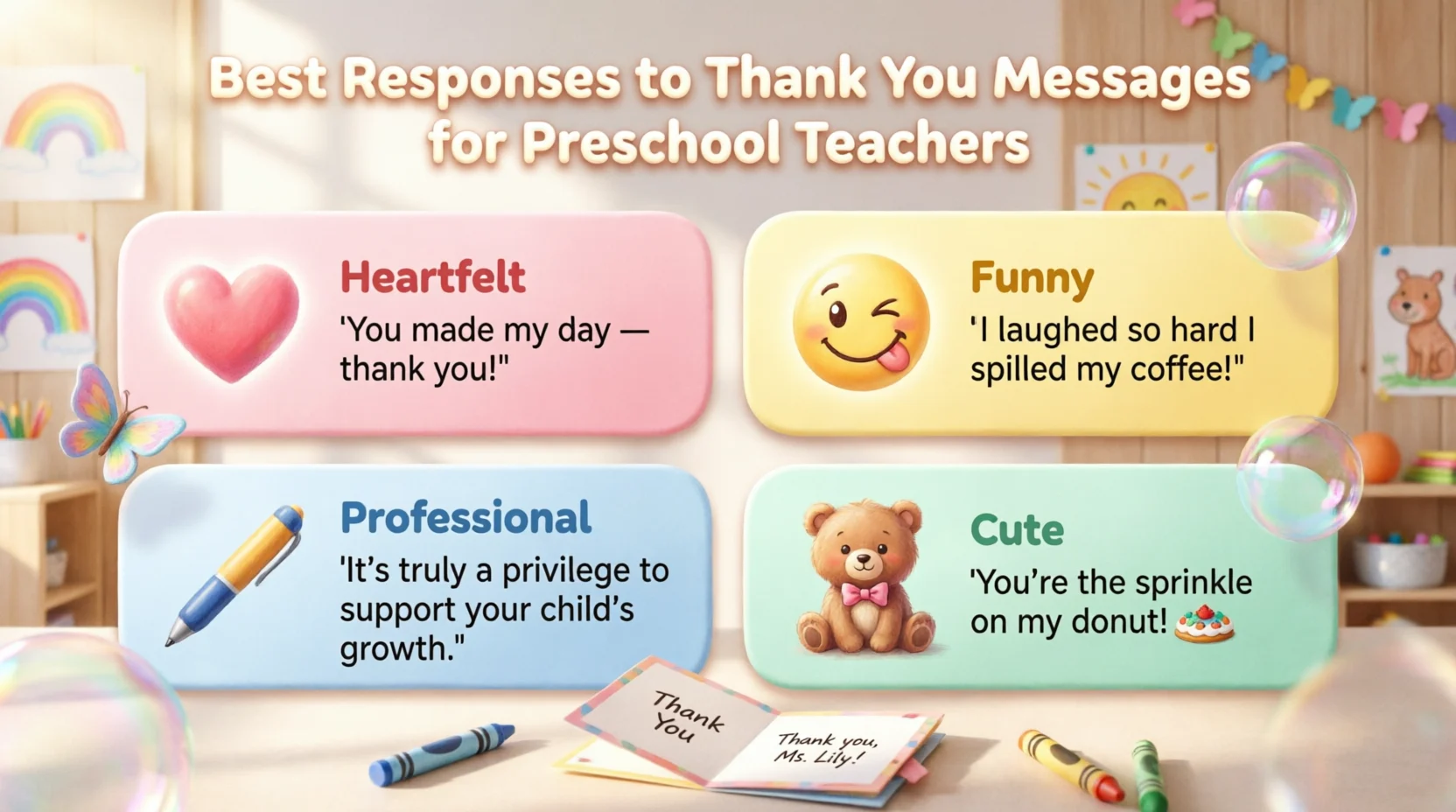
The best responses to thank you messages for preschool teachers are warm, appreciative, and genuine. Whether you’re a teacher replying to parents or a parent thanking a wonderful educator, the right words can make someone feel truly valued.
Top alternatives: You’re always welcome, It was my pleasure, Thank you for your kind words, Your little one is a joy, I’m grateful for your appreciation.
Preschool teachers make a lasting difference in children’s lives, and a thoughtful reply helps strengthen the bond between teachers and families.
A sweet thank you message can brighten a preschool teacher’s entire day. Maybe a parent appreciates the extra care you gave their child, sends a heartfelt note after a school event, or writes a lovely message at the end of the school year. Whatever the occasion, finding the perfect reply can sometimes feel surprisingly difficult.
You want to sound warm without being overly formal, professional without feeling distant, and genuine without repeating the same old “you’re welcome.”That’s where these best responses to thank you messages for preschool teachers come in handy. Whether you’re a preschool teacher replying to grateful parents, a teaching assistant acknowledging kind words, or a parent expressing appreciation for an educator, there’s a response for every situation.
From cute and cheerful replies to meaningful messages that touch the heart, these examples will help you communicate with confidence. After all, a little kindness goes a long way, especially when it comes to helping little learners grow.
1. Warm and Heartfelt Responses
- You’re always welcome! Example: Replying to a parent who appreciates your daily care. Meaning: Shows kindness and genuine willingness to help.
- It’s truly my pleasure. Example: Responding to a heartfelt note after a successful school activity. Meaning: Communicates that helping their child brings you joy.
- Thank you for your beautiful words. Example: Acknowledging a parent’s emotional appreciation message. Meaning: Expresses gratitude for their thoughtful recognition.
- Your appreciation means so much to me. Example: Replying to a parent who praises your dedication. Meaning: Shows that their kind words are personally meaningful.
- I’m so happy I could make a difference. Example: Responding when a parent thanks you for supporting their child. Meaning: Highlights the value you place on helping children.
- It’s a joy to be part of your child’s journey. Example: Replying to a family at the end of the term. Meaning: Celebrates your role in the child’s development.
- Thank you for trusting me with your little one. Example: A parent appreciates your patience and care. Meaning: Recognizes the importance of family trust.
- Your kind message made my day. Example: Replying to a sweet note received after class. Meaning: Shares the happiness their appreciation brought you.
- I’m grateful to be part of such a lovely community. Example: Responding to a family thank you card. Meaning: Expresses a sense of belonging and gratitude.
- Watching your child grow is a wonderful reward. Example: A parent thanks you for helping their child gain confidence. Meaning: Emphasizes the joy of seeing children progress.
- Thank you for making me feel appreciated. Example: Replying to a thoughtful message from a student’s family. Meaning: Shows that their recognition matters.
- Your words remind me why I love teaching. Example: Responding to a meaningful end-of-year message. Meaning: Connects their gratitude with your passion for education.
2. Professional and Polite Responses
- You’re very welcome. Example: Replying to a parent through the school’s communication app. Meaning: Offers a polite and friendly acknowledgment.
- Thank you for your kind appreciation. Example: Responding to a formal thank you email. Meaning: Recognizes their message respectfully.
- It was a pleasure supporting your child. Example: Replying after helping a student settle into preschool. Meaning: Communicates professionalism and care.
- I’m happy to be of assistance. Example: Responding to a parent who thanks you for extra support. Meaning: Shows readiness to help when needed.
- Thank you for your thoughtful message. Example: Acknowledging a parent’s written appreciation. Meaning: Keeps your response courteous and sincere.
- I’m pleased to know our efforts made a difference. Example: Replying to positive feedback about a classroom activity. Meaning: Highlights the value of your work.
- Your feedback is greatly appreciated. Example: Responding to a parent who praises your teaching. Meaning: Shows that you value constructive communication.
- It’s wonderful to hear such kind words. Example: Replying to a positive message from a family. Meaning: Acknowledges appreciation with warmth.
- Thank you for your continued trust and support. Example: Responding to a long-standing preschool family. Meaning: Reinforces a positive working relationship.
- I’m glad the experience was meaningful for your child. Example: Replying after a school celebration. Meaning: Focuses on the child’s positive experience.
- We appreciate your thoughtful recognition. Example: Responding on behalf of the preschool team. Meaning: Acknowledges appreciation professionally.
- Thank you for being such a supportive family. Example: Replying to a parent who regularly communicates positively. Meaning: Encourages a respectful partnership.
3. Short and Simple Responses
- My pleasure! Example: A quick reply to a parent’s thank you. Meaning: Shows that helping was enjoyable.
- Anytime! Example: Responding to appreciation for a small classroom favor. Meaning: Communicates friendliness and willingness to help.
- You’re so welcome! Example: Replying to a cheerful message after pickup. Meaning: Offers a warm acknowledgment.
- Happy to help! Example: Responding after sharing classroom updates. Meaning: Shows a helpful attitude.
- Of course! Example: Replying when a parent thanks you for your support. Meaning: Makes your assistance feel natural and sincere.
- Glad I could help! Example: A parent appreciates your help with a school transition. Meaning: Expresses satisfaction with the outcome.
- Thank you, too! Example: Responding to a family that has been supportive. Meaning: Returns the appreciation.
- Always a pleasure! Example: Replying to a regular classroom volunteer. Meaning: Shows ongoing appreciation.
- So happy to help! Example: A parent thanks you for answering their questions. Meaning: Keeps the interaction cheerful.
- You’re most welcome! Example: Responding to a polite thank you note. Meaning: Communicates respect and warmth.
- Glad you reached out! Example: Replying after helping a parent understand a classroom routine. Meaning: Encourages open communication.
- Absolutely my pleasure! Example: Responding to a grateful family after a school event. Meaning: Emphasizes your positive feelings.
4. Sweet and Caring Responses
- Your little one is such a joy to teach! Example: A parent thanks you for being caring. Meaning: Reassures the family that their child is valued.
- Sending a big thank you right back! Example: Replying to a sweet appreciation card. Meaning: Returns their kindness playfully.
- It’s a pleasure watching those little smiles every day. Example: Responding to a message about your cheerful classroom. Meaning: Shares the happiness children bring.
- Your child makes our classroom brighter. Example: Replying when a parent praises your patience. Meaning: Celebrates the child’s positive presence.
- Thank you for such a lovely message. Example: A parent sends a kind note after a busy week. Meaning: Expresses appreciation for their thoughtfulness.
- Little learners make every day special. Example: Responding to an end-of-term thank you. Meaning: Celebrates the joy of preschool teaching.
- I’m lucky to teach such wonderful little learners. Example: Replying to a parent who compliments your work. Meaning: Shows affection for your students.
- Your family’s kindness means a lot. Example: A parent sends an appreciation message. Meaning: Recognizes the family’s thoughtfulness.
- Thank you for sharing your sweet words with me. Example: Responding to a handwritten card. Meaning: Makes the parent feel heard and appreciated.
- Every little milestone is worth celebrating. Example: A parent thanks you for helping with their child’s progress. Meaning: Emphasizes the importance of small achievements.
- Your little star is growing beautifully. Example: Replying to a parent celebrating a new skill. Meaning: Shares excitement about the child’s development.
- I’m sending your family lots of appreciation, too! Example: Replying to a kind end-of-year message. Meaning: Returns warmth to the whole family.
5. Funny and Lighthearted Responses
- You’re welcome! Tiny humans keep us on our toes! Example: Replying to a parent after a lively school day. Meaning: Adds gentle humor about preschool life.
- Happy to help! My teacher superpowers are working today. Example: A parent thanks you for solving a classroom problem. Meaning: Keeps the exchange playful.
- You’re welcome! Glitter, giggles, and gratitude! Example: Responding after a colorful craft activity. Meaning: Celebrates the fun side of preschool.
- It’s all part of the little-learner adventure! Example: Replying after a memorable classroom activity. Meaning: Frames teaching as a joyful journey.
- You’re welcome! Snack time deserves some credit, too! Example: Responding to a parent who appreciates your classroom routine. Meaning: Adds a relatable preschool joke.
- Thank you! The tiny team makes every day interesting. Example: Replying after a particularly energetic class. Meaning: Shares affectionate humor about young students.
- Glad to help! Preschool days come with bonus giggles. Example: A parent thanks you for a fun learning activity. Meaning: Highlights the cheerful classroom atmosphere.
- You’re welcome! Little shoes, big adventures! Example: Responding to a family after a school outing. Meaning: Celebrates the excitement of early learning.
- Happy to help! Finger paint makes everything memorable. Example: Replying after an art project. Meaning: Adds a lighthearted classroom reference.
- You’re welcome! Every day brings a new plot twist. Example: Responding to a parent after a busy week. Meaning: Jokes about the unpredictability of preschool.
- Thank you! Our classroom has plenty of tiny comedians. Example: Replying after a funny moment with students. Meaning: Celebrates children’s playful personalities.
- My pleasure! Preschool magic is a team effort. Example: Responding to a parent’s kind message. Meaning: Gives a cheerful nod to teamwork.
6. Emotional and Meaningful Responses
- Your message touched my heart. Example: A parent writes about their child’s progress. Meaning: Expresses sincere emotional appreciation.
- Knowing your child feels safe and happy means everything. Example: Replying to a family who appreciates your care. Meaning: Highlights children’s emotional well-being.
- Thank you for recognizing the heart behind my work. Example: Responding to a deeply thoughtful note. Meaning: Shows that their appreciation feels personal.
- Being part of these early memories is a privilege. Example: Replying to an end-of-year family message. Meaning: Recognizes the lasting value of early childhood experiences.
- Your words will stay with me for a long time. Example: A parent sends a meaningful thank you card. Meaning: Communicates the lasting impact of their message.
- It’s beautiful to see how far your child has come. Example: Replying to a parent celebrating progress. Meaning: Shares pride in the child’s development.
- Thank you for letting me be part of this special chapter. Example: Responding when a child moves to kindergarten. Meaning: Acknowledges the importance of the shared experience.
- Every small step forward makes this work worthwhile. Example: Replying after a child reaches a milestone. Meaning: Shows how much you value gradual growth.
- Your trust is something I truly treasure. Example: A parent thanks you for providing reassurance. Meaning: Recognizes the emotional importance of trust.
- I’ll always appreciate the kindness behind your message. Example: Replying to a heartfelt note at the end of the year. Meaning: Expresses lasting gratitude.
- Thank you for making this journey so meaningful. Example: Responding to a supportive family. Meaning: Celebrates the relationship between home and school.
- Helping little hearts grow is a beautiful part of my life. Example: Replying to a parent’s emotional appreciation. Meaning: Expresses the deeper purpose of teaching.
7. Cute and Cheerful Responses
- Aww, you’re too kind! Example: Replying to a sweet parent message. Meaning: Shows delighted appreciation.
- Sending smiles right back! Example: Responding to a cheerful thank you note. Meaning: Returns positive energy.
- You just made my teacher heart happy! Example: A parent praises your classroom efforts. Meaning: Expresses joy in a playful way.
- Big smiles and a big thank you! Example: Replying to a family after a school celebration. Meaning: Keeps the exchange upbeat.
- You’re the sweetest! Example: Responding to a thoughtful card. Meaning: Compliments the parent’s kindness.
- A little kindness goes a long way, doesn’t it? Example: Replying to a supportive family. Meaning: Celebrates the power of thoughtful gestures.
- Thank you for sprinkling kindness into my day! Example: A parent sends an encouraging message. Meaning: Makes appreciation feel cheerful and personal.
- You’re welcome, with extra smiles! Example: Replying after a happy classroom event. Meaning: Adds warmth to a simple acknowledgment.
- That was such a sunshine-filled message! Example: Responding to a cheerful note from a parent. Meaning: Shows how their words brightened your day.
- Little learners, big love! Example: Replying to a preschool appreciation post. Meaning: Celebrates the caring side of early education.
- Aww, this made me smile so much! Example: A parent sends a lovely thank you message. Meaning: Shares your genuine happiness.
- Kind words are the cutest classroom gifts! Example: Replying to an appreciation card. Meaning: Emphasizes the value of thoughtful words.
8. Grateful and Appreciative Responses
- Thank you for taking the time to say that. Example: Replying to a detailed parent message. Meaning: Appreciates both their words and effort.
- I’m truly grateful for your kindness. Example: Responding to a family appreciation note. Meaning: Expresses sincere gratitude.
- Your support makes a real difference. Example: Replying to a parent who regularly helps the class. Meaning: Recognizes their contribution.
- I appreciate your thoughtful words more than you know. Example: Responding to a heartfelt thank you. Meaning: Shows that their message has real significance.
- Thank you for being so encouraging. Example: A parent sends praise after a school event. Meaning: Acknowledges their positive support.
- I’m thankful we can work together for your child. Example: Replying to a family after a successful term. Meaning: Highlights the value of partnership.
- Your appreciation is a lovely reminder of why this work matters. Example: Responding to a meaningful note. Meaning: Connects gratitude with professional purpose.
- Thank you for sharing such thoughtful feedback. Example: Replying to a parent who describes a positive experience. Meaning: Welcomes their perspective.
- I feel fortunate to have your family’s support. Example: Responding to a family that has helped throughout the year. Meaning: Shows mutual appreciation.
- Your message means a great deal to our team. Example: Replying on behalf of fellow preschool educators. Meaning: Extends gratitude to the wider staff.
- It’s wonderful to feel appreciated by the families we serve. Example: Responding to a school appreciation message. Meaning: Celebrates positive family relationships.
- Thank you for making kindness part of our partnership. Example: Replying to a supportive parent. Meaning: Reinforces respectful collaboration.
9. Creative and Unique Responses
- Your words deserve a spot on our classroom happiness wall! Example: Replying to a particularly lovely note. Meaning: Shows appreciation through a creative image.
- A little message, a whole lot of happiness! Example: Responding to a parent who sends kind words. Meaning: Highlights the big impact of a small gesture.
- Adding your kindness to my collection of good moments. Example: Replying to an encouraging message. Meaning: Suggests their words will be remembered fondly.
- Your note just earned a gold star in kindness! Example: Responding to a thoughtful thank you card. Meaning: Gives their appreciation a playful preschool twist.
- Consider your kind words officially classroom-approved! Example: Replying to a cheerful family message. Meaning: Adds humor inspired by school routines.
- You made my day brighter than fresh crayons! Example: Responding after receiving a positive note. Meaning: Uses a classroom image to express happiness.
- Kindness like yours belongs in every storybook. Example: Replying to a family who shows appreciation. Meaning: Celebrates their thoughtfulness creatively.
- Your message is today’s little moment of magic. Example: Responding to a warm thank you. Meaning: Describes the joy their words brought.
- Filing this one under moments that make teaching special. Example: Replying to a heartfelt message. Meaning: Shows that their appreciation stands out.
- Your kindness gets an A-plus from me! Example: Responding to a parent’s supportive note. Meaning: Uses school language to express gratitude.
- A thank you for your thank you feels only fair! Example: Replying to an especially sweet message. Meaning: Returns appreciation in a playful way.
- Your words are a tiny gift with a big impact. Example: Responding to a thoughtful family note. Meaning: Emphasizes the importance of kind communication.
10. Confident and Reassuring Responses
- I’m glad I could make a positive difference. Example: Replying to a parent who praises your support. Meaning: Acknowledges your contribution with confidence.
- Your child deserves patience, encouragement, and care. Example: Responding to a family who appreciates your efforts. Meaning: Reinforces your commitment to children’s needs.
- I’m happy we found a way to help your little one thrive. Example: Replying after working through a learning challenge. Meaning: Celebrates progress and teamwork.
- Every child deserves to feel seen and supported. Example: Responding to a message about your classroom approach. Meaning: Communicates your educational values.
- I’m proud of the progress we’ve made together. Example: A parent thanks you for supporting a child’s learning. Meaning: Recognizes shared effort.
- Thank you for trusting the process and our team. Example: Replying after a child adjusts to a new routine. Meaning: Reinforces confidence in the learning journey.
- It’s rewarding to see our efforts paying off. Example: Responding to praise about a student’s development. Meaning: Acknowledges progress without boasting.
- I’m committed to helping every child feel welcome. Example: Replying to a parent who appreciates your inclusion efforts. Meaning: Communicates dedication and reassurance.
- Your encouragement strengthens our partnership. Example: Responding to positive feedback from a family. Meaning: Highlights the value of mutual support.
- I’m pleased that the care and effort made a difference. Example: Replying after helping a student overcome a classroom difficulty. Meaning: Shows quiet confidence in your work.
- We’ll keep celebrating every step forward. Example: Responding to a parent excited about progress. Meaning: Encourages a positive outlook.
- Thank you for recognizing the work our classroom team does. Example: Replying to praise for the preschool staff. Meaning: Acknowledges the team’s contribution.
11. Casual and Friendly Responses
- Of course, happy to help! Example: Replying to a quick message from a parent. Meaning: Keeps the exchange easygoing.
- No worries at all! Example: Responding when a parent thanks you for a small favor. Meaning: Makes the help feel effortless.
- You’re welcome, anytime! Example: Replying to a family after answering a question. Meaning: Encourages comfortable communication.
- Aw, thanks for saying that! Example: Responding to a casual appreciation message. Meaning: Shows friendly gratitude.
- Glad everything worked out! Example: Replying after helping resolve a classroom concern. Meaning: Focuses on the positive outcome.
- Happy we could make it happen! Example: Responding after a successful class activity. Meaning: Celebrates a shared accomplishment.
- That’s so nice of you to say! Example: Replying to a kind message after pickup. Meaning: Acknowledges the compliment naturally.
- Anytime, that’s what we’re here for! Example: Responding to a parent who appreciates your guidance. Meaning: Communicates helpfulness in a relaxed tone.
- Thanks for the sweet message! Example: Replying to a quick note in a school app. Meaning: Returns appreciation without formality.
- Glad to be part of the fun! Example: Responding after a school celebration. Meaning: Shares enthusiasm about the experience.
- You’re making me smile over here! Example: Replying to a warm parent message. Meaning: Makes the exchange feel personal.
- No thanks needed, but always appreciated! Example: Responding to a parent’s gratitude for everyday support. Meaning: Shows humility while welcoming kind words.
12. End-of-Year and Farewell Responses
- It’s been a privilege watching your child grow. Example: Replying to a family at graduation. Meaning: Reflects on the child’s progress with pride.
- Thank you for making this school year so special. Example: Responding to a parent’s end-of-year message. Meaning: Appreciates the family’s role in the journey.
- Your little one will always have a special place in our classroom memories. Example: Replying when a student moves to kindergarten. Meaning: Celebrates shared memories.
- Wishing your child so much happiness in the next chapter. Example: Responding to a farewell note. Meaning: Offers warm encouragement for the future.
- Thank you for being part of such a wonderful year. Example: Replying to a family appreciation card. Meaning: Recognizes the value of the shared experience.
- I’ll always remember the joy your child brought to class. Example: Responding to a heartfelt farewell message. Meaning: Shares a fond memory of the student.
- May the next adventure bring even more learning and laughter. Example: Replying before a child starts kindergarten. Meaning: Offers positive wishes for the future.
- It’s been lovely being part of your child’s early years. Example: Responding to a family’s final preschool message. Meaning: Recognizes the importance of the experience.
- Thank you for walking this little learning journey with us. Example: Replying to parents at the end of the term. Meaning: Celebrates the family-school partnership.
- Your family has made this year brighter. Example: Responding to an end-of-year thank you note. Meaning: Expresses appreciation for the relationship.
- Here’s to new adventures and wonderful memories ahead! Example: Replying to a family preparing for the next school stage. Meaning: Encourages excitement about change.
- Thank you for letting us be part of such an important chapter. Example: Responding to a family leaving the preschool. Meaning: Honors the trust placed in the school.
13. Responses to Thank You Gifts and Cards
- Thank you for the thoughtful gift! Example: Replying after receiving a small teacher appreciation present. Meaning: Acknowledges the parent’s generosity.
- Your card was such a lovely surprise. Example: Responding to a handwritten note from a family. Meaning: Shows that their gesture was meaningful.
- You really didn’t have to, but I appreciate it so much. Example: Replying to an unexpected classroom gift. Meaning: Expresses gratitude without creating an expectation.
- The kind thought behind this means the most. Example: Responding to a homemade appreciation card. Meaning: Values the sentiment over the gift itself.
- Thank you for making me feel so appreciated. Example: Replying to a teacher appreciation present. Meaning: Recognizes the kindness behind the gesture.
- This was such a sweet way to brighten my day. Example: Responding to a small thank you gift. Meaning: Shares how the gesture made you feel.
- Your thoughtfulness is truly appreciated. Example: Replying to a family who brings a card. Meaning: Offers a sincere and polite acknowledgment.
- I’ll treasure the lovely words in your card. Example: Responding to a meaningful handwritten message. Meaning: Shows that their personal note matters.
- Thank you for remembering me with such kindness. Example: Replying to a teacher appreciation gesture. Meaning: Expresses gratitude for being considered.
- The sweetest gift is knowing your child feels happy here. Example: Responding to a parent’s appreciation present. Meaning: Emphasizes children’s well-being over material gifts.
- Your little note brought a big smile to my face. Example: Replying to a card from a student’s family. Meaning: Shares genuine delight.
- Thank you for such a thoughtful gesture and kind words. Example: Responding to a gift accompanied by a message. Meaning: Appreciates both the present and the sentiment.
14. Responses From the Whole Preschool Team
- Thank you from all of us! Example: Replying to a parent who appreciates the classroom team. Meaning: Shares gratitude on behalf of everyone.
- We’re so glad your family feels supported. Example: Responding to positive feedback about the preschool. Meaning: Reinforces a caring school environment.
- Our team appreciates your kind words. Example: Replying to a family thank you email. Meaning: Acknowledges appreciation professionally.
- It’s a pleasure learning and growing alongside your child. Example: Responding after a successful school term. Meaning: Celebrates the team’s role in the child’s development.
- Your encouragement means a lot to our classroom family. Example: Replying to a supportive parent. Meaning: Highlights the value of community.
- We’re grateful to have such wonderful families in our preschool. Example: Responding to a school appreciation message. Meaning: Expresses collective appreciation.
- Thank you for recognizing the dedication of our educators. Example: Replying to a parent who praises the staff. Meaning: Gives credit to the teaching team.
- We’re happy to work together for your child’s growth. Example: Responding to a message about a student’s progress. Meaning: Emphasizes collaboration.
- Your kind feedback brightens our whole team’s day. Example: Replying to a positive school review message. Meaning: Shares the impact of their appreciation.
- It’s wonderful to know our efforts are making a difference. Example: Responding to a family praising the classroom. Meaning: Recognizes the team’s contribution.
- Thank you for being such a valued part of our school community. Example: Replying to a family at a school event. Meaning: Strengthens the relationship between home and school.
- Together, we’re helping little learners shine. Example: Responding to a parent’s thank you for classroom support. Meaning: Celebrates shared responsibility for children’s growth.
15. Thoughtful Responses to Emotional Parent Messages
- Thank you for sharing something so meaningful with me. Example: Replying to a parent who explains how much your support helped. Meaning: Acknowledges their feelings respectfully.
- I’m glad your child feels comfortable and cared for here. Example: Responding to a parent’s relief about preschool adjustment. Meaning: Offers reassurance about the child’s experience.
- It means a lot to know our support has helped your family. Example: Replying to a heartfelt message about a difficult transition. Meaning: Recognizes the family’s experience with compassion.
- Your trust is something I never take for granted. Example: Responding to a parent who shares a personal thank you. Meaning: Shows respect for the responsibility entrusted to you.
- I’m so pleased your child is feeling more confident. Example: Replying to a message about growing independence. Meaning: Celebrates emotional and social progress.
- Thank you for letting me know how much this has meant to you. Example: Responding to a parent’s emotional note. Meaning: Shows that you value their perspective.
- Every child deserves patience, encouragement, and understanding. Example: Replying when a parent thanks you for being supportive. Meaning: Reinforces your caring approach.
- I’m grateful we’ve been able to make this transition easier. Example: Responding after a child settles into a new classroom. Meaning: Recognizes progress and teamwork.
- Your message is a beautiful reminder of the impact of small acts of care. Example: Replying to a heartfelt appreciation note. Meaning: Reflects on the importance of everyday support.
- Thank you for sharing this special moment with me. Example: A parent sends an update about a child’s milestone. Meaning: Shows appreciation for being included.
- I’m happy your family feels heard and supported. Example: Responding to a parent’s positive feedback. Meaning: Affirms the value of respectful communication.
- It’s an honor to play a small part in your child’s big journey. Example: Replying to a meaningful end-of-year message. Meaning: Expresses humility and appreciation for the relationship.
FAQs
What does a thank you message to a preschool teacher mean?
It expresses appreciation for a teacher’s patience, care, guidance, and support for a young child.
What is the best reply to a preschool teacher’s thank you message?
A warm reply such as “You’re very welcome! It’s a pleasure supporting your little one” works beautifully.
How do you respond emotionally to a parent’s thank you?
Say, “Your words truly touched my heart. Thank you for trusting me with your child.”
Can a thank you response sound flirty?
Professional teacher-parent communication should stay warm and friendly rather than romantic or flirty.
What is a formal response to a parent’s thank you?
Try “You’re very welcome. I’m pleased to support your child’s learning and development.”
What if you don’t know what to say?
Keep it simple with “Thank you for your kind words. I really appreciate them.”
Is humor appropriate when replying to preschool parents?
Yes, gentle classroom humor works well when you know the family and the situation is suitable.
How do you reply to a teacher appreciation gift?
Say, “Thank you for such a thoughtful gift. Your kindness truly means a lot to me.”
How can a preschool team respond to parents?
Use “Thank you for your kind words. Our whole team appreciates your support and trust.”
What should teachers avoid in thank you replies?
Avoid overly personal language, dismissive comments, and promises you cannot confidently keep.
Conclusion
The best responses to thank you messages for preschool teachers don’t need to be long or complicated. A few sincere words can strengthen relationships, reassure parents, and celebrate the important work teachers do every day. Whether you prefer a professional acknowledgment, a cheerful one-liner, or a heartfelt message, choose words that feel natural to you and fit the moment.
Remember, genuine appreciation matters more than finding a perfect sentence. Save your favorite responses for busy school days, parent messages, appreciation cards, and end-of-year celebrations. Feel free to personalize these examples, share them with fellow educators, and keep spreading kindness. After all, little learners deserve a community filled with big hearts and thoughtful words!