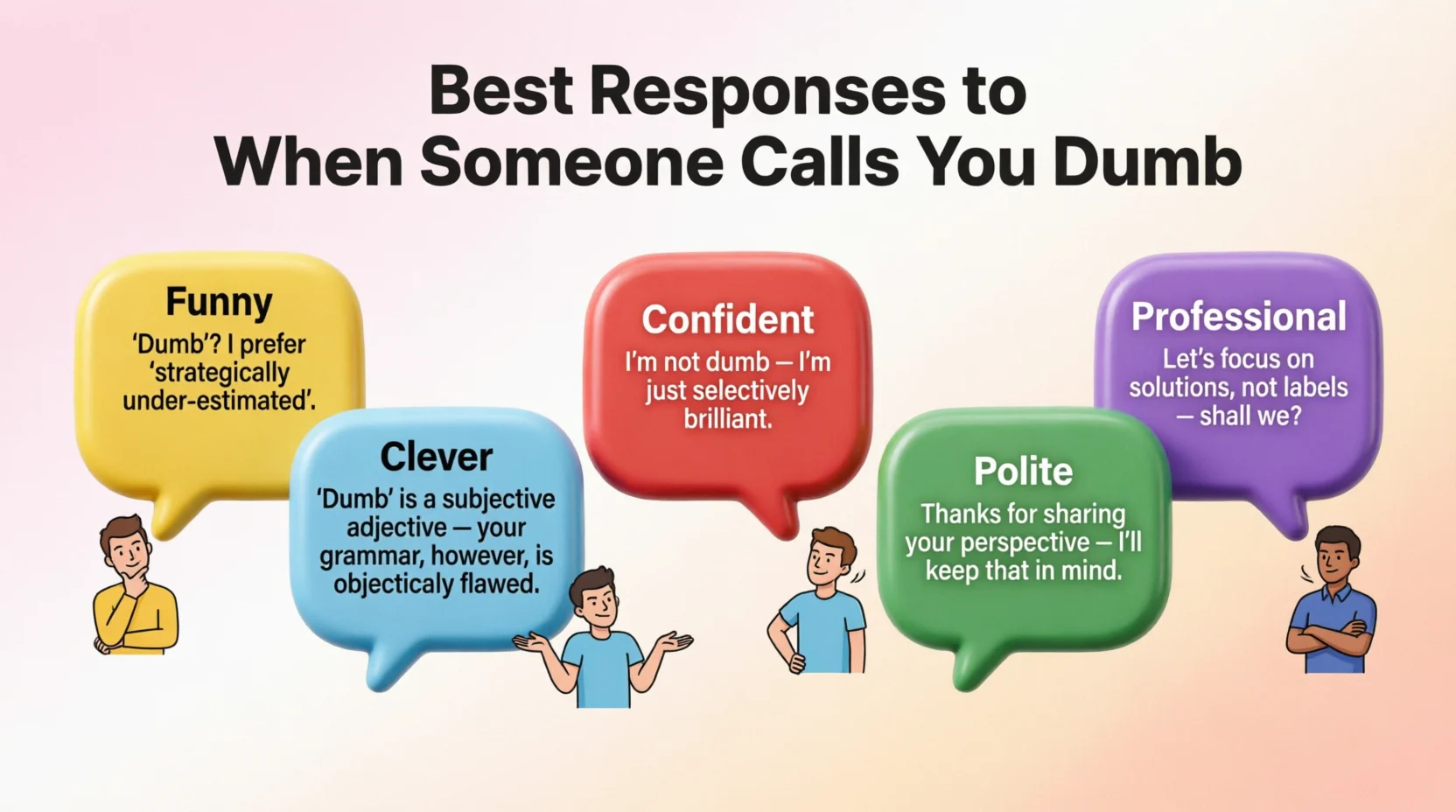
The best responses to when someone calls you dumb depend on your mood and the situation. You can keep it funny, respond with confidence, or shut down the insult without starting an argument.
Top responses: “That’s your opinion, not my identity,” “Care to explain what’s so dumb?”, “I’m still smarter than this conversation,” “Let’s agree to disagree,” “Insults aren’t arguments.”
Getting called dumb is never a particularly fun moment. Maybe a friend says it as a joke, someone throws shade in a group chat, or a coworker makes an unnecessary comment during a meeting. Whatever the situation, you don’t have to let one person’s words ruin your mood.
The best responses to when someone calls you dumb help you stand up for yourself without sounding overly defensive. Sometimes a clever comeback gets everyone laughing, while other times a calm, confident reply makes a stronger impression. You can even turn the moment into something lighthearted if the person didn’t mean to offend you.
The trick is choosing a response that fits the situation and feels natural coming from you. Ready to find your perfect comeback? From funny one-liners to professional replies, these options will help you handle the comment with confidence, humor, and just the right amount of attitude.
1. Funny Responses to When Someone Calls You Dumb
Sometimes humor is the easiest way to handle an unnecessary insult. These replies keep things light while showing that you can laugh at yourself without accepting someone’s judgment.
- My brain is still loading. Example: Use this when a friend teases you for missing an obvious detail. Meaning: You turn the insult into a harmless joke.
- At least I’m entertaining. Example: Try this during playful banter with friends. Meaning: You focus on your personality rather than the insult.
- My genius takes occasional coffee breaks. Example: Use this after making a silly mistake. Meaning: You laugh at the moment without putting yourself down.
- Congratulations, you’ve discovered my secret identity. Example: Say this when someone jokingly calls you dumb. Meaning: You respond with exaggerated humor.
- I prefer the term creatively confused. Example: Use this when you misunderstand a simple instruction. Meaning: You make the situation sound amusing instead of embarrassing.
- My last two brain cells are doing their best. Example: Send this in a funny group chat. Meaning: You poke fun at a temporary mental blank.
- And yet, here we are having this conversation. Example: Use this when someone makes a teasing remark. Meaning: You answer with a playful little comeback.
- I’m running on limited battery today. Example: Try this when you’re tired and make an obvious mistake. Meaning: You explain the moment with lighthearted humor.
- Don’t blame me, blame the software update. Example: Use this when technology or confusion gets the better of you. Meaning: You turn a mistake into a relatable joke.
- My brain has entered airplane mode. Example: Send this when you cannot think of an answer. Meaning: You make your temporary confusion sound funny.
- I call it premium-level confusion. Example: Use this among friends who enjoy silly jokes. Meaning: You exaggerate your mistake for comic effect.
- Please allow 24 hours for genius delivery. Example: Try this after taking too long to understand a joke. Meaning: You turn a delayed reaction into humor.
2. Clever Responses to When Someone Calls You Dumb
A clever reply can make your point without turning the situation into a competition. These responses are ideal when you want to sound sharp, composed, and thoughtful.
- What makes you say that? Example: Use this when someone makes an insulting comment without explaining it. Meaning: You ask them to support their judgment.
- That’s an interesting conclusion. Example: Try this when someone judges your answer too quickly. Meaning: You question their assumption without arguing.
- Let’s focus on the facts, not labels. Example: Use this during a disagreement about a decision. Meaning: You redirect attention toward useful discussion.
- An insult doesn’t make an argument stronger. Example: Say this when someone uses name-calling instead of reasoning. Meaning: You highlight the weakness of their approach.
- Being wrong about something doesn’t define intelligence. Example: Use this after making a mistake in front of others. Meaning: You separate an error from a person’s overall ability.
- I’d rather ask questions than pretend to know everything. Example: Try this when someone mocks you for asking for clarification. Meaning: You present curiosity as a strength.
- Could you explain that without the insult? Example: Use this when you want useful feedback. Meaning: You ask for respectful communication.
- Confidence and correctness aren’t always the same thing. Example: Say this when someone acts certain without evidence. Meaning: You remind them that certainty alone proves nothing.
- Let’s test that assumption. Example: Use this in a discussion where someone dismisses your idea. Meaning: You invite evidence rather than trading insults.
- A label isn’t an explanation. Example: Try this when someone calls you foolish but offers no reason. Meaning: You ask for substance instead of name-calling.
- I’d appreciate a reason, not a rating. Example: Use this when someone criticizes your work. Meaning: You prefer actionable feedback over judgment.
- Let’s discuss the point instead of attacking the person. Example: Say this during a tense conversation. Meaning: You encourage a more constructive exchange.
3. Sarcastic Responses to When Someone Calls You Dumb
A little sarcasm can work when the situation is casual and the other person understands your humor. Keep these replies playful rather than personal.
- Thank you for your very detailed analysis. Example: Use this after someone makes an unsupported judgment. Meaning: You sarcastically question their expertise.
- I’ll add that to my list of unsolicited opinions. Example: Try this when someone comments on your intelligence without being asked. Meaning: You show that their judgment was unnecessary.
- What would I do without your feedback? Example: Use this with someone who constantly criticizes you. Meaning: You point out their unwanted commentary.
- I’ll alert the academic community immediately. Example: Say this when a friend acts like they have discovered something extraordinary. Meaning: You exaggerate the importance of their remark.
- Such a thoughtful contribution to the conversation. Example: Use this after an unhelpful insult. Meaning: You sarcastically highlight the comment’s lack of value.
- I’ll try to recover from this historic moment. Example: Send this after playful teasing among friends. Meaning: You dramatize the insult for comic effect.
- Was that your final answer? Example: Try this when someone confidently calls you foolish. Meaning: You challenge the remark with playful disbelief.
- I’ll consider your opinion during my next meeting with myself. Example: Use this when you want a quirky response. Meaning: You signal that you are not taking the insult seriously.
- What a groundbreaking observation. Example: Say this when the comment adds nothing useful. Meaning: You gently mock the obviousness of their statement.
- Your kindness is truly unforgettable. Example: Use this when someone disguises an insult as a joke. Meaning: You make them notice their unkind tone.
- I’ll frame that compliment immediately. Example: Try this when someone makes a sarcastic remark about you. Meaning: You use irony to take away its sting.
- And I thought today would be a boring day. Example: Use this after an unexpected insult from a friend. Meaning: You respond with exaggerated amusement.
4. Confident Responses to When Someone Calls You Dumb
Confidence means knowing that one comment doesn’t define your abilities. These replies help you stand your ground without needing to prove your worth to everyone.
- Your opinion doesn’t define me. Example: Use this when someone tries to embarrass you publicly. Meaning: You separate your identity from their judgment.
- I know what I’m capable of. Example: Try this when someone doubts your abilities. Meaning: You express trust in yourself.
- One mistake doesn’t define my intelligence. Example: Use this after getting an answer wrong. Meaning: You recognize that everyone makes mistakes.
- You don’t have to agree with me, but you can be respectful. Example: Say this during a disagreement. Meaning: You set a clear boundary.
- I’m comfortable learning what I don’t know. Example: Use this when someone mocks your lack of knowledge. Meaning: You show confidence in your willingness to learn.
- I don’t need to prove myself through an argument. Example: Try this when a conversation becomes competitive. Meaning: You refuse to make your worth a debate.
- I’ll take constructive criticism, not personal attacks. Example: Use this when feedback becomes insulting. Meaning: You distinguish helpful advice from disrespect.
- I trust my ability to figure things out. Example: Say this when someone doubts your problem-solving skills. Meaning: You express confidence in your growth.
- You can underestimate me if you want. Example: Use this when someone repeatedly doubts you. Meaning: You remain secure despite their judgment.
- I’m here to improve, not impress everyone. Example: Try this when you feel judged for asking questions. Meaning: You prioritize learning over approval.
- I know my strengths and my weaknesses. Example: Use this when someone makes a sweeping judgment about you. Meaning: You show realistic self-awareness.
- Respect is a choice, and so is your response. Example: Say this when you want to address an insulting attitude. Meaning: You remind the person that respectful behavior is possible.
5. Polite Responses to When Someone Calls You Dumb
Not every situation calls for a sharp comeback. A polite response can protect your dignity while keeping the conversation calm, especially around acquaintances or people you don’t know well.
- I’d appreciate it if you didn’t call me that. Example: Use this when someone makes a disrespectful remark. Meaning: You clearly request better treatment.
- Let’s keep the conversation respectful. Example: Try this during a disagreement with an acquaintance. Meaning: You establish a respectful tone.
- I’m happy to discuss what I got wrong. Example: Use this when someone criticizes your answer. Meaning: You welcome useful feedback without accepting insults.
- Could you explain what you disagree with? Example: Say this when someone dismisses your idea. Meaning: You invite a meaningful explanation.
- I don’t think that label is necessary. Example: Use this when a discussion becomes personal. Meaning: You point out that the insult adds nothing useful.
- We can disagree without being unkind. Example: Try this during a heated conversation. Meaning: You encourage respectful disagreement.
- I’d prefer feedback that helps me improve. Example: Use this when someone comments on your performance. Meaning: You ask for practical advice.
- That’s not a helpful way to put it. Example: Say this when someone makes a careless remark. Meaning: You address their wording calmly.
- I’m willing to listen if you explain your point. Example: Use this when you want to keep a discussion productive. Meaning: You show openness while expecting respect.
- Let’s talk about the issue rather than make it personal. Example: Try this when an argument shifts toward insults. Meaning: You bring the discussion back to its purpose.
- I understand you disagree, but please be respectful. Example: Use this when someone criticizes you harshly. Meaning: You acknowledge disagreement while setting a boundary.
- I’d rather resolve this than exchange insults. Example: Say this when you want to end an unproductive argument. Meaning: You choose a constructive outcome.
6. Brutally Honest Responses to When Someone Calls You Dumb
Some situations require a firm answer that makes it clear you won’t entertain disrespect. These responses are direct without relying on personal attacks.
- If you have a point, make it without insulting me. Example: Use this when someone repeatedly calls you names. Meaning: You demand a useful explanation.
- Calling me foolish doesn’t make you right. Example: Try this when someone insults you during a debate. Meaning: You separate their behavior from the facts.
- You can disagree without being disrespectful. Example: Use this when someone crosses a line. Meaning: You establish a firm communication boundary.
- That says more about your approach than my intelligence. Example: Say this when someone uses insults instead of arguments. Meaning: You question their choice to belittle you.
- If criticism is all you have, we’re done here. Example: Use this when a conversation becomes entirely negative. Meaning: You refuse to continue an unproductive exchange.
- Bring a reason, not an insult. Example: Try this when someone makes a judgment without evidence. Meaning: You ask them to support their claim.
- I won’t entertain disrespect disguised as honesty. Example: Use this when someone claims an insult is just the truth. Meaning: You distinguish honesty from unnecessary cruelty.
- Your frustration doesn’t justify talking down to me. Example: Say this when someone gets rude during a disagreement. Meaning: You hold them accountable for their tone.
- Talk to me respectfully or not at all. Example: Use this when someone refuses to stop insulting you. Meaning: You set a clear limit.
- I’m not interested in being your target. Example: Try this when someone repeatedly makes you the joke. Meaning: You refuse to participate in hurtful teasing.
- You can make your point without attacking my character. Example: Use this during a personal argument. Meaning: You insist on discussing the issue rather than your worth.
- I’m ending this conversation until we can speak respectfully. Example: Say this when the interaction becomes hostile. Meaning: You protect your peace by stepping away.
7. Professional Responses to When Someone Calls You Dumb
Workplace insults require a different approach. Whether the comment happens during a meeting, in an email, or while working on a project, professional replies keep the focus on the issue and your responsibilities.
- Could you clarify which part of my work concerns you? Example: Use this when a colleague criticizes your work personally. Meaning: You request specific, actionable feedback.
- Let’s focus on the task and the available evidence. Example: Try this during a tense team discussion. Meaning: You redirect attention toward the work.
- I’m open to feedback delivered constructively. Example: Use this when a coworker makes a rude comment. Meaning: You show professionalism while setting expectations.
- Please identify the specific issue so I can address it. Example: Say this when someone questions your competence. Meaning: You ask for a concrete explanation.
- Personal remarks won’t help us solve the problem. Example: Use this during a meeting where discussion gets heated. Meaning: You encourage productive communication.
- I’d appreciate keeping our discussion work-related. Example: Try this when a colleague makes an inappropriate comment. Meaning: You establish a professional boundary.
- Let’s evaluate the idea on its merits. Example: Use this when someone dismisses your suggestion. Meaning: You ask for an objective assessment.
- I’m happy to correct any factual errors. Example: Say this when someone questions your work. Meaning: You demonstrate accountability without accepting insults.
- Could we keep the feedback specific and actionable? Example: Use this during a project review. Meaning: You encourage practical guidance.
- I believe we can address this respectfully. Example: Try this when a colleague becomes condescending. Meaning: You invite a more professional tone.
- Let’s separate the work issue from personal judgments. Example: Use this when criticism becomes personal. Meaning: You distinguish performance discussions from insults.
- I’d like to return to the agenda. Example: Say this during a meeting that has gone off track. Meaning: You redirect the conversation toward its purpose.
8. Chill and Casual Responses to When Someone Calls You Dumb
If the comment comes from a friend or someone you know well, a relaxed reply can keep the moment from becoming bigger than it needs to be.
- Okay, professor. Example: Use this when a friend acts overly knowledgeable. Meaning: You gently tease their attitude.
- Fair enough, moving on. Example: Try this when you don’t want to dwell on a small comment. Meaning: You choose not to make the moment a big deal.
- We all have our moments. Example: Use this after making a silly mistake. Meaning: You normalize occasional confusion.
- Anyway, what’s next? Example: Say this when you want to change the subject. Meaning: You refuse to get stuck on the insult.
- Not my finest moment, I’ll admit. Example: Use this when you genuinely missed something obvious. Meaning: You acknowledge the mistake without feeling defined by it.
- Could be, but I’m learning. Example: Try this when someone jokes about your lack of knowledge. Meaning: You accept that growth takes time.
- Let’s not make it a whole thing. Example: Use this when a casual disagreement starts escalating. Meaning: You encourage everyone to move on.
- I’ve heard better reviews. Example: Say this when a friend playfully roasts you. Meaning: You respond with relaxed humor.
- We’re both allowed an off day. Example: Use this when both of you are struggling with a task. Meaning: You make room for human mistakes.
- I’ll survive this review. Example: Try this after a playful criticism. Meaning: You show that the comment hasn’t upset you much.
- All right, what’s your solution? Example: Use this when you want to move from teasing to problem-solving. Meaning: You invite a practical next step.
- Let’s call it a learning experience. Example: Say this after a small mistake with friends. Meaning: You turn the moment into an opportunity to improve.
9. Creative Responses to When Someone Calls You Dumb
Want something more original than the usual comeback? These imaginative responses add personality and make your reply feel less predictable.
- My brain is currently under renovation. Example: Use this after struggling to understand a new concept. Meaning: You describe learning as a work in progress.
- I’m a limited-edition thinker. Example: Try this when friends tease your unusual ideas. Meaning: You present your individuality as something distinctive.
- My thoughts took the scenic route. Example: Use this when you arrive at an answer slowly. Meaning: You make your delayed understanding sound charming.
- The plot is still developing. Example: Say this when you’re figuring out a confusing situation. Meaning: You acknowledge that you need more information.
- I’m collecting knowledge, not insults. Example: Use this when someone mocks your questions. Meaning: You focus on learning instead of negativity.
- My brain works in bonus features. Example: Try this when you approach a problem differently. Meaning: You celebrate your individual way of thinking.
- I’m buffering in another dimension. Example: Use this when you lose track of a conversation. Meaning: You turn a moment of confusion into an imaginative joke.
- Consider me a work in progress. Example: Say this when someone criticizes your current skills. Meaning: You emphasize that improvement takes time.
- My thinking comes with unexpected plot twists. Example: Use this when your answer surprises your friends. Meaning: You make your thought process sound entertaining.
- I’m downloading the next level of understanding. Example: Try this when learning a difficult skill. Meaning: You frame learning as progress.
- My ideas arrive by express delivery, occasionally delayed. Example: Use this after taking a while to respond. Meaning: You laugh about your timing.
- I’m an unfinished masterpiece. Example: Say this when someone teases you about a mistake. Meaning: You celebrate growth and individuality.
10. Cute Responses to When Someone Calls You Dumb
Cute replies work best with people who understand your playful side. They’re especially useful when a friend is teasing you affectionately and you want to keep the mood sweet.
- My brain needs a little hug today. Example: Use this after making a small mistake with a friend. Meaning: You respond with gentle humor.
- I’m adorable, so let’s focus on that. Example: Try this during lighthearted teasing. Meaning: You playfully change the subject to your charm.
- Oops, my thoughts got tangled. Example: Use this when you mix up your words. Meaning: You admit confusion in a sweet way.
- Please be patient with my little brain. Example: Say this when someone jokes about your slow reaction. Meaning: You invite patience through humor.
- I may be confused, but I’m trying my best. Example: Use this when learning something new with friends. Meaning: You show effort without taking yourself too seriously.
- My brain deserves a snack break. Example: Try this when you’re mentally tired. Meaning: You turn your confusion into a cute excuse.
- I’m still figuring out this human thing. Example: Use this after an awkward social moment. Meaning: You make everyday mistakes feel relatable.
- Can I get a little credit for trying? Example: Say this when someone teases your efforts. Meaning: You ask for encouragement in a playful way.
- My thoughts are shy today. Example: Use this when you struggle to find the right words. Meaning: You explain your hesitation with charm.
- I promise I’m smarter after breakfast. Example: Try this when you make a morning mistake. Meaning: You blame your temporary confusion on being sleepy or hungry.
- A little kindness helps my brain sparkle. Example: Use this with someone who usually teases you affectionately. Meaning: You gently ask for encouragement.
- I’m learning, one tiny victory at a time. Example: Say this when you’re proud of making progress. Meaning: You celebrate small improvements.
11. Emotional Responses to When Someone Calls You Dumb
Sometimes an insult genuinely hurts, especially when it comes from someone whose opinion matters to you. These replies help you express your feelings honestly without attacking the other person.
- That actually hurt my feelings. Example: Use this when a friend’s joke goes too far. Meaning: You honestly communicate the impact of their words.
- I expected more kindness from you. Example: Try this when someone close to you makes a hurtful comment. Meaning: You express disappointment in their behavior.
- You don’t know how hard I’m trying. Example: Use this when someone criticizes you while you’re learning. Meaning: You explain that their judgment overlooks your effort.
- I can accept mistakes without being insulted. Example: Say this when someone mocks an error you made. Meaning: You ask for respect while accepting responsibility.
- Please don’t make me feel small to make your point. Example: Use this when someone repeatedly talks down to you. Meaning: You explain why their communication feels hurtful.
- I needed understanding, not judgment. Example: Try this when you’re struggling and someone responds harshly. Meaning: You communicate what kind of support you wanted.
- You can correct me without putting me down. Example: Use this when someone gives criticism in a hurtful way. Meaning: You distinguish correction from humiliation.
- That comment wasn’t fair to me. Example: Say this when someone judges you without knowing the full story. Meaning: You express that their treatment was unjust.
- I wish you’d spoken to me differently. Example: Use this when reflecting on an upsetting conversation. Meaning: You tell the person that their delivery mattered.
- My mistakes don’t cancel out my good qualities. Example: Try this when a remark makes you question yourself. Meaning: You remind yourself that one error doesn’t define you.
- I deserve the same respect I give you. Example: Use this when someone close to you repeatedly speaks disrespectfully. Meaning: You affirm the importance of mutual respect.
- I’d like us to talk without hurting each other. Example: Say this when you want to repair a difficult conversation. Meaning: You express a desire for healthier communication.
12. Sweet Responses to When Someone Calls You Dumb
A sweet response can soften the moment without pretending the insult was acceptable. Use these when you want to preserve a friendship or keep a conversation friendly.
- Help me understand it, then. Example: Use this when a friend says you misunderstood something. Meaning: You invite them to explain instead of argue.
- Maybe I missed something, but I’m willing to learn. Example: Try this during a friendly disagreement. Meaning: You show humility and openness.
- Let’s figure it out together. Example: Use this when you’re solving a problem with someone. Meaning: You turn criticism into teamwork.
- A little patience goes a long way. Example: Say this when someone gets frustrated explaining something. Meaning: You gently encourage a kinder approach.
- I’m not perfect, but I’m always learning. Example: Use this after making an honest mistake. Meaning: You acknowledge your imperfections while staying positive.
- We’re all learning something new every day. Example: Try this when a friend teases you for not knowing something. Meaning: You normalize learning at every stage.
- You can teach me without teasing me. Example: Use this when someone jokes while explaining a difficult concept. Meaning: You ask for support without embarrassment.
- Let’s give each other a little grace. Example: Say this when both people are frustrated. Meaning: You encourage patience and understanding.
- I appreciate the correction, just not the label. Example: Use this when someone offers useful information rudely. Meaning: You accept the helpful part while rejecting the insult.
- We’re on the same team, remember? Example: Try this with a friend or partner during a disagreement. Meaning: You remind them that cooperation matters more than winning.
- I’d rather learn from you than argue with you. Example: Use this when you want to calm a discussion. Meaning: You prioritize connection and understanding.
- Let’s make this a better conversation. Example: Say this when the exchange starts feeling unkind. Meaning: You encourage both people to communicate more thoughtfully.
13. Dramatic Responses to When Someone Calls You Dumb
If your friends enjoy exaggerated reactions, a dramatic comeback can turn a small insult into a memorable joke. Save these theatrical lines for playful situations.
- I shall never recover from this announcement. Example: Use this after a friend jokingly questions your intelligence. Meaning: You exaggerate your reaction for humor.
- Someone alert the history books. Example: Try this when someone acts proud of a basic observation. Meaning: You make the remark sound ridiculously important.
- My reputation has entered a difficult chapter. Example: Use this after making a public mistake among friends. Meaning: You dramatize the moment without taking it seriously.
- And just like that, my peaceful day ended. Example: Say this after an unexpected tease. Meaning: You turn the comment into a theatrical event.
- I request a formal investigation into this accusation. Example: Use this when a friend calls you foolish as a joke. Meaning: You respond with exaggerated seriousness.
- This will be remembered for generations. Example: Try this when someone points out an obvious mistake. Meaning: You turn a tiny incident into an imaginary historical event.
- My ancestors deserve an explanation. Example: Use this when you make a silly error in front of friends. Meaning: You add absurd drama to the moment.
- I wasn’t prepared for this level of criticism. Example: Say this when someone unexpectedly teases you. Meaning: You exaggerate your surprise.
- The courtroom will decide my intellectual fate. Example: Use this during playful group banter. Meaning: You turn the insult into a pretend trial.
- I need a five-minute intermission. Example: Try this when you need a moment to think of a reply. Meaning: You make your pause part of the joke.
- Please respect this historic learning moment. Example: Use this after realizing you made an obvious mistake. Meaning: You turn embarrassment into playful celebration.
- Roll the credits, I’ve had enough character development. Example: Say this when friends keep teasing you about one mistake. Meaning: You dramatically announce that the joke has run its course.
14. Flirty Responses to When Someone Calls You Dumb
If someone you like teases you affectionately, a playful reply can keep the interaction light. Use these only when the banter feels mutual and respectful.
- Maybe I need you to explain it to me. Example: Use this when your crush playfully teases you about a simple mistake. Meaning: You invite a little extra interaction.
- Are you always this charming? Example: Try this when someone mixes a compliment with playful teasing. Meaning: You redirect the exchange toward flirtatious banter.
- At least I got your attention. Example: Use this when someone jokes about your mistake. Meaning: You turn the moment into a playful connection.
- You’ll have to teach me your ways. Example: Say this when someone shows you how to do something. Meaning: You invite friendly interaction with a hint of flirtation.
- I guess you’ll have to be my tutor. Example: Use this when someone helps you understand a topic. Meaning: You playfully suggest spending more time together.
- Careful, I might start asking you questions all day. Example: Try this when someone enjoys explaining things to you. Meaning: You create an opening for more conversation.
- I’m smarter than I look, promise. Example: Use this when someone teases you about a silly mistake. Meaning: You respond with playful confidence.
- You make it hard to concentrate. Example: Say this when a crush distracts you during a conversation. Meaning: You offer a lighthearted hint of attraction.
- Is teasing me your favorite hobby now? Example: Use this when someone repeatedly jokes with you. Meaning: You invite them to acknowledge the playful dynamic.
- I’ll forgive you if you explain that again. Example: Try this when someone teases you while helping you learn. Meaning: You keep the exchange warm and playful.
- Keep talking, I like your attention. Example: Use this when the teasing is clearly welcome. Meaning: You show that you enjoy the interaction.
- You owe me a compliment to balance that out. Example: Say this after a playful insult from someone you like. Meaning: You turn the tease into a lighthearted request for something sweet.
15. Short and Witty Responses to When Someone Calls You Dumb
Sometimes the best comeback is short enough to send in a text or say without interrupting the flow of conversation. These quick replies are easy to remember and use.
- That’s your opinion. Example: Use this when someone makes an unnecessary judgment. Meaning: You refuse to treat their opinion as a fact.
- Prove your point. Example: Try this during a disagreement about an idea. Meaning: You ask for reasoning rather than insults.
- And your argument is? Example: Use this when someone offers nothing beyond name-calling. Meaning: You challenge them to explain their position.
- Be specific. Example: Say this when criticism is vague or unhelpful. Meaning: You request useful details.
- Noted, and moving on. Example: Use this when you don’t want to engage in a pointless argument. Meaning: You acknowledge the comment without giving it more attention.
- Let’s keep it respectful. Example: Try this when someone crosses a conversational boundary. Meaning: You make your expectations clear.
- Try again, politely. Example: Use this when you want someone to rephrase a rude comment. Meaning: You give them an opportunity to communicate better.
- That’s not an argument. Example: Say this when someone substitutes an insult for evidence. Meaning: You focus on the quality of the discussion.
- We can do better than that. Example: Use this when a conversation turns childish. Meaning: You encourage a more mature exchange.
- I’m listening to reasons, not labels. Example: Try this when someone criticizes your intelligence. Meaning: You invite an explanation rather than a personal attack.
- Let’s agree to disagree. Example: Use this when neither person is changing their mind. Meaning: You end the disagreement without escalating it.
- I’ll take the useful feedback. Example: Say this when criticism includes both a valid point and an insult. Meaning: You keep what helps and disregard the unnecessary negativity.
FAQs
What Does It Mean When Someone Calls You such words?
It usually means they think you’ve made a mistake or are teasing you, but context matters.
What Is the Best Response ?
Stay calm and say, “Calling me foolish doesn’t make you right.” Choose a reply that fits the situation.
What Does It Mean If Your Crush Calls You Dumb?
It might be playful teasing, but it doesn’t automatically mean they like you. Notice their tone and behavior.
How Do You Respond Professionally When Someone Calls You Dumb?
Ask for specific feedback and say, “Let’s keep this discussion respectful and focused on the work.”
What If You Don’t Actually Mean Your Comeback?
Choose a gentle reply, such as “I know you didn’t mean it that way, but that wasn’t nice.”
Is Humor a Good Response to Being Called Dumb?
Yes, when everyone is comfortable with the joke. If the comment hurts, a clear boundary is better.
How Do You Respond When a Friend Calls You Dumb?
Try “You can tease me, but don’t make it personal.” It keeps the message friendly and clear.
How Do You Stop Someone From Calling You Dumb Repeatedly?
Tell them clearly to stop, and step away if they continue. Seek support if the behavior becomes bullying.
Should You Ignore Someone Who Calls You Dumb?
Ignoring a one-off remark can work. If it keeps happening, address it directly or seek support.
How Do You Respond Without Sounding Rude?
Ask, “What do you mean by that?” It gives the person a chance to explain without escalating things.
Conclusion
Getting called dumb doesn’t mean you have to prove yourself, win an argument, or come up with the perfect comeback every time. Sometimes a funny reply keeps the mood light, while a confident or professional response helps you establish a boundary. The best responses to when someone calls you dumb are the ones that match your personality and the situation.
Choose humor when the teasing is friendly, stay direct when someone crosses a line, and remember that asking questions or making mistakes is part of learning. Save your favorite replies for the next awkward conversation, share this list with a friend who loves a clever comeback, and keep showing up with confidence. Your words can make a difference, so choose them wisely!